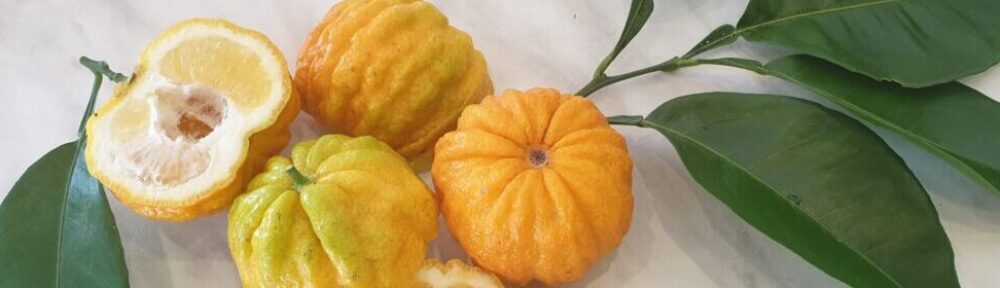
Japanese name: カラタチ(枸橘) (Karatachi), the name is derived from 唐橘 (karatachibana), i.e. “Chinese tachibana” (BE-PAL, 2024)
English name: Trifoliate orange, Hardy orange, Japanese bitter orange, Chinese bitter orange (Nesom, 2014; Lamichhane et al., 2023)
Czech name: citronečník trojlistý (Botany.cz), in growers’ practice also “trifoliata” (Citrusy.info, 2015)
Chinese name: 枸橘 (Gōujú), pronounced approximately “goh-joo” (Kotobank)
Korean name: 탱자나무 (taengjanamu), pronounced “teng-ja-na-moo” (Shim et al., 2023)
Dwarf form: Flying Dragon — in Japanese ヒリュウ (Hiryū), pronounced “hee-ryoo”, literally “flying dragon” (Ōkura et al., n.d.)
SYNONYMS
— Citrus trifoliata L., Sp. Pl. ed. 2: 1101 (1763) — basionym; according to the USDA GRIN database, now the accepted name (USDA-ARS GRIN, 2020; Nesom, 2014)
— Poncirus trifoliata (L.) Raf., Sylva Tellur.: 143 (1838) — name in a separate genus, commonly used in the rootstock literature (Nesom, 2014)
— Bilacus trifoliata (L.) Kuntze, Revis. Gen. Pl. 1: 99 (1891) (Nesom, 2014)
— Citrus triptera Desf., Tabl. École Bot., ed. 3: 406 (1829) (Nesom, 2014)
— Citrus trifolia Thunb. — synonym cited in nineteenth-century literature (André, 1885, cit. in Nesom, 2014)
— Aegle sepiaria DC., Pseudaegle sepiaria (DC.) Miq. — further older synonyms (Botany.cz)
— Citrus trifoliata var. monstrosa T.Itô (1909) = Poncirus trifoliata var. monstrosa (T.Itô) Swingle (1916) — the dwarf mutation “Flying Dragon” (Nesom, 2014)
Note on nomenclature: The USDA GRIN database and a number of other current botanical databases place the species in the genus Citrus and treat the name Poncirus trifoliata as a homotypic synonym (USDA-ARS GRIN, 2020; Lamichhane et al., 2023). In the agricultural and rootstock literature, including the Japanese literature, however, Poncirus trifoliata is still commonly used (Kawase et al., 1987; Peng et al., 2020), and we therefore retain this name here as well.
TAXONOMIC NOTE
The genus Poncirus Raf. has traditionally been distinguished from Citrus by its deciduous trifoliolate leaves, densely hairy fruits, transversely partitioned pith, flowers borne on old wood, stamens free at the base, and pulp vesicles with oily droplets and hair-like appendages; to this is added its exceptional frost hardiness (Bailey, 1949, cit. in Nesom, 2014).
Molecular studies, however, have repeatedly shown that Poncirus arose within the broader evolutionary circle of the genus Citrus and split from the basal lineage of true citrus approximately 9.8 million years ago (Peng et al., 2020). Sequencing of the reference genome has also shown that this is a species with distinctive features of its own: a comparison with nine Citrus genomes revealed 605 species-specific genes and six rapidly evolving gene families. Crucially, P. trifoliata has remained sexually compatible with species of the genus Citrus (Peng et al., 2020).
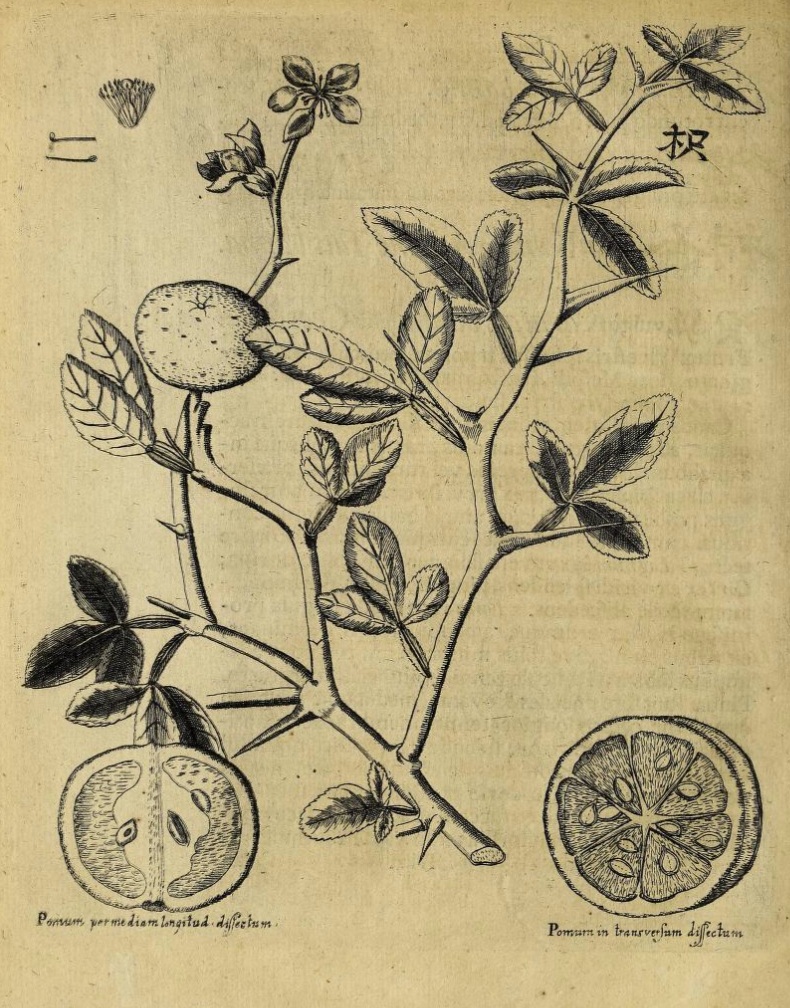
The type material comes from Japan. Swingle (1943) designated as the lectotype (the type standard) the description and illustration of the plant under Kaempfer’s transcription of the Japanese name “Karatats banna” (karatachi-no-hana or karatachi bana, meaning “flower of the Chinese tachibana”) in Amoenitatum Exoticarum (Kaempfer, 1712, fasc. V, pp. 801–803), which Linnaeus subsequently used for the formal scientific description and naming of the species. Linnaeus’s protologue states “Habitat in Japonia” (Nesom, 2014). The typification is thus based on a Japanese, not a Chinese, plant.
The second species of the genus, Poncirus polyandra S.Q.Ding et al. (1984), was described from the Chinese province of Yunnan. It is probably extinct in the wild and exists only in cultivation, where its propagation is monitored by the Kunming Institute of Botany; its separate origin was confirmed by Pang et al. (2007) and Li et al. (2010) (Nesom, 2014 and the literature cited therein).
HISTORY AND ORIGIN
Native range and Chinese sources
The trifoliate orange is native to the temperate zone of East Asia, to China and, according to a number of authors, also to Korea (WHO, 1998; Dianxiang & Mabberley, 2008; Fang et al., 2011; all cit. in Nesom, 2014; Lamichhane et al., 2023). Native status in Korea is, however, not entirely clear-cut — the author at Citrusy.info points out that the Korean sources he came across speak of an import from China (Citrusy.info, 2015).
The first known description of the species in China, together with a mention of its use as a rootstock, is found in the oldest known book on citrus, Chü Lu (“Records of Citrus”), written by Han Yen-Chih in 1178 (Han Yen-Chih, 1178; Nesom, 2014). An ancient Chinese source thus already documents the principle on which the species’ worldwide importance still rests today: grafting noble citrus onto its seedlings.
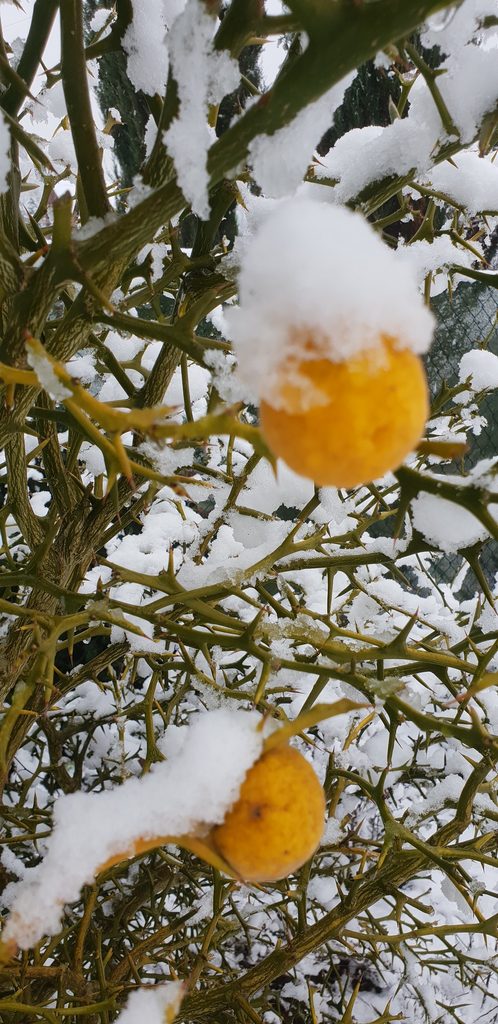
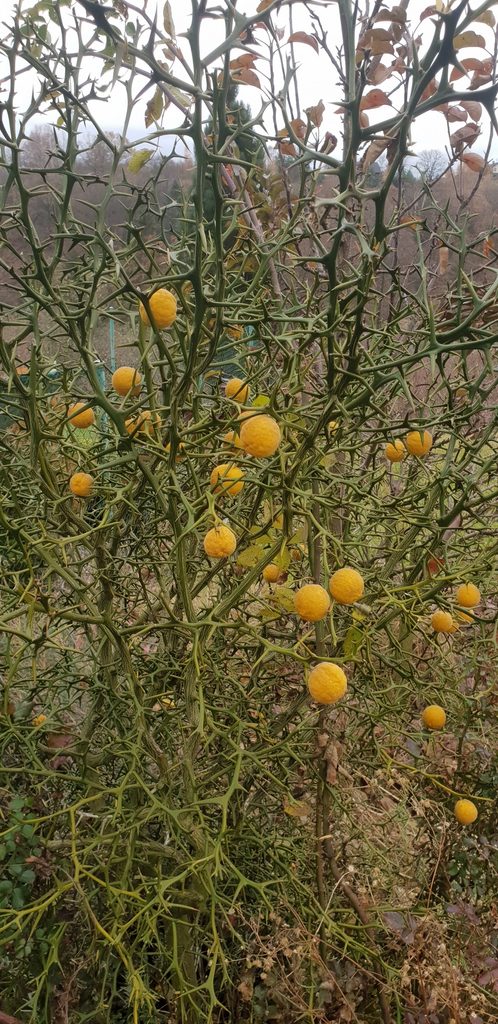
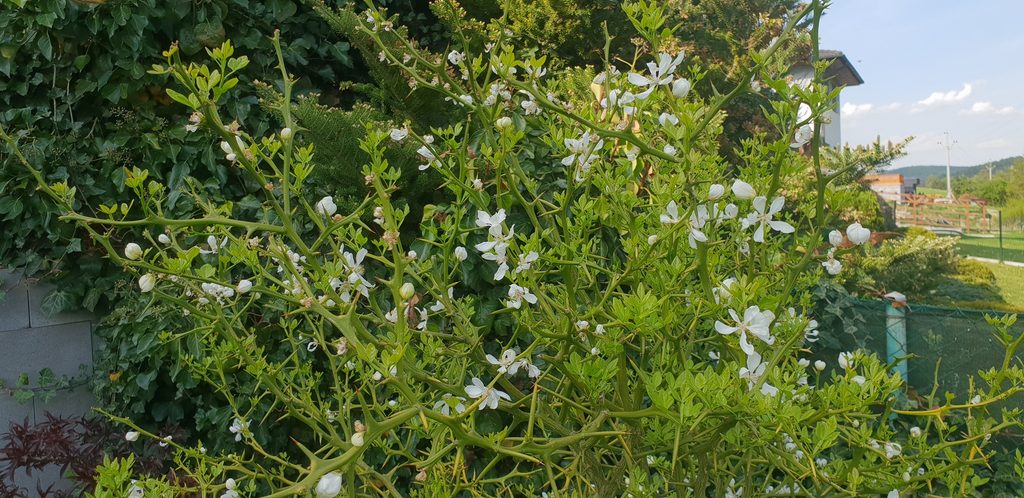
Introduction to Japan
Karatachi reached Japan from China in the distant past. According to Swingle and Reece (1967) it has been grown there since at least the 8th century (cit. in Nesom, 2014; ACIAR, n.d.). A Japanese encyclopaedia states that the species has long been cultivated throughout the country and has become locally naturalised in Kyushu and Tsushima (Kotobank). The floristic treatment by Ohba (1999) describes it as widely cultivated for hedges, as a citrus rootstock and for medicinal purposes (cit. in Nesom, 2014).
It was the Japanese plant that stood at the birth of the scientific name. Linnaeus described Citrus trifoliata in the second edition of Species Plantarum (1763), relying on the work of Engelbert Kaempfer, a German physician and traveller who worked in Japan in 1690–1692 for the Dutch East India Company (Kaempfer, 1712; Citrusy.info, 2015; Nesom, 2014).
The dwarf clone Flying Dragon (ヒリュウ) is also of Japanese origin. It was formally described as Citrus trifoliata var. monstrosa by T. Itô in 1909 in the encyclopaedia Nippon Hyakka Daijiten, and it was brought to the USA from Japan in 1915 (Nesom, 2014). Genetic analysis has shown that two phenotypically very different accessions, a dwarf and a non-dwarf one, are clonally related, which supports the earlier assumption that Flying Dragon arose as a mutation of a non-dwarf type (Peng et al., 2020).
Korea — the thorny rampart
In Korea, during the Joseon dynasty, the trifoliate orange was used as a thorny barrier around fortifications. A study of historical sources on the so-called defence forests (gwanbang-rim) found that trifoliate orange is the species mentioned most often in these records, and for Ganghwa Island, which protected the capital and the royal court, several sources document a dense planting of trifoliate orange to reinforce the outer wall (Shim et al., 2023). The heritage tree at Gapgot-ri is protected as a natural monument; assuming it was planted when plantings on the island were first documented, in 1704, the authors estimate its maximum age at more than 319 years (Shim et al., 2023), somewhat less than the roughly four hundred years given in popular sources, including Citrusy.info (Citrusy.info, 2015).
USA, Europe and Australia
The species reached the USA at the beginning of the 19th century; in 1823 it was offered in the catalogue of the Linnaean Botanic Garden of William Prince in Flushing, near New York. The first documented use as a rootstock is linked to a story from 1869: grafted Japanese citrus travelling from San Francisco to Washington froze along the way, but the rootstocks survived and the USDA botanist William Saunders propagated them further (Brackett, 1919, cit. in Nesom, 2014). Documented naturalisation in the wild dates from about 1910, and today the species is an aggressive colonist of the south-eastern USA, where it forms dense thorny thickets (Nesom, 2014). The dwarf Flying Dragon was brought to the USA from Japan by W. T. Swingle (Citrusy.info, 2015).
In Europe, according to Citrusy.info, the first reliably documented import was a consignment from China to England in 1850, arranged by Robert Fortune (Citrusy.info, 2015); the species is naturalised in Europe, Australia and Kashmir (Randall, 2011; Aslam et al., 2010; all cit. in Nesom, 2014). It was introduced to Australia in the second half of the 19th century. At first it did not catch on there, because trees on it often stunted and declined; only when it became clear that the cause was exocortis viroid transmitted by infected budwood did trifoliata become a favoured rootstock for heavy soils (ACIAR, n.d.).
GENETIC CHARACTERISTICS
The trifoliate orange is a diploid (2n = 2x = 18) and is sexually compatible with species of the genus Citrus. A chromosome-scale reference genome is available, which revealed specific adaptations to cold and made it possible to localise candidate genes in regions of tolerance to huanglongbing (HLB) and in the region of resistance to citrus tristeza virus (CTV) and to the citrus nematode (Peng et al., 2020). Resistance to CTV is controlled by a single dominant locus, Ctv (Peng et al., 2020); in the progeny of Flying Dragon a further locus (Ctm) was also described, contributing to limiting the spread of the virus around the point of inoculation, so that resistance here is controlled by several genes (Mestre et al., 1997).
The species reproduces by facultative apomixis (asexually, through seeds formed without fertilisation); the seeds are polyembryonic, and in open-pollinated plants 80–90% of seedlings develop from nucellar (apomictic) embryos, i.e. as clones of the mother plant (Khan & Roose, 1988, cit. in Nesom, 2014). For rootstock production this is a major advantage: the seedlings are uniform and need not be propagated vegetatively. The proportion of zygotic seedlings does, however, vary — for Flying Dragon a range of 0–75% is reported, depending on locality and year (Ferguson et al., 2004, cit. in Nesom, 2014).
A study of 48 collection accessions of the species showed that it can be divided into four groups, of which the two largest comprise large-flowered (24 accessions) and small-flowered selections (20 accessions, including Flying Dragon and one tetraploid) (Fang et al., 1997, cit. in Nesom, 2014). The genetic base of the species in US collections is, moreover, narrow, so the authors of the genome study stress the need to collect and conserve further natural variation (Peng et al., 2020).
BOTANICAL DESCRIPTION
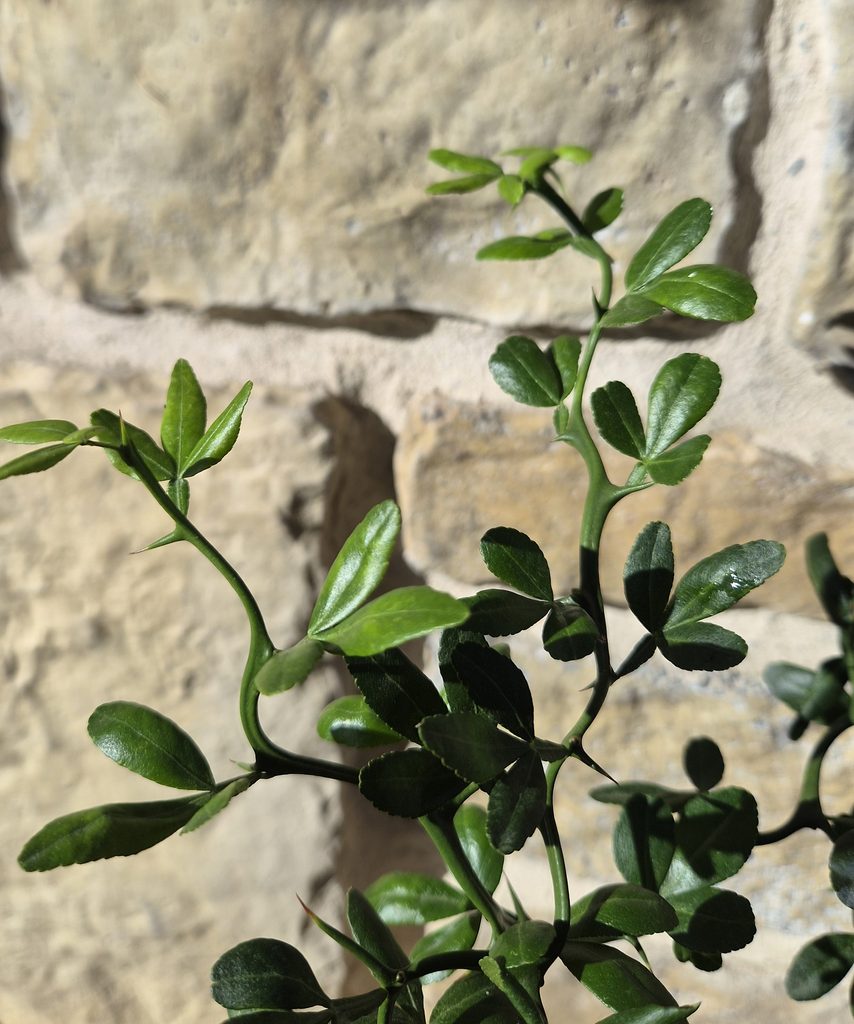
Kaempfer describes the plant as a wild, thorny shrub with trifoliate leaves, winged petioles, and bitter fruit. The trunk is irregularly branched from the base, and the branches and twigs are uneven, flattened or thickened in places, especially around the sharp thorns. The wood is porous, only slightly harder than willow wood; the bark is green, glossy, and peels off easily when wet. The leaves are sparse, growing singly in random locations, but most often beneath the thorns. Each leaf consists of three leaflets that converge at the center on a thin, winged petiole. They are deep green and glossy on the upper surface, somewhat lighter on the underside—a grassy green—and serrated along the margins with small, rounded teeth (Kaempfer, 1712, p. 801).
The flowers grow in the axils of the thorns, either singly or alongside a leaf, and appear in early spring; they are solitary or in pairs, sessile, with a calyx of five green, ovate-acuminate sepals, white, faintly fragrant, and five-merous. According to Kaempfer, the fruit differs from that of the orange in its pulp, which is sticky, has an unpleasant, faint odor, and a somewhat astringent taste that is only noticeable in the throat. The seeds have the same taste (Kaempfer, 1712, p. 803). Kaempfer makes no mention in his description of the dense pubescence of the fruit, which more recent authors consider one of the genus’s main distinguishing characteristics (Bailey, 1949, cit. in Nesom, 2014).
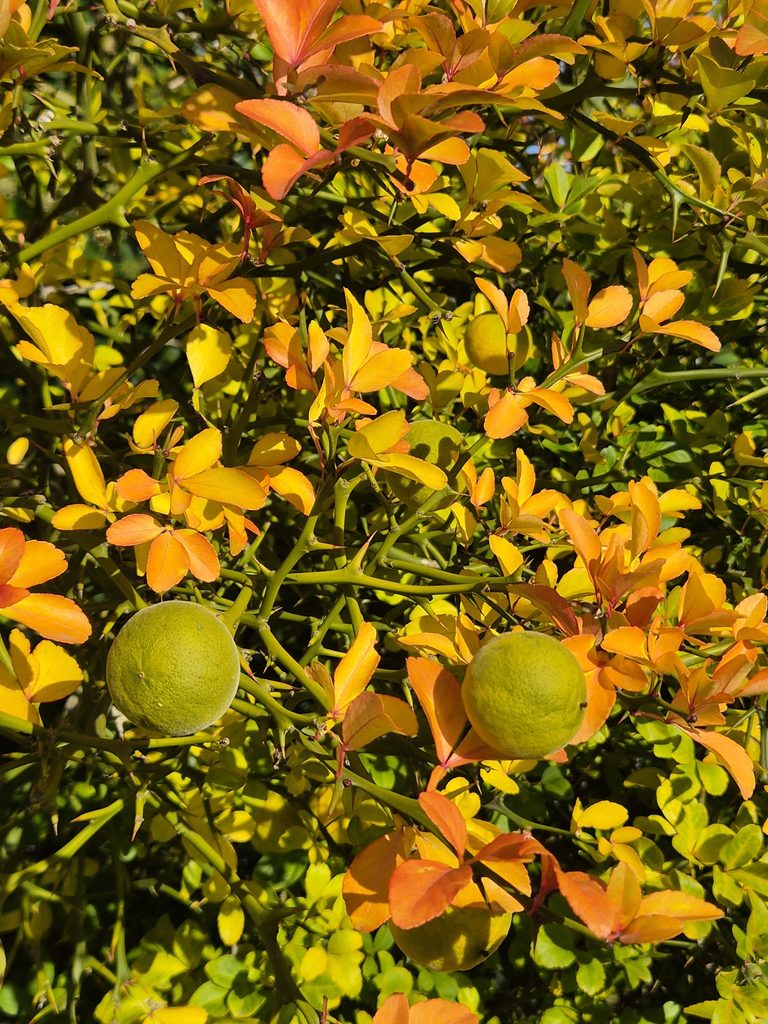
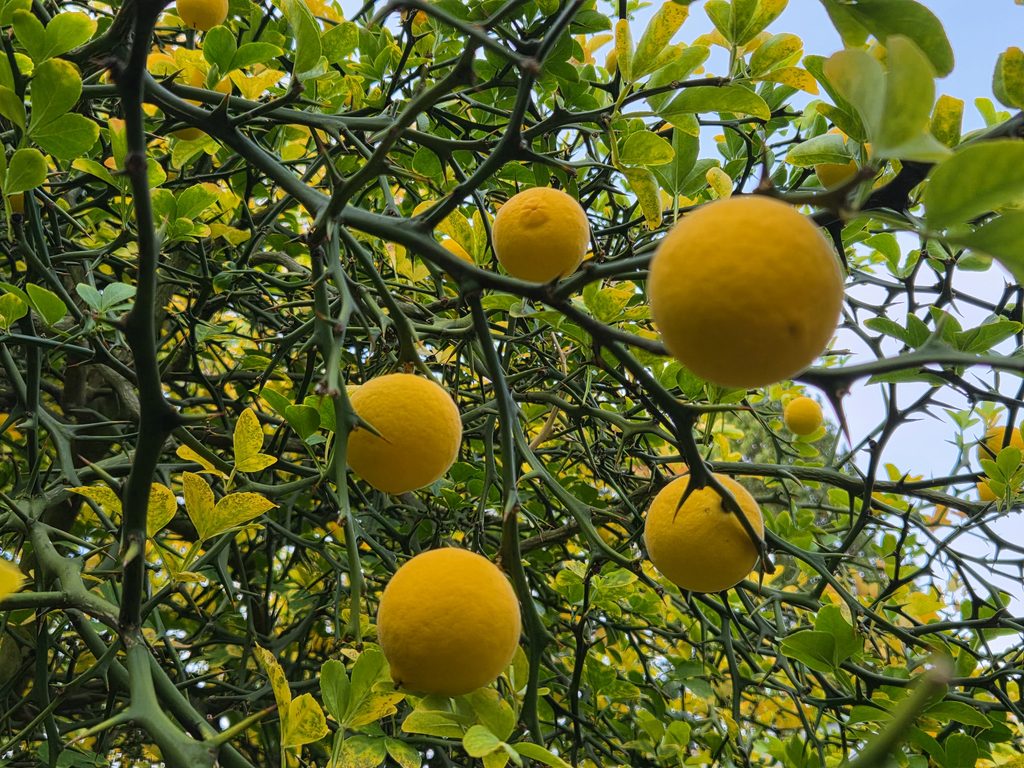
More recent sources supplement Kaempfer’s description with measurements and further characters. The plant is a deciduous shrub or small tree, usually 2–3 m tall in cultivation (Kotobank) and, according to American treatments, 2.4–6 m (Oregon State University, n.d.); it is the only deciduous representative among the citrus relatives, which contributes to winter dormancy and explains the colder range of the species (Nesom, 2014). The twigs are green, flattened and angular and bear thorns 1–7 cm long (Kotobank). The petiole is winged and 1–3 cm long, the leaflets are 2.5–6 cm long, rounded to shallowly notched at the apex, wedge-shaped at the base, with translucent oil glands (Kotobank); in autumn the leaves change colour and fall. The flowers are 3.5–5 cm in diameter, borne on last year’s wood, and appear before or together with the leaves, in Japan in April (Kotobank; Oregon State University, n.d.). It usually flowers for the first time at 3–4 years, but sometimes only after 10–12 years (Nesom, 2014). The fruits are globose, densely hairy (downy), 3.5–5 cm across, green and yellow when ripe; in Japan they ripen in October to November (BE-PAL, 2024), in the USA in September to October (Nesom, 2014), and in the Czech Republic mostly in October. The flesh is strongly acidic and bitter, with a resinous aftertaste and a large number of seeds — Citrusy.info gives 20–50 seeds per fruit (Citrusy.info, 2015).
Frost hardiness is exceptional: the species survives temperatures around −26 °C (Peng et al., 2020), and in Missouri a survived drop to −13 °F (approximately −25 °C) was recorded (Porter, 1972, cit. in Nesom, 2014). The hardiness is not absolute, however: in regions with unexpectedly warm winter weather (above 70 °F during the day) the cold hardiness of the rootstock may decline (Ferguson et al., 2004, cit. in Nesom, 2014). In Central Europe, in areas with sudden incursions of arctic air, night frosts in spring may damage budding and flowering branches.
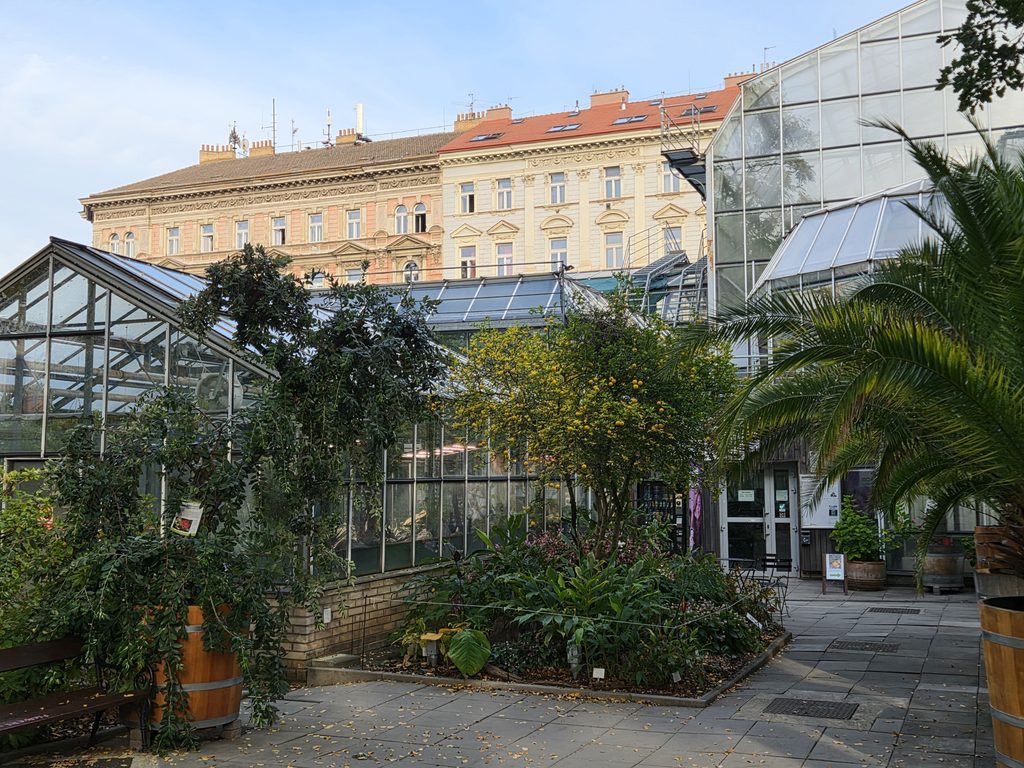
Longevity depends strongly on climate. In England the plants are described as relatively short-lived, declining at around 25 years, while in the botanical garden in St. Louis individual specimens reached almost 50 years (Davis, 1990; Porter, 1972; all cit. in Nesom, 2014); Korean heritage trees are, according to historical sources, more than three centuries old (Shim et al., 2023). A Poncirus in the Botanical Garden of the Faculty of Science of Charles University in Prague is, according to the local citrus-growing community, at least 60–80 years old.
USE AS A ROOTSTOCK
Importance and distribution
The trifoliate orange is among the most important citrus rootstocks in the world, and the genome study describes it as one of the most important rootstocks and one of the most valuable sources of resistance and tolerance genes for citrus (Peng et al., 2020). Castle places it among the 11 rootstocks that make up the world portfolio and states that it has a long, successful and traditional history as the main rootstock in Japan and China; it has an important place in north-eastern Argentina and in Uruguay, and to a limited extent in Australia and California, for fruit intended for fresh consumption (Castle, 2010). In Alabama, according to the extension service, it is even the only recommended rootstock for growing citrus; on Satsuma it can raise frost tolerance by up to 5 °F (approximately 2.8 °C) (Alabama Cooperative Extension System, 2026).
It is also important that the trifoliate orange became the foundational parent of most modern rootstock breeding. Castle notes that citrus rootstock breeding has relied heavily on a single parent — trifoliata — and that it remains an exceptionally important source of traits that are passed on to hybrids, above all with mandarins (Castle, 2010).
Rootstock in Japan
In Japan most citrus trees are grafted onto the trifoliate orange (Kawase et al., 1987). The study by Kawase et al., fundamental in its time, gives four main reasons: the trifoliate orange is very well suited to Satsuma (in 1984 it accounted for 116,400 ha, i.e. 70% of the Japanese citrus area); the trees remain compact, which eases work on slopes; they have high productivity relative to canopy volume and excellent fruit; and the rootstock is resistant to citrus tristeza virus and the citrus nematode, and is frost hardy (Kawase et al., 1987).
In a fifteen-year trial (1956–1970) of Satsuma on 18 rootstocks, trees on the trifoliate orange reached a cumulative yield of 444 kg per tree, whereas on yuzu only 260 kg; the sweetness of the fruit in 1968 was 9.6 °Brix on the trifoliate orange against 8.7 °Brix on yuzu. Trees on the trifoliate orange grew quickly and cropped heavily in the first years; later canopy expansion slowed and they stayed small; they showed less alternate bearing, the fruit coloured earlier and had higher sugar content. Rusk citrange performed similarly well (Kawase et al., 1987).
The rootstock also has Japan-specific problems. The trifoliate orange is not suitable for trees infected with citrus tatter leaf virus (CTLV): in a trial with an infected Ponkan, trees on the trifoliate orange lost vigour and cropped very little, whereas on Shiikwaasa (C. depressa) and Cleopatra mandarin (C. reshni) they had much larger canopies and yields; inarching a yuzu root into plants on the trifoliate orange improved the result. In CTLV-free plants, on the other hand, the trifoliate orange was on a par with yuzu (Kawase et al., 1987). For very early mutants of Satsuma of the Wase type and for the low-vigour variety Iyo, rootstocks that boost vigour are needed instead (Kawase et al., 1987).
A chapter of its own is the dwarf form Hiryū (Flying Dragon). According to the NARO manual, Hiryū is a variety of karatachi: Satsuma on it reaches about 70% of the height and 50–70% of the canopy volume of trees on ordinary karatachi, the fruit has 0.5–1% higher sugar content and colours earlier, flower formation improves and alternate bearing is reduced (Ōkura et al., n.d.). In trials with the variety Aoshima, fruit on Hiryū had 11.0 °Brix and 1.0 g/100 ml of acids against 10.6 °Brix and 1.2 g/100 ml on ordinary karatachi, but the yield per tree was lower (15.0 against 18.2 kg; mean of the years 2005–2007) (Ōkura et al., n.d.). The higher sugar content is explained by water stress: trees on Hiryū have lower photosynthesis and lower leaf water potential (Fukuoka ARC, 2000). The price is a shallow root system with a high proportion of fine roots, susceptibility to drought and to windthrow, so the trees require support and windbreaks (Ōkura et al., n.d.).
Rootstock properties
Advantages. The trifoliate orange confers increased frost hardiness on rootstocks and grafted varieties alike and is resistant to foot rot caused by Phytophthora species, so it is useful under wet conditions (Ferguson et al., 2004, cit. in Nesom, 2014). It is resistant to citrus tristeza virus (CTV) and to the citrus nematode (Kawase et al., 1987; Peng et al., 2020). Trees on it remain compact and have high productivity relative to canopy volume (Kawase et al., 1987); in the dwarf form Flying Dragon this effect is the strongest of all rootstocks (Castle, 2010).
Disadvantages. The trifoliate orange is poorly adapted to saline and calcareous soils; high pH is a “very important factor” for trifoliata-based rootstocks (Castle, 2010). It does not form a deep or widely spread root system and is therefore sensitive to drought and grows slowly in deep sandy soils (Ferguson et al., 2004, cit. in Nesom, 2014). For a long time it had a bad reputation as an unpredictable rootstock, until the cause was found to be exocortis viroid; with clean budwood it is no longer a threat today (Castle, 2010). It is not compatible with the Eureka lemon (Castle, 2010). In Japan the CTLV problem is added to this (see above).
The most important cultivars
In practice, selections of the trifoliate orange are divided mainly by flower size. Small-flowered selections are less vigorous and bushier, and earlier dormancy has been observed in them in California, which may be related to higher frost hardiness; large-flowered selections grow more vigorously and are taller (Koskinen, 2011; Ferguson et al., 2004; all cit. in Nesom, 2014). A remark by Bitters (1964): in Japan, by contrast, large-flowered forms are considered more dwarfing (cit. in Nesom, 2014).
— Rubidoux — small-flowered selection, the most common choice for commercial plantings in the USA (Alabama Cooperative Extension System, 2026); navel and Valencia trees on it in California reached 10–14 feet (approx. 3–4.3 m) at 8–12 years (Ferguson et al., 2004, cit. in Nesom, 2014)
— Pomeroy — large-flowered selection; trees on it are 15–20% taller than on Rubidoux (Ferguson et al., 2004, cit. in Nesom, 2014)
— Rich 16-6 — selection included in the UCR collection as budwood from Irvine in 1965, available in California through the Citrus Clonal Protection Program (UCR CVC, CRC 3485, 2026)
— Australian selection (P. trifoliata 22) — small-leaved and small-flowered selection, used in Australia as a standard rootstock (ACIAR, n.d.)
— Flying Dragon (P. trifoliata var. monstrosa, ヒリュウ) — dwarf mutation with twisted branches and curved thorns, producing the most dwarfed trees of any rootstock; used commercially mainly in Argentina and Costa Rica (Castle, 2010); in Japan it is used as a dwarfing rootstock for Satsuma (Ōkura et al., n.d.)
— Broad-leaved trifoliate (BLT) — Japanese broad-leaved selection; in trials with the variety Otani Iyo it was, together with the standard trifoliate orange and Shiikwaasa, among the most promising rootstocks (Kawase et al., 1987)
— Small-leaf trifoliate — small-leaved selection from China admitted to the UCR collection in 1990 (UCR CVC, CRC 4017, 2026)
FLAVOUR AND USE
Trifoliate orange fruits are practically inedible raw — they are strongly acidic, bitter and full of seeds (Nesom, 2014). Ripe fruits are locally processed into drinks and marmalade in Japan (Kotobank); in Korea dried unripe fruits are ground into a powder used as a spice, and fermentation of the fruits, which reduces their bitterness, is also popular (Lamichhane et al., 2023). Caution: the plant contains substances that cause photodermatitis and in sensitive people may provoke skin irritation in sunlight when the fruits or other parts of the plant are handled (NC State Extension, n.d.).
The dominant use of the fruit is in traditional medicine. Ponciri Fructus, the dried unripe fruits, is widely used in traditional Korean, Chinese and Kampo medicine for allergies, inflammation, oedema, digestive and respiratory disorders and a number of other complaints (Lamichhane et al., 2023). Kaempfer already recorded that a famous medicine called “Ki kókv” (i.e. kikoku, 枳殻) was boiled from the dried rind of the fruit, sold divided into pieces, with other ingredients added, and that the common people used the same name for the fruit itself (Kaempfer, 1712, p. 803). In the Japanese tradition the dried unripe fruit is called 枸橘 (kukitsu) and is used medicinally, while 枳殻 (kikoku) denotes sliced, almost ripe fruits of karatachi and other citrus (Kotobank). It is occasionally confused with the official Chinese drug Zhishi: according to the Chinese Pharmacopoeia it derives from the unripe fruits of Citrus aurantium or C. sinensis (Chinese Pharmacopoeia, 2020).
The review by Lamichhane et al. states that the main constituents of the unripe fruits are flavonoids (the most abundant is poncirin, reported at around 6% of the dry extract), terpenoids and coumarins including furanocoumarins (methoxsalen, imperatorin, isoimperatorin, oxypeucedanin), phytosterols and alkaloids; pharmacological studies are, however, mostly in vitro or in animals, and the authors themselves stress that extensive research on the isolation of active compounds, mechanisms of action and toxicity is still lacking (Lamichhane et al., 2023).
Its use as an ornamental and hedge plant is no less important. The dense thorny branches form an impenetrable hedge; in Japan karatachi is widely used for hedges in warm regions (Kotobank), in Korea it formed part of the defence of fortress walls (Shim et al., 2023), and in the USA it was already being planted as a hedge in the 19th century (Welch & Grant, 2011, cit. in Nesom, 2014). Its ornamental value comes from the fragrant spring flowers, golden-yellow fruits and, in winter, green branches with thorns (NC State Extension, n.d.). It is also a host plant of swallowtail caterpillars, which are often found on it in Japan (Kotobank).
In Japanese culture karatachi is remembered above all thanks to the children’s song “Karatachi no Hana” (Karatachi Blossoms), with words by the poet Kitahara Hakushū and music by Yamada Kōsaku, published in 1925 (BE-PAL, 2024; Bungeishunjū, 2024).
CONSERVATION AND CURRENT STATUS
In the wild and in cultivation
The trifoliate orange is among the most widespread citrus relatives in the world, and its existence is not threatened. On the contrary, in the south-eastern USA it is considered an invasive species that spreads from ornamental plantings and hedges and displaces native woody plants; seeds are formed mostly apomictically and the plants also regenerate from root suckers (Nesom, 2014). In East Asia it remains a species of common hedges, a traditional rootstock and — especially in Korea — also a heritage-protected tree (Shim et al., 2023).
Genetic resources
As a genetic resource, by contrast, the trifoliate orange is relatively vulnerable: the genetic base of accessions in collections in the USA is narrow, and the authors of the genome study warn of the need to collect and protect further natural variation (Peng et al., 2020). The UCR Citrus Variety Collection holds a number of accessions of the species, for example probably seedlings from W. T. Swingle from 1924 (CRC 1498), the budwood Rich 16-6 (CRC 3485) and seeds of a small-leaved selection from China (CRC 4017) (UCR CVC, CRC 1498, 2026; UCR CVC, CRC 3485, 2026; UCR CVC, CRC 4017, 2026).
A related species
Far worse off is Poncirus polyandra, which probably does not occur in the wild and whose conservation is ensured only by collection plantings under the supervision of the Kunming Institute of Botany (Nesom, 2014).