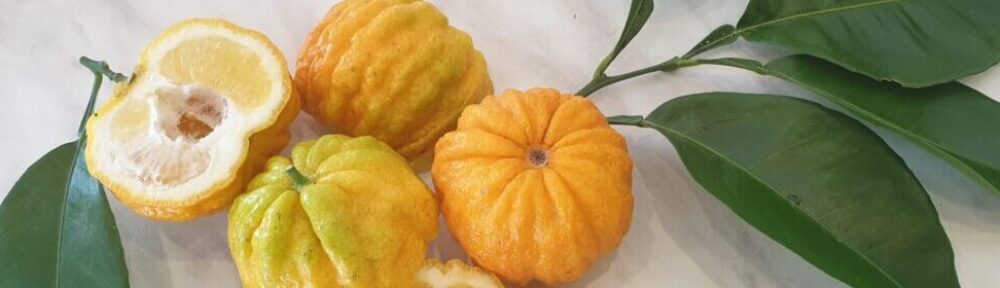
Japanese name: 黄金柑 (Ogonkan) — literally golden citrus
Regional japanese name: 黄蜜柑 (Ki-mikan) — literally yellow mikan (Kagoshima Prefecture), Golden orange (Kanagawa Prefecture)
English name: Ogonkan, Golden citrus, Golden orange, Yellow mikan
SYNONYMS
— Citrus flaviculpus Hort. ex Tanaka — valid scientific name in Tanaka’s classification system (Tanaka, 1980, no. 31)
— In the Swingle classification it is treated as a cultivar of Citrus reticulata Blanco, or alternatively as a natural hybrid of undetermined parentage
— Ougonkan, Ogon-kan — alternative romanisations of the Japanese script
HISTORY AND ORIGIN
Origin and legends of introduction
Ogonkan (Citrus flaviculpus Hort. ex Tanaka) is a small Japanese citrus with a distinctly golden-yellow rind, traditionally cultivated primarily in Kagoshima Prefecture, from where it spread to other parts of Japan. The precise botanical origin of the taxon was unknown for a long time, and older literature proposed yuzu (Citrus junos) as the maternal parent. This hypothesis is, however, refuted by organellar cytotype analysis: Shimizu et al. (2016)
assigned ogonkan cytotype C05 (hyuganatsu type), whereas yuzu carries its own distinct cytotype C09 (yuzu type). Since organellar DNA is inherited exclusively through the maternal line, yuzu cannot be the maternal ancestor of ogonkan. Instead, the shared cytotype C05 links ogonkan to hyuganatsu, and — as demonstrated by a subsequent SSR marker analysis — to tachibana (Citrus tachibana) as the paternal (pollen) parent; the maternal parent remains unidentified (Shimizu et al., 2016; Shimizu, 2022).
The earliest documented records come from the Higashiichikicho area (today part of the city of Hioki) in Kagoshima Prefecture, where the cultivar was known at least by the Meiji era (1868-1912). Local tradition suggests the fruit may have been present in the area even earlier — a story circulates in Hioki according to which the citrus was brought either by the Jesuit missionary Francis Xavier in the 16th century, or imported from the Korean Peninsula during the military campaigns of Toyotomi Hideyoshi at the end of the 16th century. Both legends are, however, undocumented and are of the nature of local oral tradition (Tanaka, 1980).
Naming and spread to other prefectures
In Kagoshima Prefecture the cultivar was long known under the simple name Ki-mikan (黄蜜柑, yellow mikan). The distinct trade name Ogonkan (黄金柑, golden citrus) became established only after the cultivar was introduced into Ehime Prefecture. According to tradition, this renaming was driven by Harutaro Muramatsu (村松春太郎), who introduced the citrus into Ehime, though this information is likewise poorly documented. In Kanagawa Prefecture, the name Golden orange then came into use (Specialty Produce, 2026).
In his standard work An Iconograph of Japanese Citrus Fruits (1980) Tanaka devoted entry no. 31 to Ogonkan under the Latin name Citrus flaviculpus Hort. ex Tanaka, with a detailed botanical illustration, a table of physical parameters, and a morphological description.
BOTANICAL DESCRIPTION
Tree
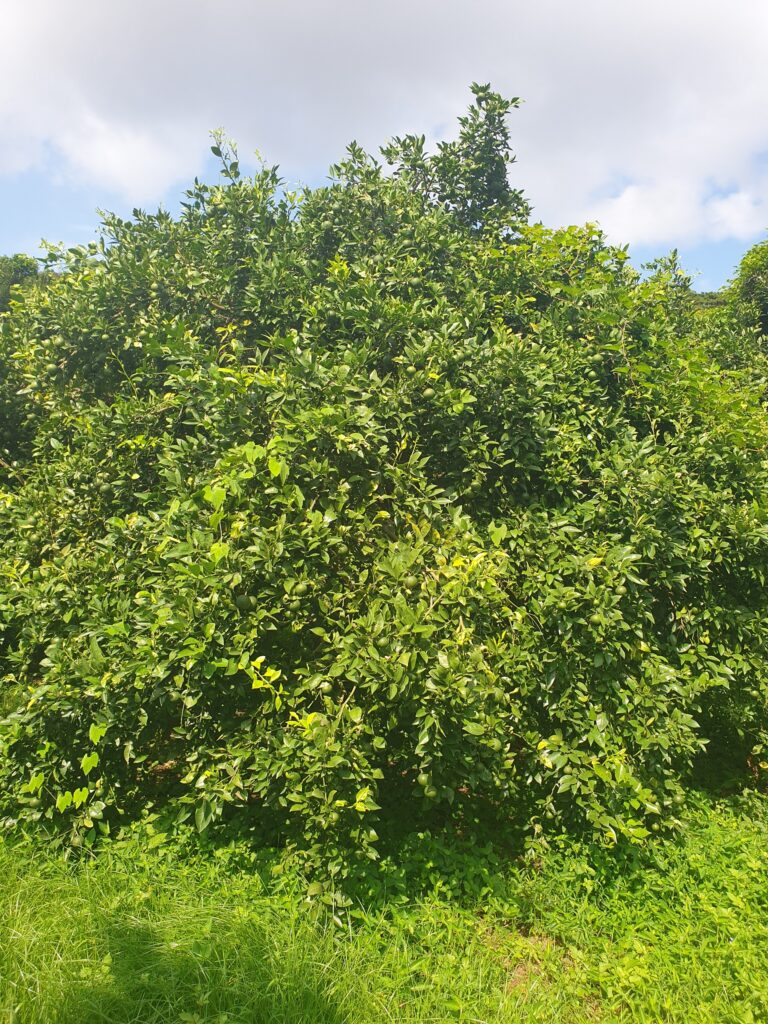
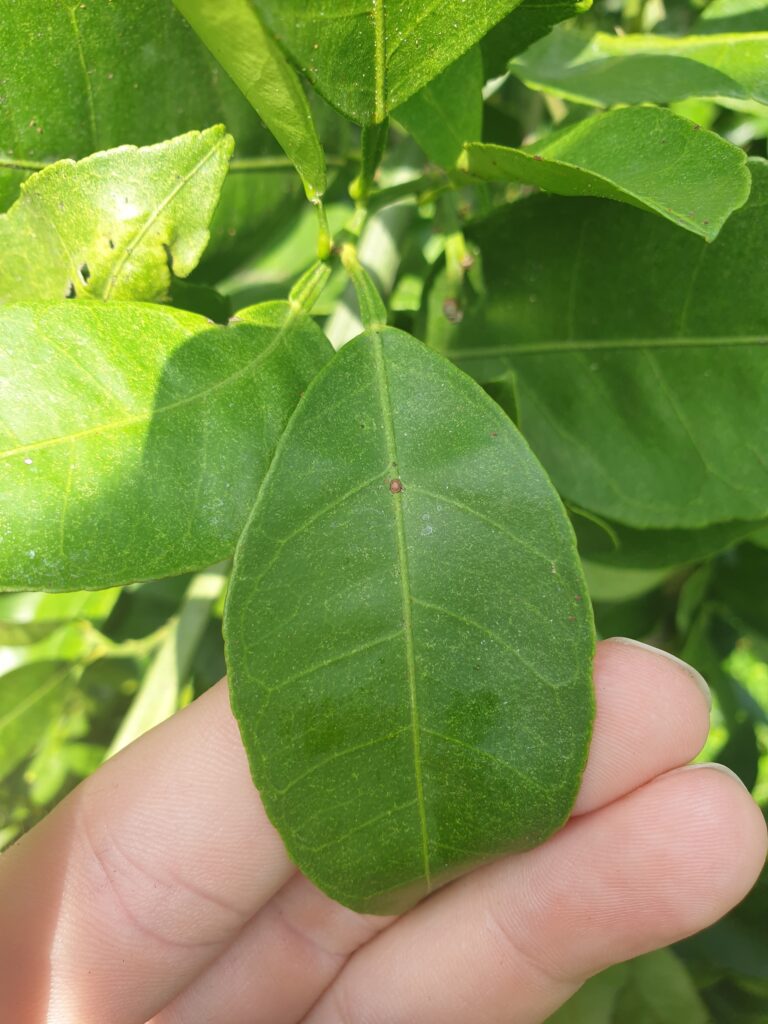
The ogonkan tree is of small stature, evergreen, with characteristically strong and sharp thorns on the branches — a feature that substantially complicates hand harvesting and is one of the reasons why the cultivar has remained primarily a locally grown crop. As trees age they gradually lose some of their thorniness. Leaves are medium-sized, oblong, and glossy. The tree flowers in spring with white, fragrant blossoms (Specialty Produce, 2026; Tanaka, 1980).
Fruits
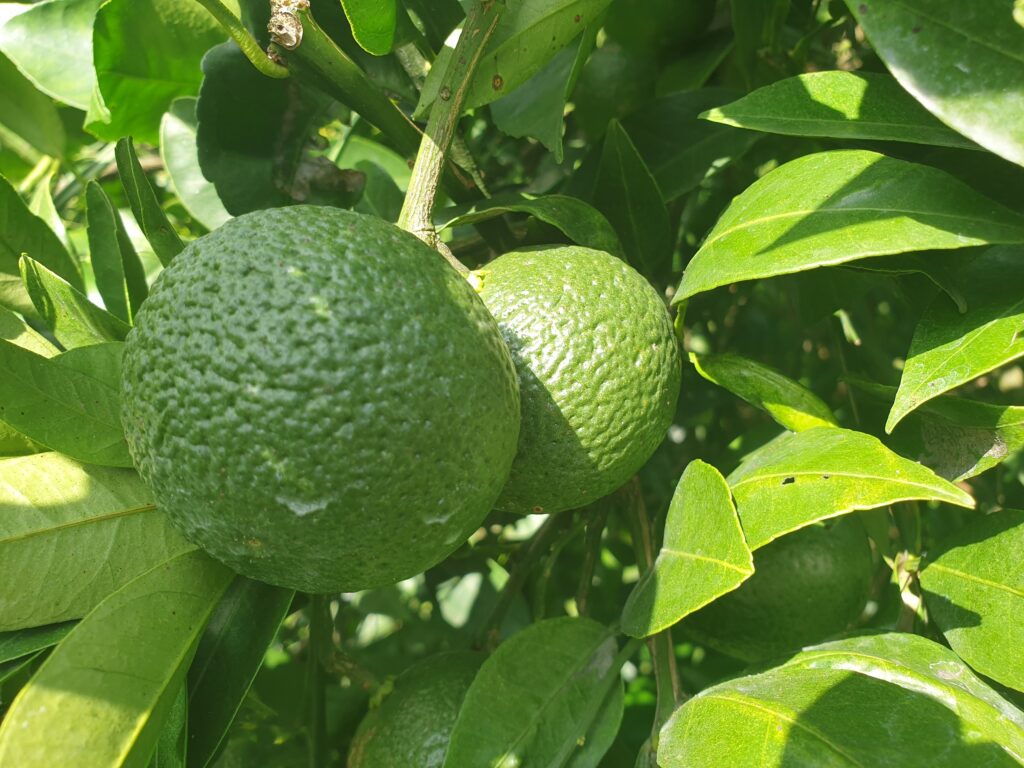
The fruits are small, 4-5 cm in diameter, weighing 60-80 g, oblate to spherical in shape, slightly flattened. The rind is characteristically bright golden-yellow to golden-orange — hence both Japanese names. Rind thickness is approximately 2-3 mm; the surface is rough, with prominent oil gland pits. The rind can be peeled by hand, though with some difficulty. The white mesocarp layer (albedo) is sweet and edible, similarly to the related hyuganatsu. The flesh is yellow, juicy, fine-textured and soft, divided into 9-10 segments. Fruits are usually seedless or contain only 2-5 seeds (Tanaka, 1980; Specialty Produce, 2026).
Data from Tanaka’s monograph III (1980, no. 31) give a fruit diameter of 55-60 mm and a height of 30-35 mm, with a peduncle length of approximately 4-15 mm. These measurements correspond to larger specimens; in commercial cultivation fruits commonly fall in the range of 40-50 mm (Tanaka, 1980).
Aroma and fragrance profile
The aroma of ogonkan is pronounced, fresh and floral — reminiscent of the related hyuganatsu (Citrus tamurana), but with specific differences. The sesquiterpene hydrocarbon content is higher in ki-mikan than in hyuganatsu, while ketone constituents are less represented (sesquiterpenes are the heavy, calming and safe components of essential oils, whereas ketones are the potent, functional but potentially risky components) (Bioscience, 2001).
Ripening
The harvest season falls between February and April. Ogonkan thus ripens distinctly late within the Japanese citrus calendar — precisely in the period when stocks of satsuma
mandarins (unshiu) are declining. This property makes it a valuable seasonal speciality bridging the spring gap in the supply of fresh citrus (Specialty Produce, 2026).
TASTE AND USE
Ogonkan is characterised by a markedly sweet flavour with a pleasant balancing acidity. Sugar content falls in the range typical for premium Japanese citrus; the hybrid cultivar Shonan Gold, derived from ogonkan, reaches 11-12 °Brix, while it did not inherit ogonkan’s rough rind or thorny habit, but fully preserves the aroma of its parent (Japan Today, 2024).
It is consumed primarily fresh: the fruits can be brought whole to the mouth, eating both the flesh and the edible albedo, with the golden, intensely fragrant rind enhancing the overall experience. A traditional way of serving in Japan is also ogonkan segments laid over ginger-braised pork. The delicate flesh pairs well with fruit bowls, salads, cheeses and desserts. The juice finds use in marinades, dressings and soup stocks (Specialty Produce, 2026).
Ogonkan is further valued for its resistance to cold, drought and disease, and for its exceptionally good keeping quality — under optimal conditions the fruit stays fresh for several months. These properties are attractive for specialist growers, even though the high thorniness of the trees requires careful hand picking (Specialty Produce, 2026).
CONSERVATION AND CURRENT STATUS
Distribution in Japan and production
Ogonkan is a rare cultivar grown in Japan in small volumes. According to statistics from the Japanese Ministry of Agriculture, Forestry and Fisheries (MAFF) for 2010, total ogonkan production in Japan reached 137.3 tonnes, of which 108.2 tonnes were marketed. The largest producer was Kanagawa Prefecture with a share of 68.1% (93.4 t), followed by Shizuoka Prefecture (25.0 t; 18%) and Ehime Prefecture (13.9 t). Although it is a species-level cultivar with a specialised grower base, commercial production is limited and ogonkan is not available in mainstream retail outlets — it is grown primarily by specialist horticulturalists and small-scale producers (Bonsai Natal, 2017).
Breeding contribution — Shonan Gold and Hime-Koharu
Despite its limited commercial application, ogonkan has played a key role as a breeding parent in two hybridisation programmes.
Citrus flaviculpus × Citrus unshiu cv. Imamura) was developed at the Kanagawa Prefectural Agricultural Technology Centre in Odawara. The breeding programme was launched in 1988 and after 12 years of selection the new cultivar was stabilised and in 2003 registered by the Japanese Ministry of Agriculture as a protected variety. Shonan Gold (湘南ゴールド
, Citrus flaviculpus × Citrus unshiu cv. Imamura) inherited the golden-yellow colour and intense aroma of ogonkan, while acquiring a smoother and more easily peelable rind from satsuma. (Japan Today, 2024; the Japan Rail Club, 2024).
Hime-Koharu (媛小春) was developed by Ehime Prefecture, where ogonkan was used as the pollen parent. Production of this cultivar, distinguished by its pronounced sweetness and aroma, is likewise confined to specialist farms in Ehime (Shimizu, 2022).