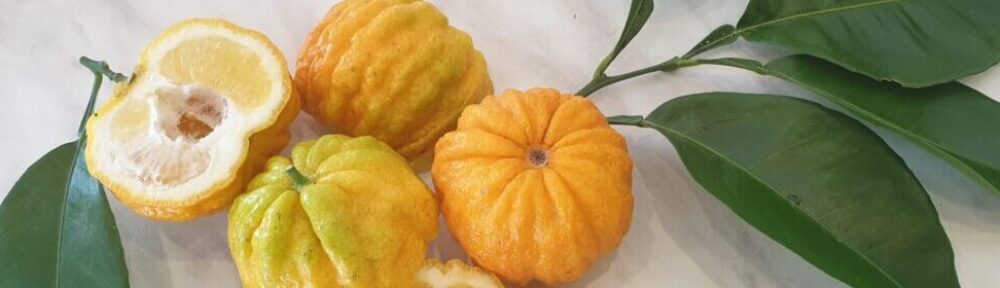
Japanese name: Ōtachibana (大橘), read “oh-tah-chee-bah-nah” — literally “Great Tachibana”
Regional name (Kumamoto): Pāru-kan / Pearl Kan (パール柑), read “pah-roo-kahn” — literally “pearl (citrus)” — commercial brand of Kumamoto Prefecture
Regional name (Kagoshima): Sawā-pomero (サワーポメロ), read “sah-wah-poh-meh-roh” — literally “sour pomelo”; name used in Kagoshima, chosen through a public competition
Regional name (Kōchi): Tosa Buntan (土佐文旦) — genomically identical clone, same nuclear and organellar genotype; cultivated in Kōchi Prefecture on Shikoku (Shimizu et al., 2016)
SYNONYMS
——— Hōmoto Buntan (法元文旦, read “Hōmoto-buntan”) — historical name used in Kagoshima and brought to Kōchi in 1929; named after the Hōmoto family in whose garden the original tree was found in Kagoshima (Takeda Seika, 2024; Kajuen, 2024)
——— Daikitsu, Kotobukikan — synonyms listed in the UCR collection based on Ortiz Marcide (1986); less documented in Japanese sources (UCR, CRC 3470, 2026)
Note on nomenclature: The taxon Citrus otachibana Hort. ex Yu. Tanaka (大橘, “great tachibana”) must not be confused with the mandarin species Citrus tachibana (Makino) Yu. Tanaka (橘, Tachibana). The similarity in names is purely linguistic — “ō-tachibana” refers to the size of the fruit, not to any relationship with the mandarin species Tachibana (Tanaka, 1946).
HISTORY AND ORIGIN
Origin and early presence in Kagoshima
Citrus otachibana is a Japanese pummelo cultivar originating from Kagoshima Prefecture in south-western Kyushu. It is a regionally rare cultivar whose presence in Kagoshima is documented at least from the Meiji era (1868–1912) (JA Group, 2024; Sweetsvillage, 2025). The cultivar was likely present in Kagoshima even earlier, possibly connected to the lively trade contacts between the Amami archipelago and Kyushu with southern China and the Ryukyus, but written records from earlier periods are not available. Pummelo species generally arrived in Japan from the south during the Edo period (17th–19th centuries), and cultivars with distinct characteristics arose from their seedlings (Kudamononavi, 2025).
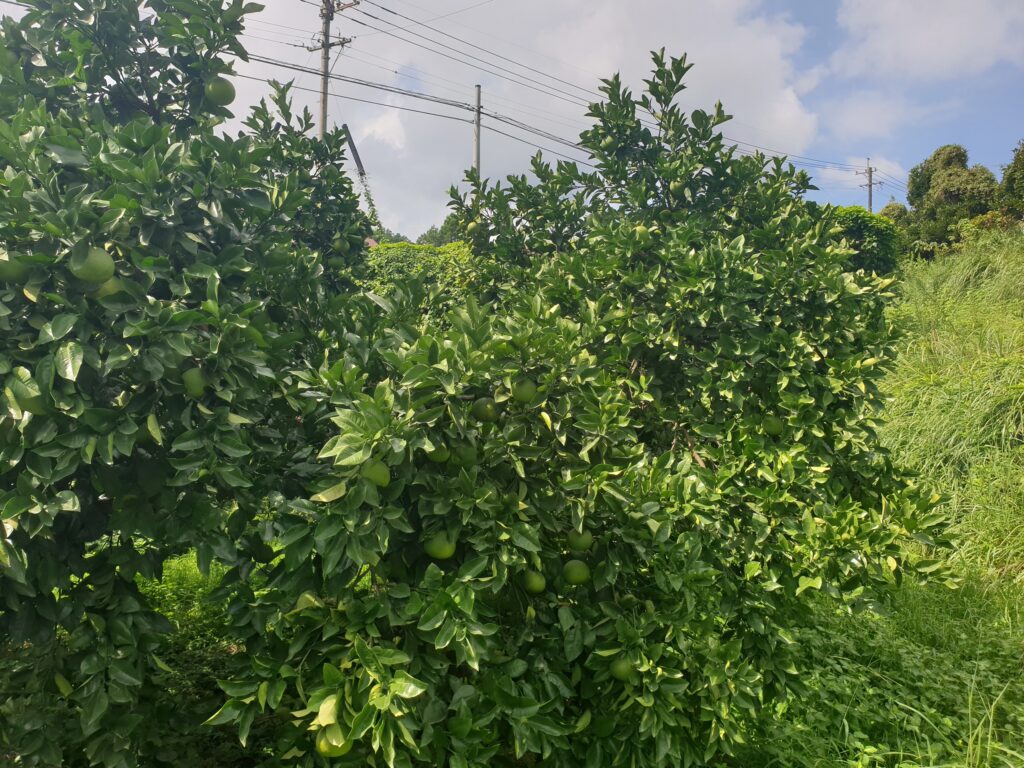
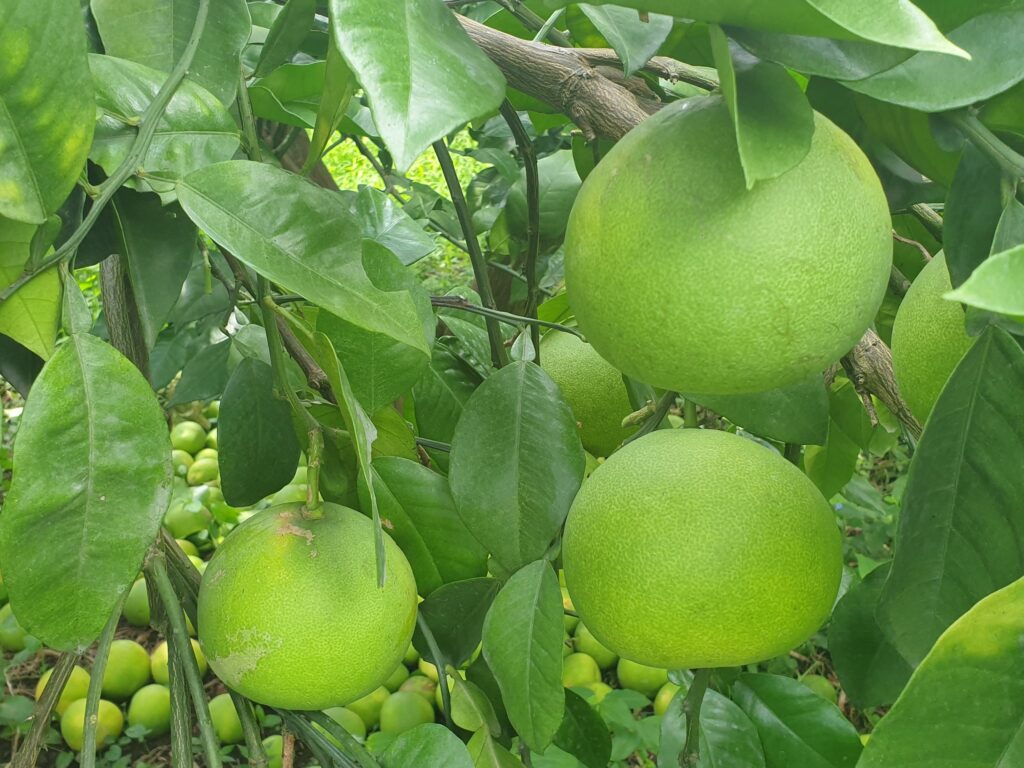
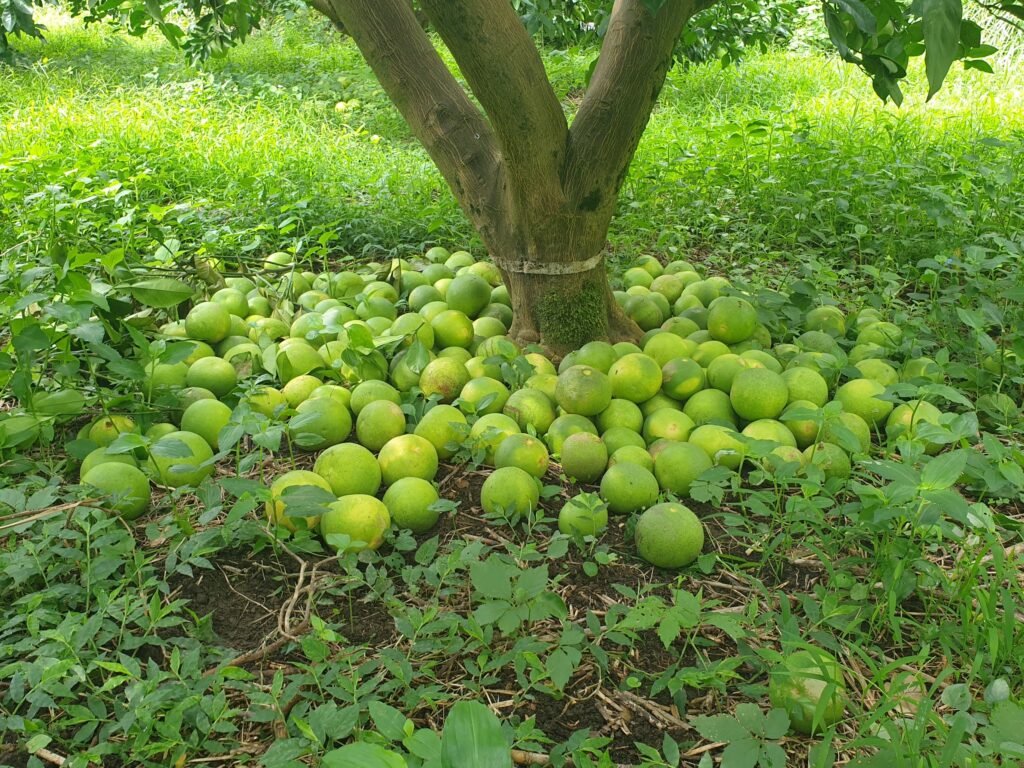
Tyōzaburō Tanaka formally described the species as Citrus Ōtachibana Hort. ex Y. Tanaka sp. nov. in his work An Iconograph of Japanese Citrus Fruits (1946), entry no. 69 (pp. 234–236), with a detailed botanical illustration, data tables, and morphological description. The botanical data were drawn from specimens grown in the fruit orchard of Taihoku Imperial University in Taiwan during 1930–1939. Tanaka describes Otachibana as a cultivar from Kagoshima Prefecture with soft, juicy, sweet-and-sour flesh and a substantially more pleasant taste without bitterness compared to Natsudaidai (Tanaka, 1946).
The story of Hōmoto Buntan — spread from Kagoshima to Kōchi
The most important historical chapter of this cultivar unfolded in 1929. In Shōwa 4 (1929), Watanabe Tsuneo, head of the horticultural division of the Agricultural Research Institute of Kōchi Prefecture, brought a seedling from Kagoshima, named it Hōmoto Buntan, planted it at the entrance of the research station, and the cultivar began to spread (Nōma Kajuen, 2024; Shiroki Kajuen, 2024). The name “法元” (read Hōmoto) refers to the Hōmoto family in Kagoshima, in whose garden the original tree was found — naming after the owner of the tree is a classic Japanese practice for recording local cultivars.
The original Tosa Buntan tree descends from these seedlings planted in Kōchi. More than a decade later, in 1941, Miyaji Fumiya brought seedlings from the research institute to the town of Tosa and began cultivation (Takeda Seika, 2024; Shiroki Kajuen, 2024). At that time the cultivar was still called Hōmoto Buntan. Tosa thus became home to the first commercial cultivation of this cultivar.
The name “Tosa Buntan” was introduced in 1961 by Tyōzaburō Tanaka himself in his work Citrologia (Nōma Kajuen, 2024). Tosa Buntan is the most widely cultivated pummelo in Japan, and DNA analyses have confirmed that it is identical to the same lineage as Ōtachibana (alternative names: Sour Pomelo, Pearl Kan) (Shimizu et al., 2016).
Research background and introduction into collections
Tanaka’s 1946 data originated from Taiwan. The UCR Citrus Variety Collection in Riverside, California received accession CRC 3470 in 1963 as a seed from Shizuoka Prefecture via W. P. Bitters (UCR, CRC 3470, 2026). Otachibana / Tosa Buntan is also preserved in Japanese citrus gene banks; Yamamoto et al. (2005) list it in the catalogue of Toso Orchard (Kagoshima University).
BOTANICAL DESCRIPTION
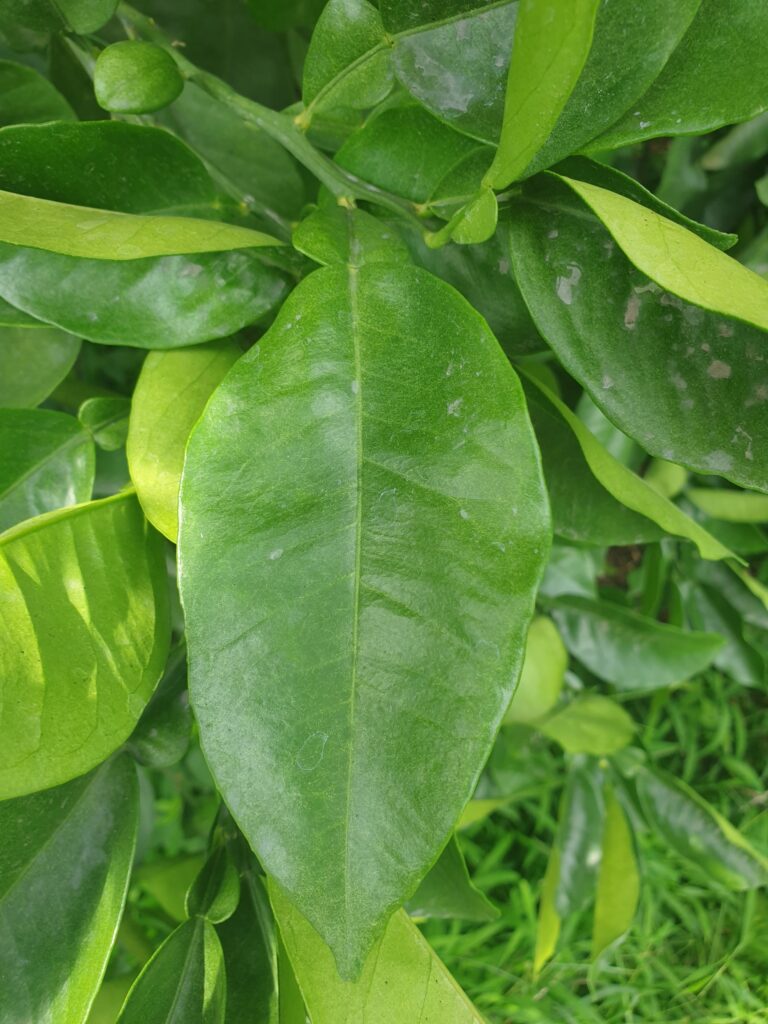
The tree is a small to medium-sized shrub or open tree, reaching 4–5 metres in height with erect branches forming an elliptical to rounded crown. The tree is vigorous, tolerant of cold, direct sun, and drought. Branches are long with weak branching; thorns are short. Leaves are medium-sized, ovate-lanceolate, approximately 9 cm long and 6 cm wide, with a prominently winged petiole; the petiole wing is cordate-cuneate (Tanaka, 1946).
Fruits are variable in shape, most often obconical (inverted cone) or ovate; the Shizuoka ecotype tends to be pyriform and the Kagoshima ecotype more globose. Fruit diameter is typically 10.5–11.5 cm and weight 470 g or more — up to 600 g for larger specimens. The rind is moderately thick; surface slightly rough, deep yellow at full maturity (Tanaka, 1946).
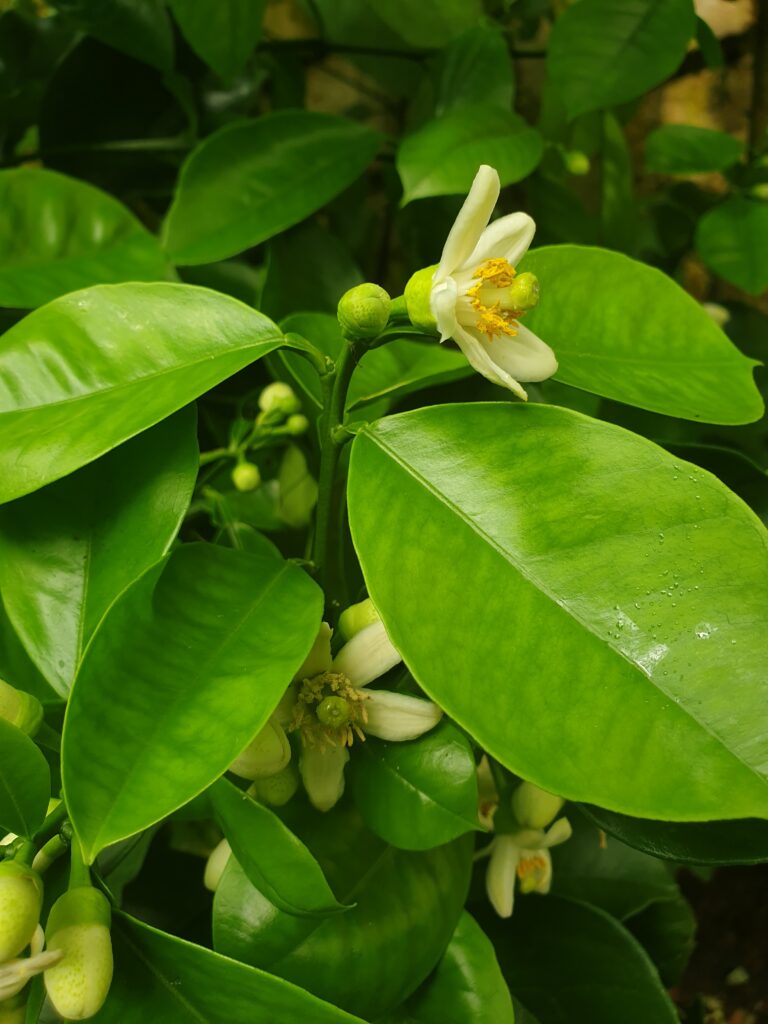
The flesh is dark yellow, juicy, with a pleasant sweet-and-sour taste and delicate fragrance; UCR describes it as “tolerably edible, but markedly more pleasant than Natsudaidai” (UCR, CRC 3470, 2026). Segment count is approximately 10. Sugar content ~12.1°Brix, acidity ~0.96%, juice content ~12.6% (Tanaka, 1946). Tosa Buntan has numerous seeds — the tree produces abundant pollen; growers carry out hand-pollination during flowering in May to ensure well-shaped, large fruits with good seed set. Yamamoto, Kubo & Tominaga (2006) classify Tosa Buntan (listed in the table as C. ootachibana) as self-incompatible—pollen development is completely blocked. Without cross-pollination by a compatible variety (another pomelo with different S-alleles), fruit set is insufficient; furthermore, the presence of seeds directly affects fruit size and shape. In the absence of at least one normal seed, many small, undeveloped seeds develop, which make the fruit unpleasant to eat (Yamamoto, 2014).
Note on embryony: Tanaka describes the seeds as monoembryonic (Tanaka, 1946), while UCR CRC 3470 (the Shizuoka accession) classifies the cultivar as polyembryonic (UCR, CRC 3470, 2026). This discrepancy may reflect a difference between the two ecotypes, but given that the accession was grown from seed, the Californian plant may also be of hybrid origin. Morphologically, the fruits in California are noticeably more pyriform than is typical for the Shizuoka accession.
Ripening: In Kagoshima and Kumamoto, harvest takes place in December–February, after which a mandatory post-harvest ripening period (追熟, tsuijuku) of approximately one month follows — only after this process does acidity decrease and the fruit become ready for sale (JA Group, 2024; Sweetsvillage, 2025). Greenhouse-grown variants are available from November (Shiroki Kajuen, 2024).
TASTE AND USE
Tanaka praises Otachibana as a cultivar of exceptional table quality, with a pleasant sweet-and-sour taste free of bitterness and a refreshing fragrance typical of pummelos. Compared with Natsudaidai he describes the fruit as substantially more pleasant (Tanaka, 1946). The fruit is soft, with a refreshing aroma, a gentle, fresh flavour, and pleasant acidity. Marketing of Pearl Kan in Kumamoto emphasises the fresh aroma, low bitterness, and pronounced sweet-and-sour taste.
Tosa Buntan is characterised by a strong orange fragrance when the rind is peeled, a balanced flavour combining sweetness, acidity, and mild bitterness. The fruit is consumed fresh; segments are used in salads or served as a dessert. The albedo (white pith beneath the rind) is less bitter than in other pummelos and can be eaten raw, candied, or made into jam; the fragrant rind is suitable as a bath additive or for making a citrus peel scrub.
CONSERVATION AND CURRENT STATUS
In Kagoshima — Sour Pomelo
In Kagoshima Prefecture, 大橘 (Ōtachibana) is traditionally cultivated under the name “Sour Pomelo” (サワーポメロ, Sawā-pomero), chosen through a public competition. Cultivation is concentrated in the areas of Ichikikushikino, Satsuma-Sendai, and Izumi on the north-western coast of the prefecture (JA Group, 2024). Exact production figures in tonnes are not reported separately in Japanese agricultural statistics (MAFF) — the volume is too small to exceed the threshold for individual publication.
In Kumamoto — Pearl Kan
In Kumamoto Prefecture, the same cultivar is grown as the premium commercial product “パール柑 (Pearl Kan)”. The name refers either to the pearlescent sheen of the flesh or to the Amakusa Pearl Line (天草パールライン), a scenic road running along the coast from the Uto Peninsula to the Amakusa archipelago where the orchards are concentrated. Production is carried out by a group of ten growers in Ōyanoda on Amakusa, who grow Pearl Kan with reduced agrochemical use (70% fewer pesticides and 70% less industrial fertiliser compared with conventional cultivation). Exact production figures are not publicly available; output is small compared with other pummelo cultivars, but Pearl Kan is a sought-after speciality among connoisseurs (Sweetsvillage, 2025).
In Kōchi — Tosa Buntan
Tosa Buntan is by far the most significant commercial expression of this cultivar. It is the most widely cultivated pummelo in Japan: the national harvest in 2021 reached 8,885 tonnes, of which Kōchi Prefecture accounted for 8,455 tonnes — approximately 95% of total production. The main production areas are Tosa City, Sukumo, and Kōnan (Kōchi Marugoto Net, 2025). The company Ōgushi Nōen (おおぐし農園) alone, in the Hata area, cultivates over 52 hectares and ships more than 400 tonnes of Tosa Buntan annually (Shiroki Kajuen, 2024).
In Kōchi, two main selections exist within the pummelo group: Tosa Buntan (yellow, thick rind, grown both outdoors and under glass) and Suishō Buntan (水晶文旦, Crystal Buntan) — more translucent, finer-textured, and grown exclusively under glass. As confirmed by Shimizu et al. (2016), Suishō Buntan is an offspring of Tosa Buntan / Ōtachibana (seed parent, sharing cytotype C04).
In institutional collections
The taxon is preserved in the UCR Citrus Variety Collection (CRC 3470), introduced in 1963 from Shizuoka (UCR, CRC 3470, 2026). In Japanese gene banks it is recorded in the Toso Orchard catalogue (Yamamoto et al., 2005).
TAXONOMIC NOTE
Position within classification systems
Tanaka described the taxon as an independent species, Citrus Ōtachibana Hort. ex Y. Tanaka sp. nov., within his broad classification system (Tanaka, 1946). Modern genomic studies revise this placement.
Genomic identity with Tosa Buntan
The study by Shimizu et al. (2016) included both Tosa Buntan (accession A191, registered in the NIFTS collection in Okitsu as C. maxima (L.) Merr.) and Ootachibana (accession A102, C. otachibana hort. ex Yu. Tanaka). An identity test performed on a set of 169 certified SSR/indel markers showed zero mismatches (MM=0, ND=0) between the two accessions — they are therefore genetically identical clones. Shimizu explicitly comments on this identity in the text, placing it alongside other documented synonymies.
Organellar cytotype: maternal pummelo lineage
Both accessions carry cytotype C04 (pummelo type), identified on the basis of 11 SSR markers of the chloroplast and mitochondrial genomes (Shimizu et al., 2016). Organellar DNA is maternally inherited; cytotype C04 is shared by pure pummelo cultivars such as Banpeiyu, Hirado Buntan, Egami Buntan, and Mato Buntan. The maternal lineage of C. otachibana / Tosa Buntan is therefore pummelo (C. maxima).
Phylogeny: pummelo cluster
In principal coordinate analyses (PCoA) of the nuclear genome and in the phylogenetic tree constructed from 101 representative indigenous cultivars, Tosa Buntan falls into Cluster II (Pummelo) together with Hirado Buntan, Egami Buntan, Mato Buntan, and other pummelo-related cultivars (Shimizu et al., 2016). Tosa Buntan / Ōtachibana is among the gametophytically self-incompatible cultivars—this type of incompatibility is universal in pomelo (C. maxima) and is considered a phylogenetically primitive characteristic of the group (Yamamoto et al., 2006; Yamamoto, 2014).
Parentage: seed parent of Suishō Buntan
Tosa Buntan (A191) was identified as the seed parent of the cultivar Suishō Buntan (A145), with zero mismatches in the parentage analysis (Shimizu et al., 2016).
Taxonomic conclusion
On the basis of the body of evidence from Shimizu et al. (2016) — identical nuclear genotype, matching organellar cytotype of the maternal pummelo lineage, and phylogenetic placement in the pummelo cluster — it can be concluded that Tosa Buntan (C. maxima) and Ōtachibana (C. otachibana) are synonyms denoting the same clone. C. otachibana Hort. ex Yu. Tanaka is a pummelo-group taxon; Tanaka’s classification as a separate species reflects his broad approach to citrus taxonomy, but molecular data place it within C. maxima. The regional names Pearl Kan (Kumamoto), Sour Pomelo (Kagoshima), and Tosa Buntan (Kōchi) refer to the same clone cultivated in three different regions of Japan — the genetic identity of Tosa Buntan and Ōtachibana is genomically verified (Shimizu et al., 2016), while the identity of Pearl Kan and Sour Pomelo with this pair is documented botanically and historically and awaits direct genomic confirmation.