Japanese name: 島蜜柑 (Shimamikan)
SYNONYMS
– Kuroshima-mikan (黒島蜜柑) — name after Kuroshima Island
– Shima-mikan (島みかん) — generic term for “island mandarin”
– Shivamikan (European name) — see separate section below
NOTE ON TAXONOMY
Shimamikan does not have a formally published scientific description and is currently designated as Citrus sp. (species undetermined). Historically, Shimamikan was often included in the broader group of Kōji (Citrus leiocarpa) based on morphological similarity. Molecular analyses conducted by Professor Yamamoto and colleagues have demonstrated that it is a genetically distinct taxon (Yamamoto et al., 2021; 2022).
HISTORY AND ORIGIN
Shimamikan is a local citrus cultivated on the Amami Islands in Kagoshima Prefecture in the subtropical zone. Its distribution includes: Nagashima, Koshikijima, Kuroshima, Tanegashima, Yakushima, Amami Ōshima, Kakeromajima, and Tokunoshima (Yamamoto et al., 2021). The name Shimamikan (島蜜柑) literally means “island mandarin.”
Molecular characterization: All six accessions of Shimamikan collected from different islands showed identical combinations of 16 CAPS marker genotypes. Shimamikan was genetically closest to the Chinese mandarin Sunki (Citrus sunki). cpDNA analyses revealed that Shimamikan forms its own cpDNA Type III, distinct from other mandarin groups (Yamamoto et al., 2021; 2022).
Key diagnostic character: Shimamikan is polyembryonic, while the morphologically most similar Kishu-mikan is monoembryonic (Yamamoto et al., 2021).
BOTANICAL DESCRIPTION of the
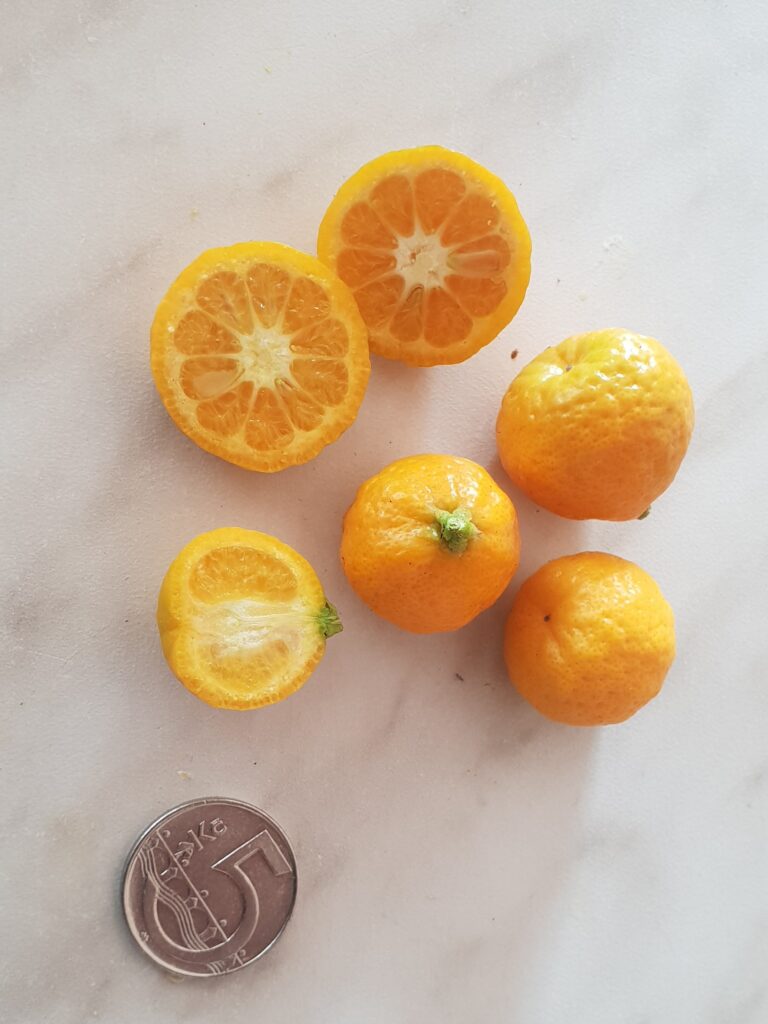
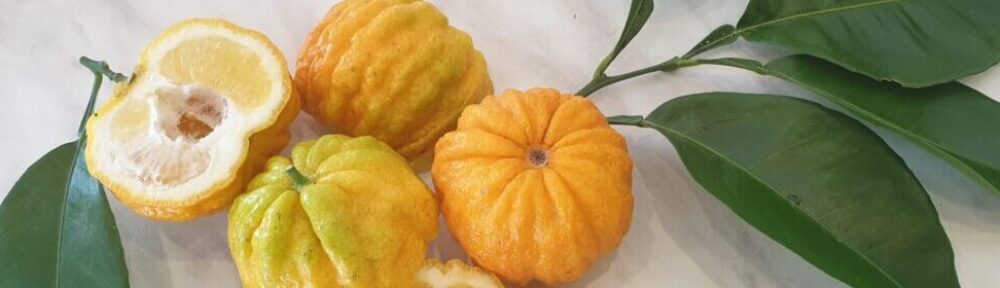
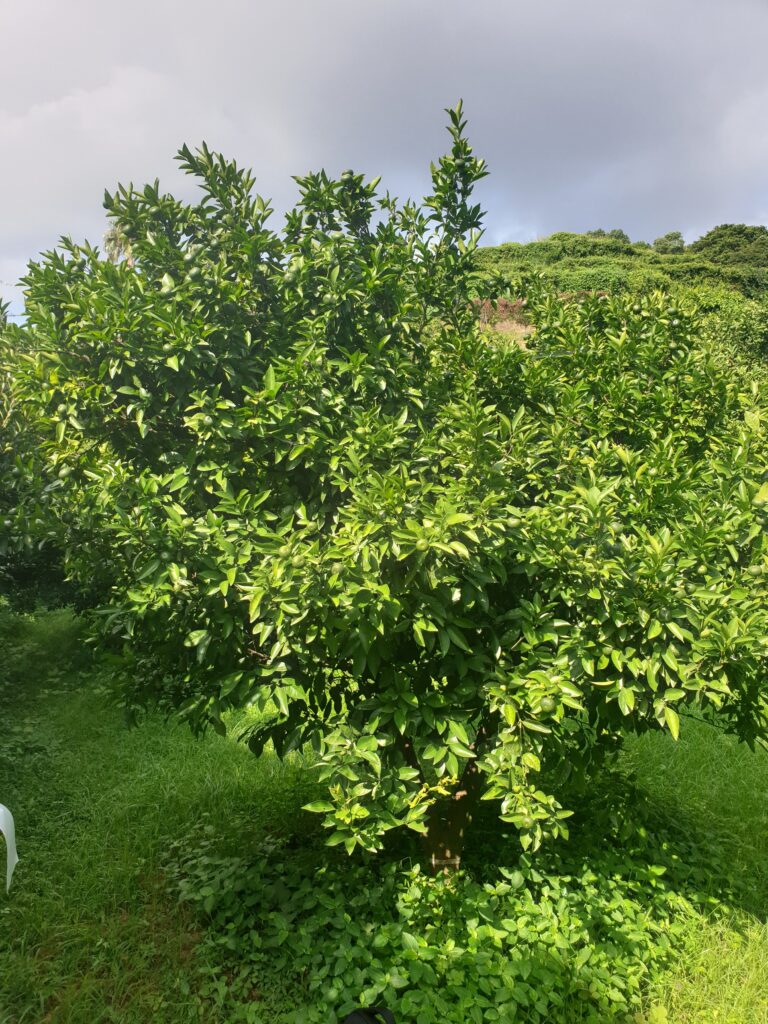
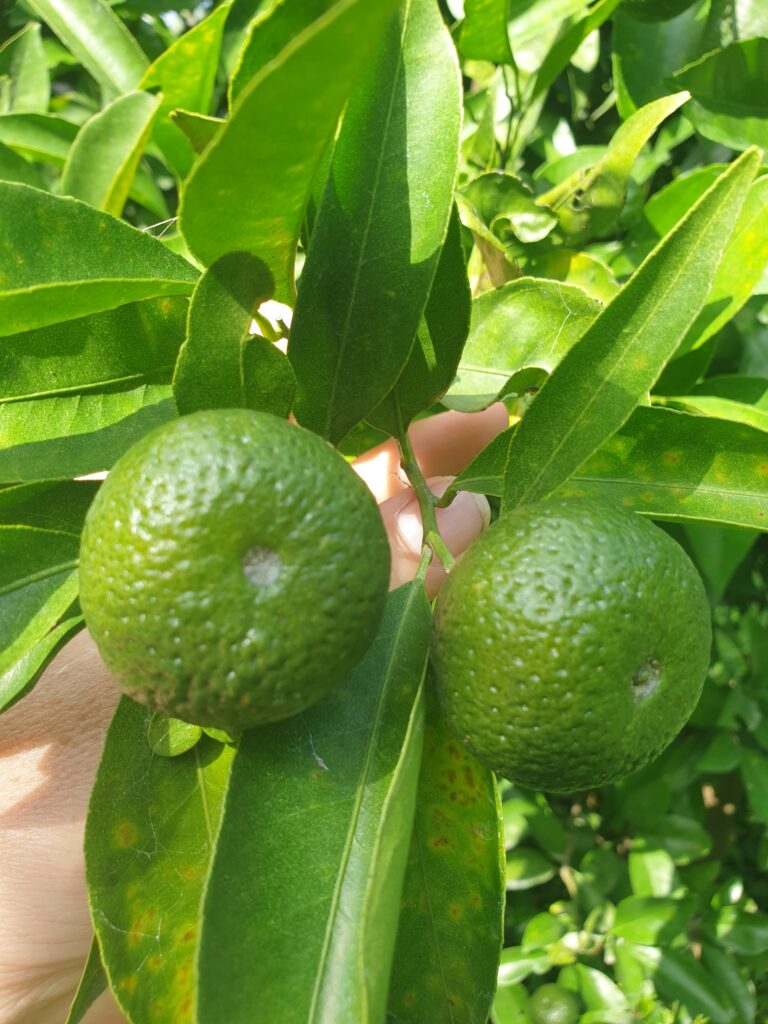
The Shimamikan tree has a smaller stature than continental Kōji. In the Toso Orchard collection, specimens reach approximately 3–4 meters in height with a compact canopy. Leaves are broad, elliptic, dark green. Fruits are small, globose to slightly flattened in shape. According to Yamamoto’s study (2022) fruits reach a weight of 31-39 g and a diameter of approximately 30 mm. The D/H index (diameter/height ratio × 100) corresponds to a slightly flattened shape. The peel surface is smooth with fine texture, orange in color. Peeling is easy, the peel lacks pronounced granulation. The flesh is orange, soft, juicy. The number of segments per fruit is 7-10 (Yamamoto, 2022). The average number of seeds per fruit is 8-12, seeds are polyembryonic, pale green to green in cross-section.
TASTE AND USE
According to quantitative measurements (Yamamoto et al., 2022) Shimamikan has a Brix of 11.7 and titratable acidity of 1.20%. The Brix/acidity ratio is approximately 9.75, corresponding to a sweet-tart flavor — slightly above the California minimum standard of 8:1 for fresh citrus. For comparison: Shiikwaasa has a ratio of 3.92 and morphologically similar Sunki has a ratio of 5.65 — both are objectively much more acidic than Shimamikan. Shimamikan’s flavor is refreshing, with balanced sweetness and acidity, without the bitterness that is common in Kōji.
According to Yamamoto’s study (2022) fruits ripen in mid-December.
Traditional use:
Consumption of fresh fruits as a refreshing snack
Local specialty on the Kagoshima islands.
CONSERVATION AND CURRENT STATUS
Shimamikan is currently preserved in the citrus collection of Toso Orchard at the Experimental Farm of Kagoshima University. Samples collected during surveys of the Amami Islands have been transferred to this collection, where they are maintained for research and conservation purposes. Shimamikan is documented on several islands of the Amami archipelago, specifically on Amami Ōshima, Kakeromajima, and Tokunoshima (Yamamoto, 2006; 2022). It is not a major commercial crop of the region. While agriculture in Amami is dominated by crops such as sugarcane, Shimamikan is grown in local gardens and small farms as a traditional citrus.
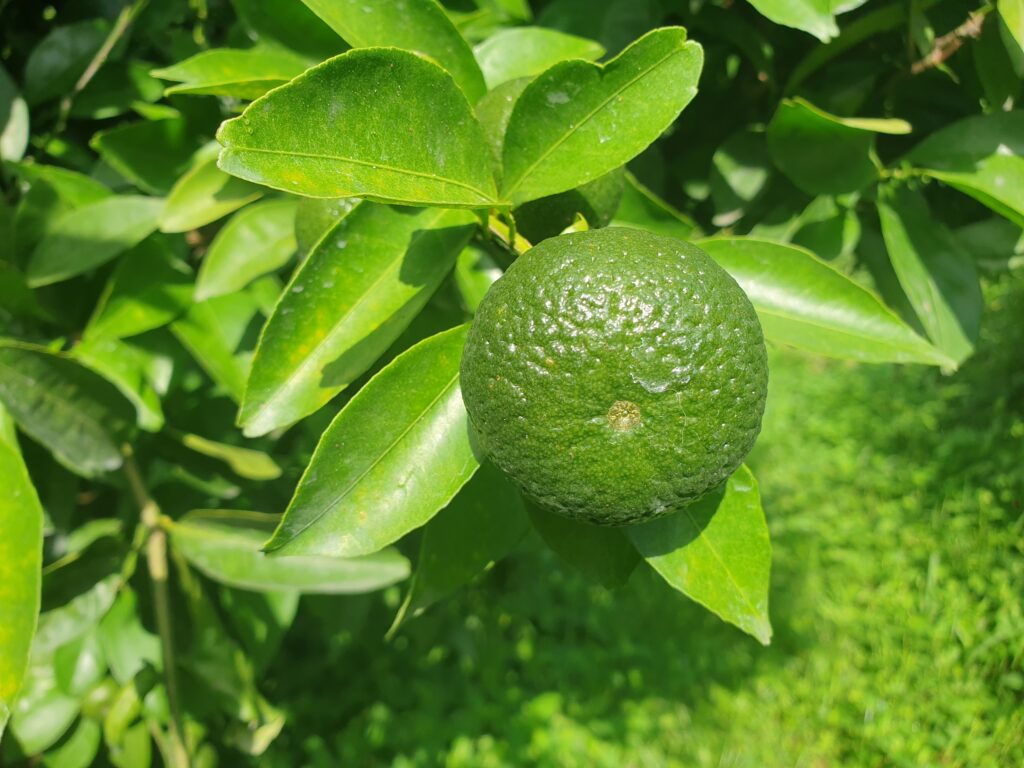
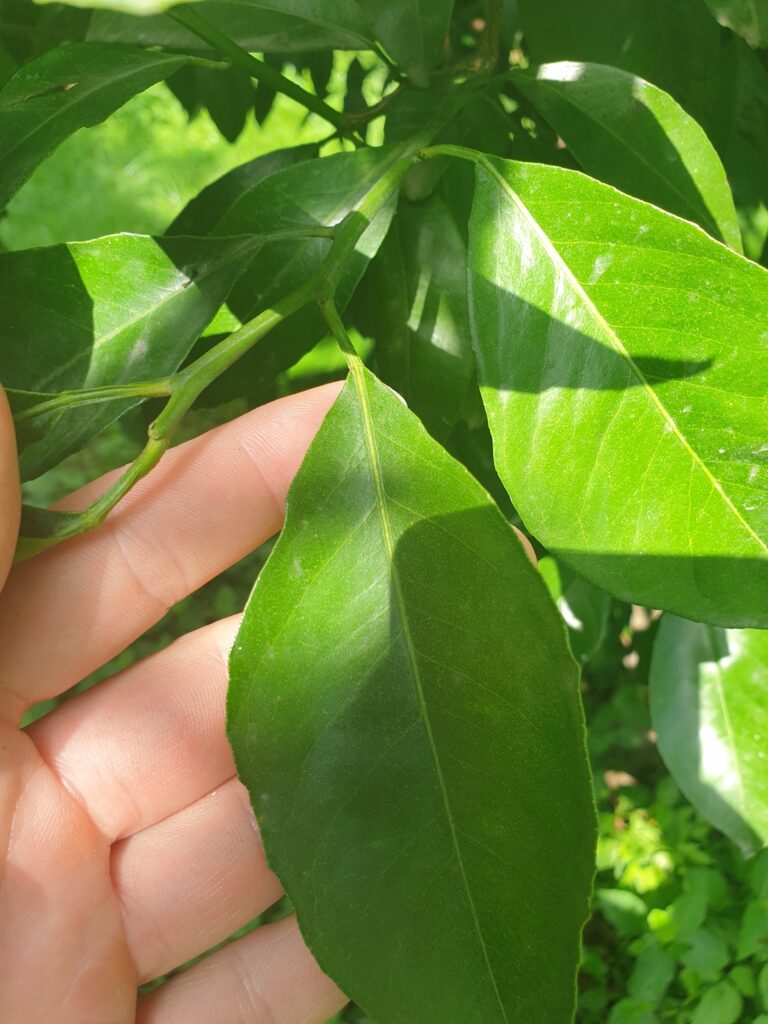
EUROPEAN SHIVAMIKAN
In Europe, a cultivar called Shivamikan is grown that is probably related to Japanese Shimamikan.
Origin of the name and route to Europe:
The earliest documented mention dates from 1927 from Georgia (Caucasus), where Marcovitch writes: in Sukhumi, white shiva-mikan ripens in early October, recorded in Georgian შივა-მიკან (shiva-mik’an) and Russian Шиба Микан (Shiba Mikan) (Marcovitch, 1927).
Etymology: Phonetic shift from Japanese Shima-mikan (島蜜柑, island mandarin) through Russian Cyrillic to the form Šiva/Shiva is more plausible than alternative explanations.
Soviet breeding work: In Sukhumi (Georgia, USSR), the cultivar was grown from the 1920s and was used for hybridization to obtain cold-hardy citrus. Boris Tkachenko (1951) ranks Shiva-Mikan 4th in the cold hardiness ranking of citrus — its cold hardiness is twice as good as Natsudaidai or yuzu. Some contemporary sources, such as (Pépinière Du Bosc, 2024), report a hardiness rating of up to -12°C.
Route to Czechoslovakia: Shivamikan reached Czechoslovakia in the 1970s through exchanges with Soviet stations in Georgia. It was selected for its extreme earliness (ripens in October) and cold hardiness.
Spread to Western Europe: The French citrus forum Agrumes-Passion (2013) states that Shivamikan came to France from the Czech Republic via Riera nursery. The Czech Republic was a distribution node for spreading this cultivar to Europe.
Morphological and taste the comparison:
European Shivamikan shares with Japanese Shimamikan: small fruit diameter ~30 mm, finely textured peel, compact tree habit. The difference is in fewer seeds (~3–5 vs. ~10), which may be the result of selection in Sukhumi. European Shivamikan has a sweet-tart, palatable flavor — which corresponds to the measured data of Shimamikan (Brix/acidity ratio 9.75).
Hypothesis: The original Japanese material brought to Sukhumi was probably Shimamikan (island taxon of the Kagoshima/Amami group), not continental Citrus leiocarpa ‘Kōji’ as commonly stated. Soviet agronomists probably conducted selection of this material for cold hardiness and fewer seeds. The sweet-tart flavor of European Shivamikan corresponds to the measured data of Japanese Shimamikan. This hypothesis could be verified by DNA analysis of European Shivamikan compared to samples from the Toso Orchard collection