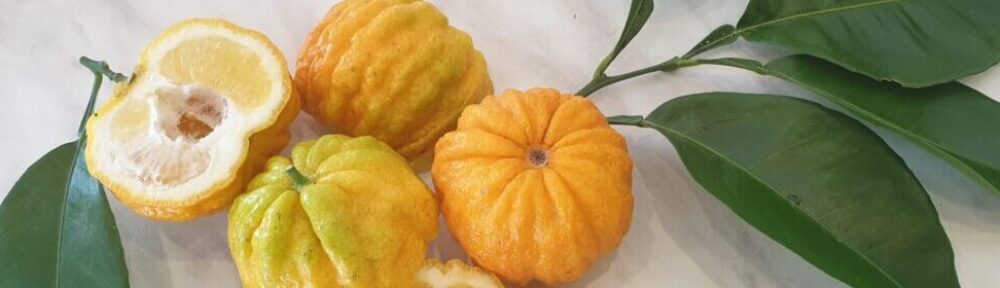
Japanese name: 辺塚だいだい (Hetsuka Daidai); local name: 辺塚デデス (Hetsuka Dedesu)
English name: Hetsuka Daidai (no established English translation)
SYNONYMS
Citrus sp. hetsukadaidai Hort. — provisional scientific designation; no formal botanical description has yet been published
辺塚デデス (Hetsuka Dedesu) — local vernacular name used in the Uchinoura district of the city of Kimotsuki
HISTORY AND ORIGIN
Origin and geographical delimitation
Hetsuka Daidai is an endemic citrus cultivar originating from the southern part of the Ōsumi Peninsula in Kagoshima Prefecture. It occurs naturally and was traditionally cultivated in the village of Hetsuka — a border area on the boundary of present-day Kimotsuki city (Uchinoura district) and Minamiosumi town (Sata district). The name of the cultivar is derived directly from this locality.
The village of Hetsuka is surrounded by mountains and sea; before the construction of road infrastructure it was virtually cut off from the outside world. This geographical isolation meant that the value of Hetsuka Daidai as a food and condiment remained unknown beyond the immediate vicinity for centuries (Japan GI, 2017; Kankou Kimotsuki, 2024). (Japan GI, 2017; Kankou Kimotsuki, 2024).
Traditional use and organisation of production
Fruits were traditionally harvested in September and October as a substitute for culinary vinegar and as a garnish (tsuma) when serving fish dishes and sashimi. Use of the fruit was confined to the local kitchen, and knowledge of the cultivar circulated exclusively within the village.
From 1992, regional institutions — growers’ associations and prefectural administrative bodies — initiated the systematic selection of superior clones, expansion of plantings and standardisation of cultivation practices. In 1997 an official Hetsuka Daidai growers’ section (bukai) was established within JA Kagoshima Kimotsuki (かごしまきもつき). Co-ordinated quality management and production oversight has continued since that time (Japan GI, 2017).
Geographical indication
Hetsuka Daidai was registered in December 2017 as a protected geographical indication (GI no. 57) under the Japanese system of geographical indication protection administered by the Ministry of Agriculture, Forestry and Fisheries of Japan (MAFF). Production is strictly limited to the two municipalities of Kimotsuki and Minamiosumi; direct export of nursery stock from the area is prohibited, thereby preserving the local character of the cultivar (Japan GI, 2017).
GENETIC CHARACTERISATION
Yamamoto et al. (2024) conducted a genetic analysis of four Hetsuka Daidai specimens using the CAPS method (cleaved amplified polymorphic sequence analysis) of both nuclear and chloroplast DNA. The results showed that Hetsuka Daidai carries cytoplasm derived from pummelo (C. maxima), and is nuclearly most closely related to the cultivars kabosu (C. sphaerocarpa), beni-amanatsu (C. natsudaidai) and kimikan (C. flaviculpus). No differences in nuclear or chloroplast CAPS genotype were found among the four tested Hetsuka Daidai specimens, indicating a high degree of genetic uniformity within the cultivar (Yamamoto et al., 2024).
A hybrid origin is probable on the basis of the combination of a pummelo chloroplast lineage and nuclear genotypes typical of the bitter orange group. Although Hetsuka Daidai carries the word „daidai“ in its name, the genetic analysis confirms that it represents a different taxon from the standard bigarade daidai (C. aurantium var. daidai). More detailed genomic studies to determine the precise parental pairing have not yet been published (Yamamoto et al., 2024).
BOTANICAL DESCRIPTION
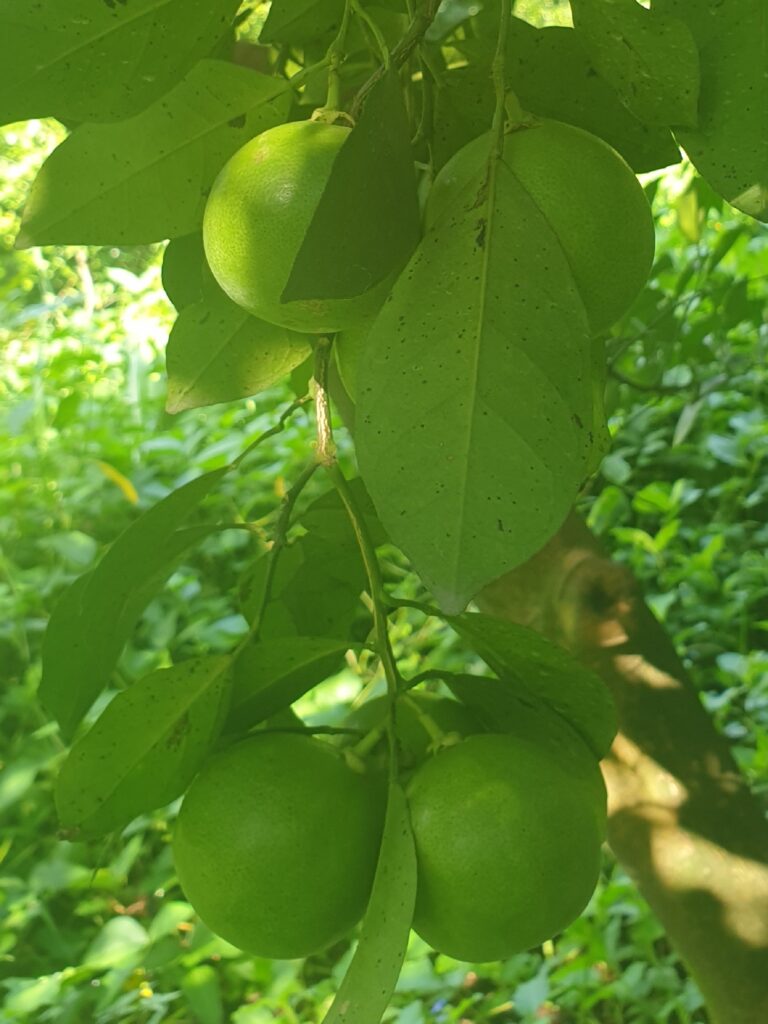
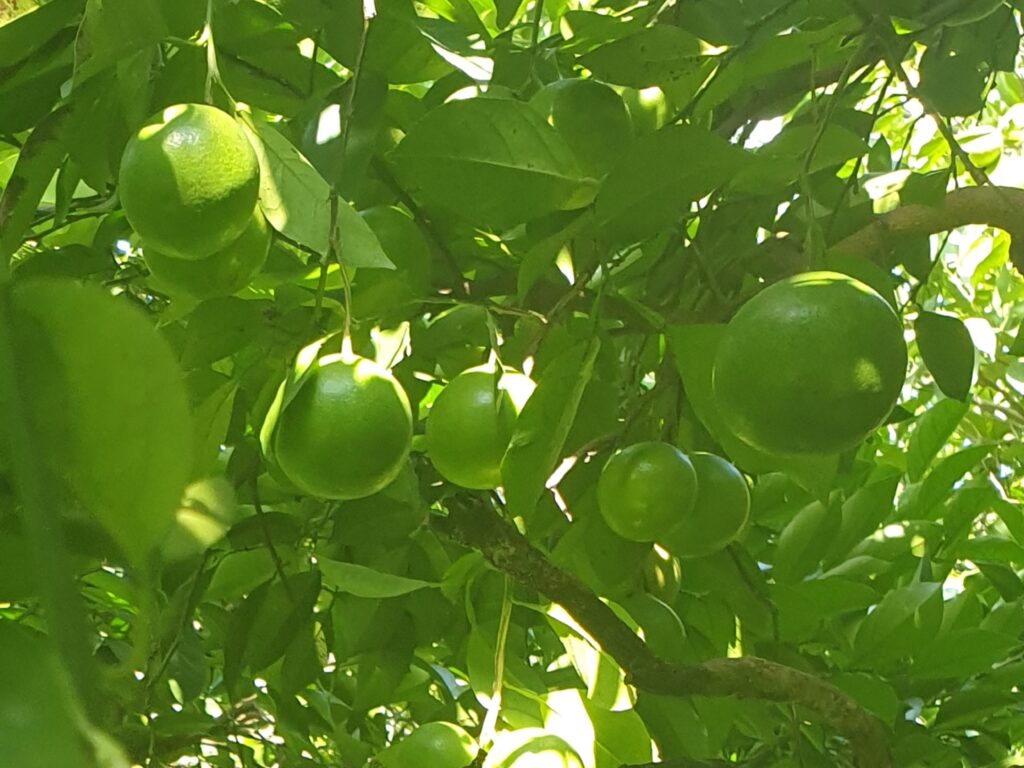
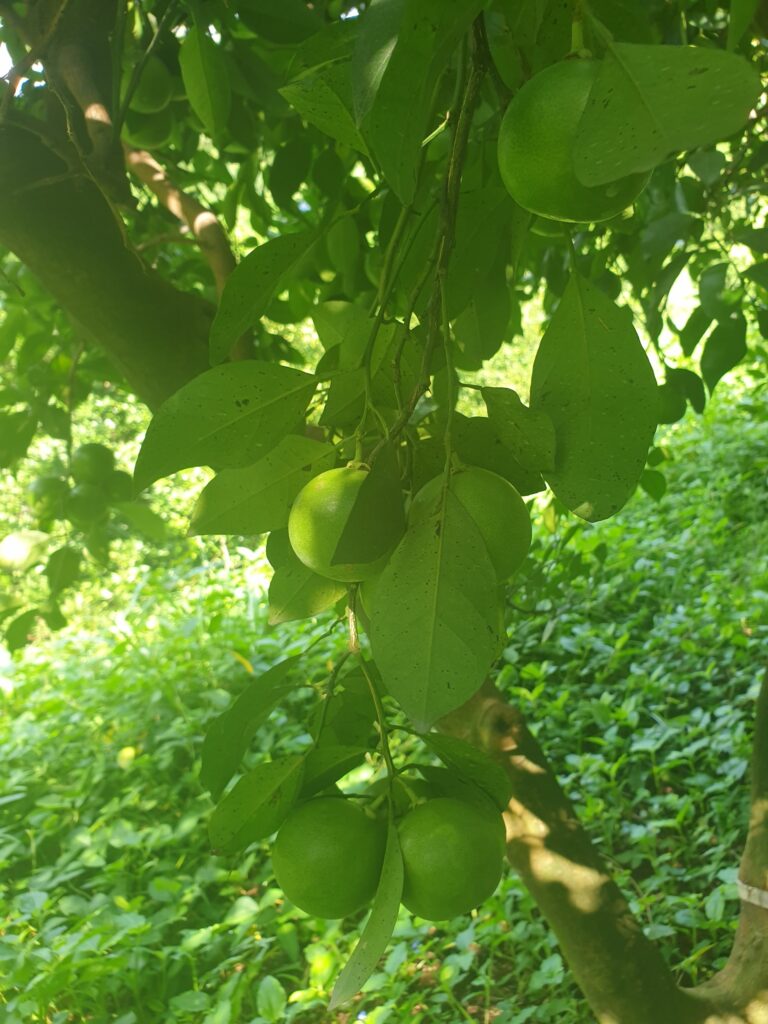
Fruits are small to medium, diameter 5–8 cm; weight at full maturity (October) approximately 100 g. The rind is thin and smooth, bright green at the time of the main harvest (September–October), gradually turning yellow-green; fruits are richly juicy, with a juice content of approximately 50 % (Yamamoto et al., 2024; Japan GI, 2017).
The flesh is acid and mildly bitter. Titratable acidity reaches approximately 4 % during the main harvest season (late September–October); organic acids consist of approximately 97 % citric acid. Ascorbic acid content is 19.2–28.0 mg·100 mL⁻¹ (Yamamoto et al., 2024).
The dominant aromatic constituent of the peel oil is limonene (81.2 %), complemented by γ-terpinene (9.8 %), β-myrcene (2.6 %), α-pinene (1.4 %), p-cymene (1.2 %) and sabinene (1.1 %). No single aromatic compound unique to Hetsuka Daidai has been identified; the characteristic fragrance of the cultivar — described as lime-like with fruity complexity — arises from a different ratio of constituents compared with other acid citrus fruits (Hamada et al., 2020; Yamamoto et al., 2024).
Fruits ripen gradually. During the main harvest period (August–October) they retain a green rind and pronounced acidity; in the winter months (January) acidity decreases, the rind yellows and the flesh becomes sweeter and aromatically more delicate (Yamamoto et al., 2024; Kankou Kimotsuki, 2024).
FLAVOUR AND USE
Traditional culinary use
The traditional mode of use centres on the fresh juice. The juice is applied directly to fish dishes and sashimi (as a decorative and flavouring garnish tsuma), added to soy sauce, dressings, ponzu and marinades. A popular local custom is to add a few drops to shōchū or beer (Kankou Kimotsuki, 2024; JA Kagoshima Kimotsuki, 2025).
Modern processed products
With growing awareness of the cultivar, processed use has developed across various sectors of the food industry and gastronomy:
Distilled beverages: JIN7 gin from Oyama Jinshichi Shoten (大山甚七商店, Ibusuki) is produced with Hetsuka Daidai as one of the key botanicals; the cultivar is cited as a principal aromatic ingredient (Ginza Berlin, 2025).
Industrial beverages: In 2020 Kirin Beer released a limited series „KIRIN Hyōketsu® STRONG Kagoshima-san Hetsuka Daidai“ (KIRIN 氷結
®STRONG鹿児島産辺塚だいだい), bringing the name of the cultivar to a national audience for the first time. In 2024 the cultivar was again featured in the series „Kirin Honshibori Premium — 5-variety citrus blend with Hetsuka Daidai“ (Kirin, 2024).
Aquaculture use: Fish farmers in Ariake Bay add pressed waste from Hetsuka Daidai to feed for yellowtail (Seriola quinqueradiata). The supplement demonstrably improves flesh quality — eliminating fishy odour, increasing freshness and improving tissue blood circulation (Taniyama Suisan, 2024).
Craft beer and other products: Honey Forest Brewing (Minamiosumi) produces an ale with Hetsuka Daidai. JA Kagoshima Kimotsuki markets fresh juice, juice drink, ponzu, dressings and syrups under its own brand (JA Kagoshima Kimotsuki, 2025).
CONSERVATION AND CURRENT STATUS
Hetsuka Daidai is grown by approximately 45 producers; annual production reaches approximately 50 t. This represents an exceptionally low volume in the context of Japanese citrus production, and the cultivar is consequently classified as a rare agricultural product (Japan GI, 2017).
Planting of nursery stock outside the municipalities of Kimotsuki and Minamiosumi is strictly prohibited — this measure serves as the principal instrument for protecting the local character of production and the geographical indication. Reference specimens are maintained in the Toso Orchard collection at the Experimental Farm of the Faculty of Agriculture, Kagoshima University (Yamamoto et al., 2024).
Hetsuka Daidai is not cultivated outside Japan; the cultivar is not available in foreign collections or in the catalogues of specialist European nurseries (as of 2025).
TAXONOMIC NOTE
Although Hetsuka Daidai carries the expression daidai (橙
) in its Japanese name — a term conventionally applied to the bigarade (Citrus aurantium var. daidai) — it is a genetically distinct taxon. Confusion arising from the similarity of names is explicitly noted in Japanese sources as a common misidentification (Japan GI, 2017; JA Kagoshima Kimotsuki, 2025).
The local etymology of the term daidai in the context of Hetsuka Daidai differs from its standard botanical usage: according to tradition, the local designation derives from a dialectal expression for the property of fruits persisting on the tree and bearing reliably year after year („daidai“ = continuously, year upon year). This etymological coincidence with the general term daidai has contributed to the historical conflation of the two taxa.
From a taxonomic standpoint, no formal Latin botanical description has yet been published for Hetsuka Daidai; the provisional designation Citrus sp. hetsukadaidai Hort. is accepted by the scientific community for citation purposes. The CAPS analysis results (Yamamoto et al., 2024) place Hetsuka Daidai among cultivars with a chloroplast genome derived from pummelo and nuclear genotypes related to kabosu, beni-amanatsu and kimikan — not in immediate affinity with the standard daidai. Formal systematic placement remains the subject of ongoing research..