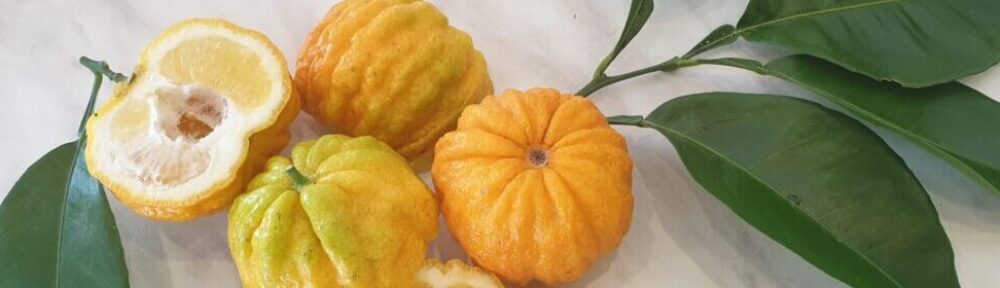
Okinawan citrus of the yukunibu group — Yūkunibu, Ōtō, Kābuchī, Tarogayo and Keraji
Wu et al. (2021) identified, on the basis of comparative genomic analysis of 69 citrus accessions from the Ryukyu Archipelago, a group of hybrid taxa sharing Citrus nobilis Lour. (Kunembo) as a common seed parent and various individuals of the wild-growing Citrus ryukyuensis Wu et al. as pollen parents. They named this group „Yukunibu“, after the Okinawan word for sour citrus. The group comprises the cultivars Yūkunibu, Ōtō, Kābuchī, Tarogayo and Keraji. Kunembo was introduced to the Ryukyu Archipelago from Indochina sometime between the 8th and 12th centuries; its hybridisation with the locally adapted wild C. ryukyuensis gave rise to an entire series of endemic forms. Apomixis (nucellar embryony) inherited from the maternal Kunembo enabled stable clonal reproduction and the rapid spread of the new hybrid taxa.
CHEMICAL COMPOSITION AND NUTRITIONAL VALUE
Yamamoto et al. (2019) demonstrated the presence of polymethoxylated flavones (PMF) — nobiletin, tangeretin, sinensetin and heptamethoxyflavone — in the peel of 32 citrus accessions from Kagoshima Prefecture cultivated in the Toso Orchard collection at the Experimental Farm of the Faculty of Agriculture, Kagoshima University. PMF are bioactive compounds with proven anticancer, antidiabetic and neuroprotective effects. Kābuchī (accession Kikai Mikan) showed a high total PMF content (approximately 1,434–2,225 μg/g fresh peel weight), comparable to Kishu mikan and Ponkan. Keraji reached lower values (580–769 μg/g peel). Ōtō (accessions Kurushima and Yunnu Oto) showed intermediate levels (570–891 μg/g). Kunembo itself contains minimal PMF (254–333 μg/g), which suggests that the higher PMF content in Kābuchī and Ōtō most likely originates from the C. ryukyuensis pollen-parent lineage.
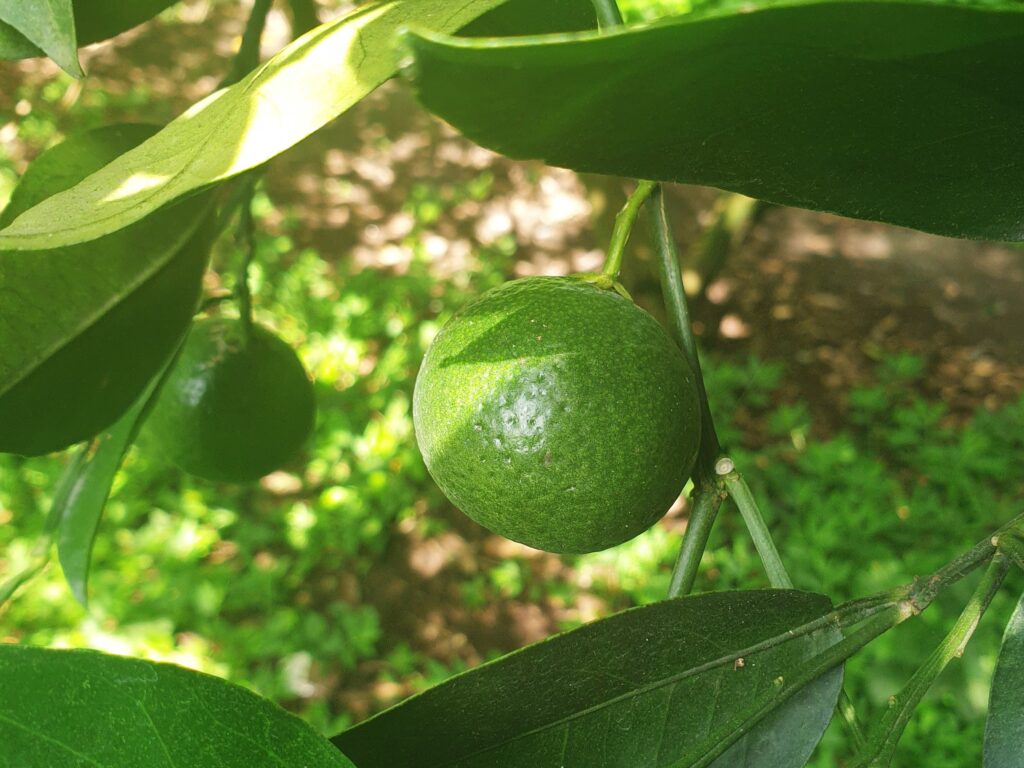
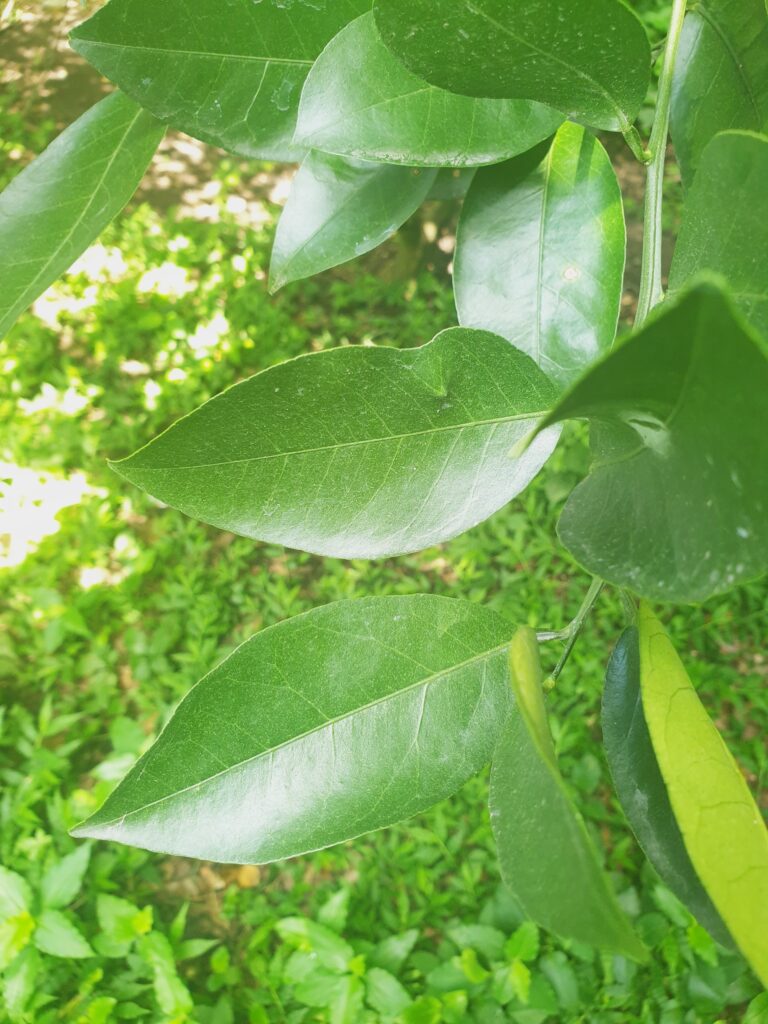
Citrus yanbaruensis hort. ex Tanaka ‘Yukunibu’
Japanese name: Yūkunibu (ユークニブ); literally „sour citrus“ in the Okinawan dialect
English name: Yukunibu
SYNONYMS
Citrus yanbaruensis Hort. ex Tanaka (1957) — valid name in the Tanaka system; new species described on the basis of material from Ōgimi-son, Okinawa
Yūkunibu (ユークニブ) Hort. — local Okinawan name (Ōgimi-son, Kunigami-son)
TAXONOMIC NOTE
Tanaka (1957) described Citrus yanbaruensis as a new species on the basis of material from Ōgimi-son in northern Okinawa, placing it in the group ARCHICITRUS-AURANTIUM-AURANTIOIDES-RACEMOSA, which also includes C. rokugatsu. Tanaka emphasises that C. yanbaruensis differs from C. rokugatsu in the absence of an apical areola, a larger open central column, seeds with more deeply coloured inner integument, and a normal (non-carnose) calyx — while fruit shape, size, rind character and pulp vesicles are very similar. Although Wu et al. (2021) do not include C. yanbaruensis as an explicitly named accession, the Okinawan accessions (R03 and R19) correspond morphologically and by local name to C. yanbaruensis. Wu et al. (2021) excluded sour orange (C. aurantium) as a parent; unlike C. rokugatsu, they derived the origin from Citrus nobilis Lour. (Kunembo) as the seed parent and Citrus ryukyuensis as the pollen parent.
HISTORY AND ORIGIN
Tyōzaburō Tanaka described Citrus yanbaruensis in his field survey of Ryukyuan citrus conducted from 17 December 1956 to 19 January 1957, the results of which were published in Revisio Aurantiacearum X (Tanaka, 1957). Material was collected by T. Maeda on 21 December 1956 in the village of Ōgimi-son in northern Okinawa, where the species was cultivated in homesteads. Tanaka (1957) noted that it is rarely planted and that many trees are being felled because the fruit is unsuitable for market sale owing to its high acidity. Occurrence is also documented in Kunigami-son (Yamamoto, 2019).
BOTANICAL DESCRIPTION
After Tanaka (1957): leaves ovate-oblong, obtuse at both ends, not thick; lamina approximately 12 × 5.5 cm, petiole approximately 1.5 cm, linear, without a developed wing. Fruits medium-sized, markedly depressed-globose, average weight approximately 120 g; surface generally wrinkled, smoother in smaller fruits but never entirely smooth; fruit always compact and heavy. Apex of fruit deeply concave, corrugated and radially grooved; base abruptly concave with a comparatively large calyx whose lobes are short and acutely pointed. Rind colour greenish-ochraceous, turning partly to light orange. The rind cross-section has a lasting, acidic, citral-like aroma, distinct from Citrus nobilis; rind thickness approximately 6 mm; oil cells very dense. Central column open, approximately 13 mm across, pithy. Segments approximately 10. Pulp soft, juicy, light yellow, very acid. Seeds fairly abundant, oblong, with deeply coloured inner integument.
TASTE AND USE
The rind has a pleasant fragrance reminiscent of a blend of grapefruit, yuzu and mandarin — delicate, sweet and refreshing, suitable for flavouring beverages and dishes. The pulp, with its many seeds, is unsuitable for direct consumption owing to its high acidity (Yamamoto, 2019).
CONSERVATION AND CURRENT STATUS
In Japan: The species is critically endangered. Tanaka (1957) already documented the felling of trees at the time of his survey. Remnant populations survive in homesteads in Ōgimi-son and Kunigami-son in northern Okinawa. Collection specimens are maintained at the Toso Orchard of the Experimental Farm, Faculty of Agriculture, Kagoshima University (Yamamoto et al. 2022).
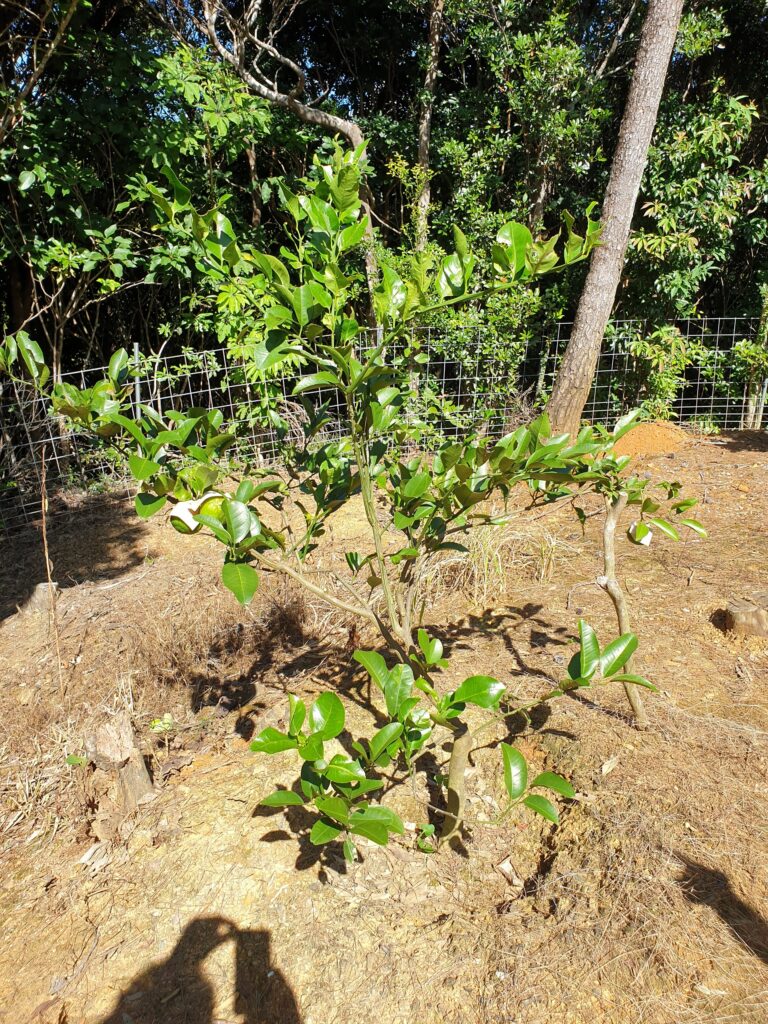
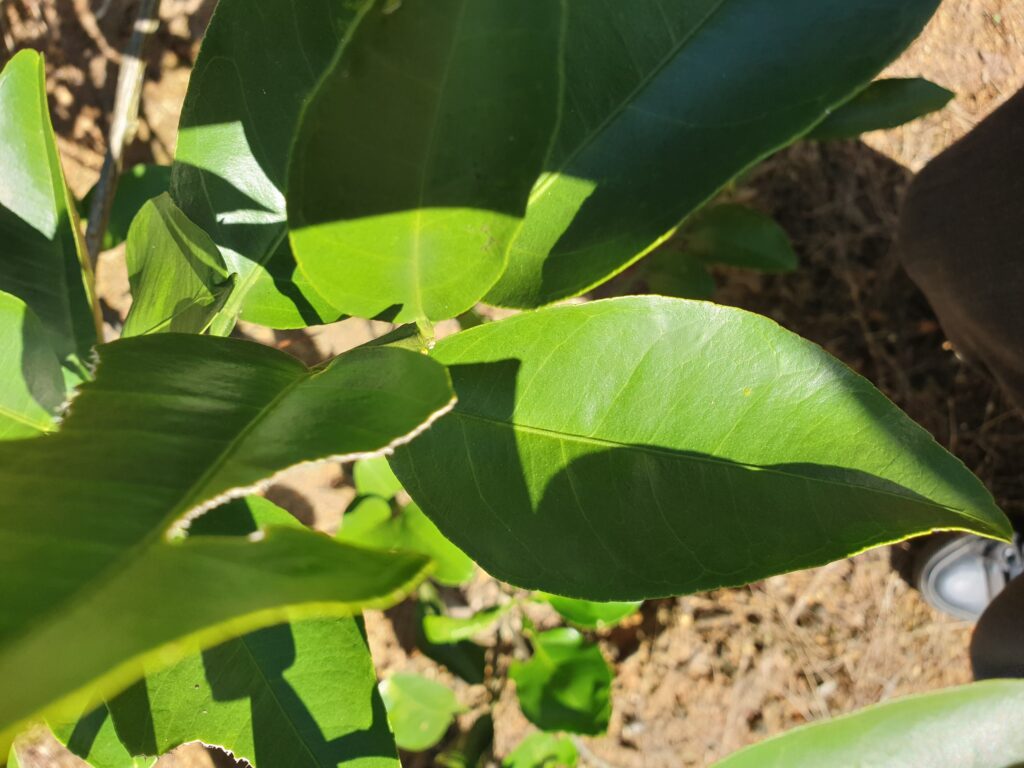
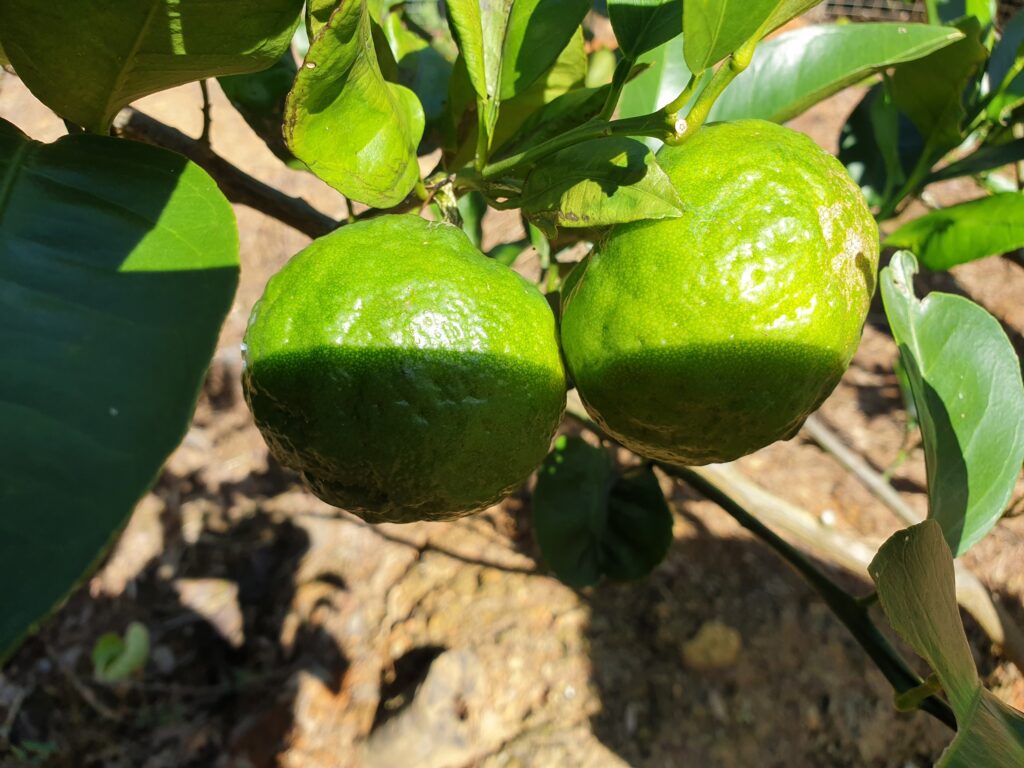
Citrus keraji var. kabuchii hort. ex Tanaka ‘Kabuchii’
Japanese name: Kābuchī (カーブチー); literally „thick rind“ (kā = rind, buchī = thick)
SYNONYMS
Citrus keraji Hort. ex Tanaka var. kabuchii Hort., status novus (Tanaka, 1957) — elevated from forma to botanical variety
Citrus keraji forma kabuchii Y. Tanaka, Icon. Jap. Cit. Fr. 2: 417, 1928 — originally described as a forma
Citrus sp. Sonohara, Useful Tr. 39, 1952 — unidentified designation
Kikaimikan (キカイミカン) Hort. — local form on Kikaijima Island; genetically identical to Kābuchī (Yamamoto et al. 2010, 2013)
TAXONOMIC NOTE
Tanaka (1957) elevated Kābuchī from the status of forma (Y. Tanaka, 1928) to a botanical variety Citrus keraji var. kabuchii. Diagnostic characters of Kābuchī relative to Keraji:
(1) leaves with a lamina decurrent on the petiole — the lowest veinlets curve into the midrib at a very sharp angle;
(2) fruits taller, often obconical;
(3) areola composed of several series of concave fovea, occasionally nearly obsolete;
(4) fewer segments;
(5) seeds more elongated toward the base with a longer tail.
Tanaka (1957) stressed that the difference between Kābuchī and Unzoki (= Keraji) is sufficiently great in Okinawa that they cannot be treated as a single taxon. Yamamoto et al. (2010) demonstrated that Kikaimikan has identical banding patterns in ISSR analysis to other forms of Kābuchī from Tokunoshima (Natsukunin) and Okinoerabu (Kabocha). Wu et al. (2021) placed the Kābuchī accession within the Yukunibu group.
HISTORY AND ORIGIN
Kābuchī has a long history of cultivation in Okinawa; historical records document that it was grown as a tribute to the royal court of the Ryukyu Kingdom (Orion Breweries, 2021). The original cultivation area covered the whole of Okinawa, but wartime damage in the Second World War and typhoons shifted the centre of production to the northern part of the main island. On Kikaijima, Kābuchī is cultivated under the name Kikaimikan as a garden plant.
BOTANICAL DESCRIPTION
After Tanaka (1957) and J-FEC (2024): fruits weigh approximately 60–70 g, diameter approximately 50–60 mm, height approximately 40–45 mm. Shape depressed-globose but markedly variable — from oblate to obconical. Apex of fruit markedly concave; areola composed of several series of concave fovea, may be indistinct. Rind 3–3.5 mm thick, loose, easily peeled, surface rougher than in Ōtō. Colour of ripe fruits light yellow-orange; in Okinawa they are eaten when the green colour has only just begun to fade. Albedo white. Segments 8–9; central column large, hollow. Pulp light yellow-orange, soft, juicy. Juice Brix 9–10°; acidity drops to approximately 1 % by late October; harvest from late October to early November. Seeds green, polyembryonic, 3–10 per fruit.
TASTE AND USE
Kābuchī is sweet at full maturity, with minimal acidity; the pulp is juicy. It is consumed primarily fresh, peeled. In Japanese cuisine the dried rind is used as one of the seven ingredients of shichimi tōgarashi (traditional seven-spice blend) (Lugar do Olhar Feliz, 2017).
CONSERVATION AND CURRENT STATUS
In Japan: Annual production in Okinawa reached approximately 51 tonnes in 2003, of which approximately 17 tonnes were sold on the local market (J-FEC, 2024; Okada, 2005). On Kikaijima, Kābuchī (Kikaimikan) is grown as a garden plant. Collection specimens are held at the Toso Orchard, Kagoshima University (Yamamoto et al. 2019, accessions no. 18–22) and at the Ogimi Experimental Station in Okinawa.

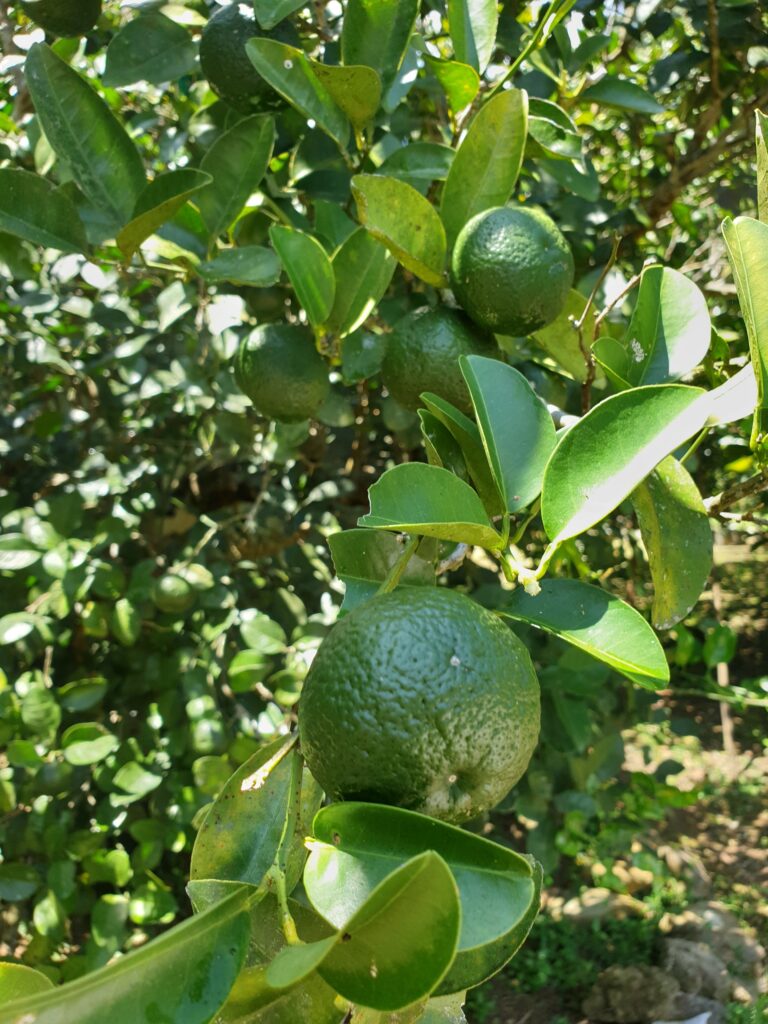
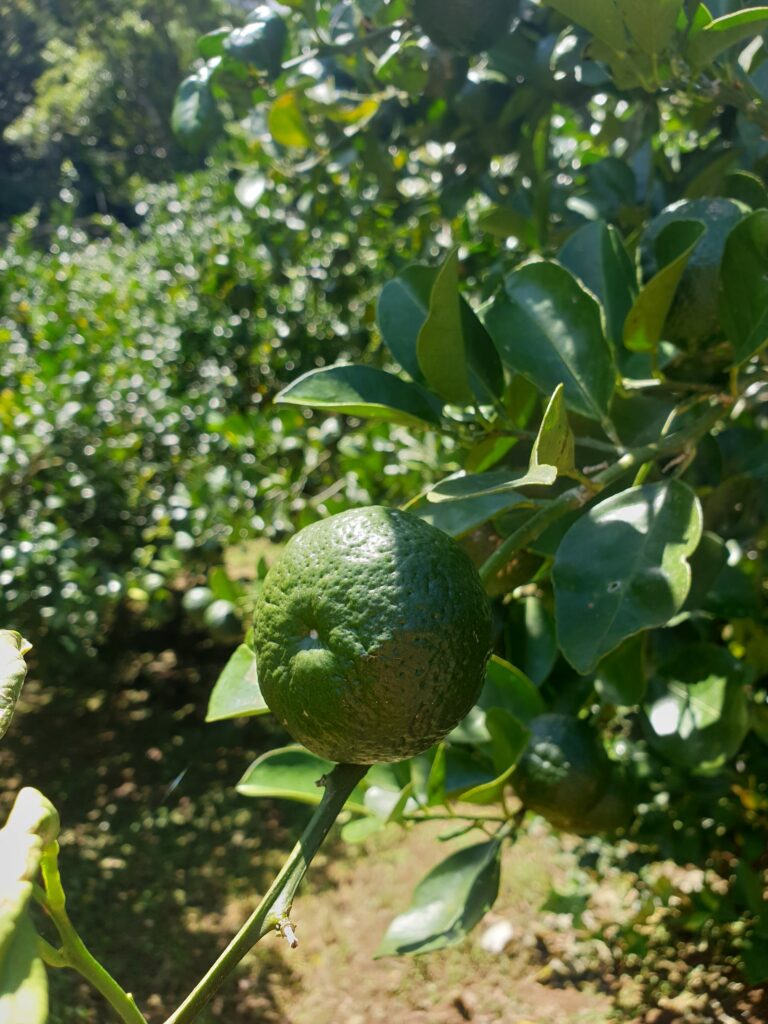
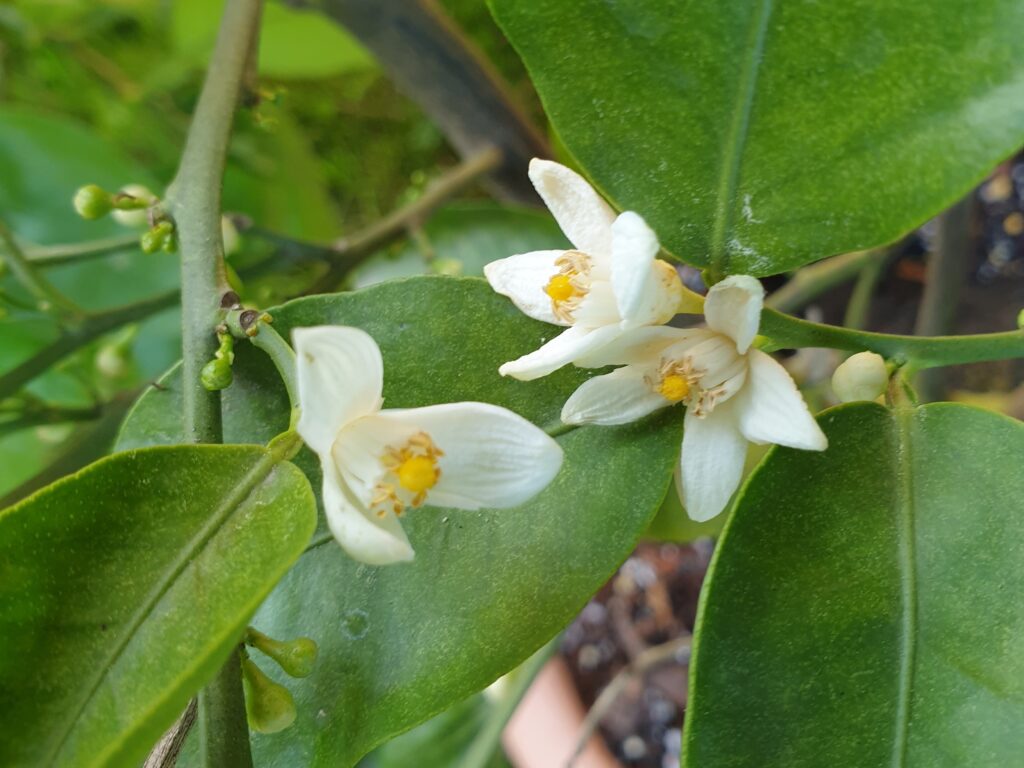
“Kabuchii“ in Citrus Experiment Station in Ogimi

Citrus oto hort. ex Yu. Tanaka ‘Oto’
Japanese name: Ōtō (オートー); historically „Ōto-kunembo“ (The Blue Nine-Year Mother)
SYNONYMS
Citrus oto Hort. ex Yuichiro Tanaka, Icon. Jap. Cit. Fr. 2: 420, 1948 — valid name in the Tanaka system
Citrus oto Hort. ex Tanaka, Spec. Probe in Cit. 130, 1954
Citrus sp. Sonohara et al., Fl. Okinaw. 83, 1952 — unidentified designation
TAXONOMIC NOTE
Tanaka (1957) studied Ōtō in 1952 from material at the Shizuoka Citrus Experiment Station, as the species ripens very early and no fruits were present on the trees during his December 1956–January 1957 field survey. Tanaka described in detail the differences between Ōtō and Kābuchī:
(1) tighter rind with dense, non-spongy albedo;
(2) smaller, closed central column with acute inner ends of segments;
(3) not rounded outer corners of segments in cross-section;
(4) semi-transparent, greenish pulp with more netted vesicle arrangement;
(5) smaller seeds.
Despite these differences, both taxa share a similar pulp flavour and a faint aroma resembling cardamom. Tanaka placed Ōtō in the group METACITRUS-MICROACRUMEN-ANISODORA. Wu et al. (2021) confirmed the Oto accession as an F1 hybrid Kunembo-mikan × C. ryukyuensis and placed it within the Yukunibu group.
HISTORY AND ORIGIN
Tradition holds that Ōtō first appeared approximately 300 years ago as „Ōto-kunembo“ (The Blue Nine-Year Mother), indicating that growers were aware of its kinship with Kunembo. In the early Shōwa period (approximately 1926–1945) annual production reached around 300 tonnes and Ōtō was the principal citrus grown in Okinawa Prefecture. From the 1970s–80s its production declined rapidly as growers switched to more commercially attractive cultivars — Tankan and early Satsuma. Tanaka (1957) recorded abundant cultivation on Okinawa, Ishigaki and Iriomote.
BOTANICAL DESCRIPTION
After Tanaka (1957) and J-FEC (2024): fruits weigh approximately 70–80 g, diameter approximately 55 mm. Shape depressed-globose, regular. Apex of fruit flat; areola composed of convex oil cells, slightly concave; calyx with apiculate lobes and deep sinuses. Rind yellow-orange, thin, approximately 2 mm, smooth, easily peeled. Oil cells very dense, sharply pitted (reminiscent of the surface of Kōji, C. leiocarpa). Segments 10–11; central column smaller, closed. Pulp light yellow-orange, soft, juicy, semi-transparent, greenish. Leaves somewhat thinner than in Kābuchī, with a distinctly winged petiole. Seeds green, polyembryonic, approximately 15 per fruit. Juice Brix approximately 7–9°; acidity drops to approximately 1 % by late November (Okinawa); harvest from late November to January.
TASTE AND USE
Fruits are sweet-acid, juicy, consumed mainly fresh. Tanaka (1957) described the flavour as pleasant, with a delicate aroma reminiscent of cardamom, characteristic also of Kābuchī. Yamamoto et al. (2019) recorded PMF content in accessions Kurushima and Yunnu Oto of approximately 569–891 μg/g peel.
CONSERVATION AND CURRENT STATUS
In Japan: Production fell to approximately 9–10 tonnes per year (2003; J-FEC, 2024). The species is still cultivated by a few farms in the northern part of Okinawa; sales occur mainly by direct retail or agritourism pick-your-own. Collection specimens are held at the Toso Orchard, Kagoshima University (Yamamoto et al. 2019, accessions no. 23 Kurushima and no. 24 Yunnu Oto) and at the Ogimi Experimental Station in Okinawa.



Citrus tarogayo hort. ex Tanaka ‘Tarogayo’
Japanese name: Tarogayo (タロガヨ); Okinawan dialect: „To whom do you belong?“ or „Who are you?“
SYNONYMS
Citrus tarogayo Hort. ex Yuichiro Tanaka, Icon. Jap. Cit. Fr. 2: 422, 1948 — valid name
Citrus tarogayo Hort. ex Tanaka, Spec. Probe in Cit. 130, 1954
Tarugayu — Okinawan dialectal spelling
Unju (ウンジュ) Hort. — alternative Okinawan name (Yamamoto et al. 2013)
TAXONOMIC NOTE
Tanaka (1957) confirmed Tarogayo as a cultivar distinct from both Ōtō and Kābuchī, explaining that the very name „Tarogayo“ (= „To whom do you belong?“) reflects historical uncertainty about its affinities. Tanaka placed all four Okinawan cultivars — Keraji, Kābuchī, Ōtō and Tarogayo — in the same group METACITRUS-MICROACRUMEN-ANISODORA. Wu et al. (2021) confirmed Tarogayo as an F1 hybrid Kunembo-mikan × C. ryukyuensis and placed it within the Yukunibu group.
HISTORY AND ORIGIN
Tarogayo is an endemic Okinawan cultivar of uncertain origin. Tanaka (1957) collected material on 10 January 1957 at the homestead of Zoei Yonamine (Ikebaru, Misato-son) and on 11 January 1957 at Oyakebaru, Tamagusuku-son (a potted plant owned by Shōryō Ishihara). Tanaka notes that far fewer trees are cultivated than of Ōtō, market sales are rare and most trees are grown for household consumption.
BOTANICAL DESCRIPTION
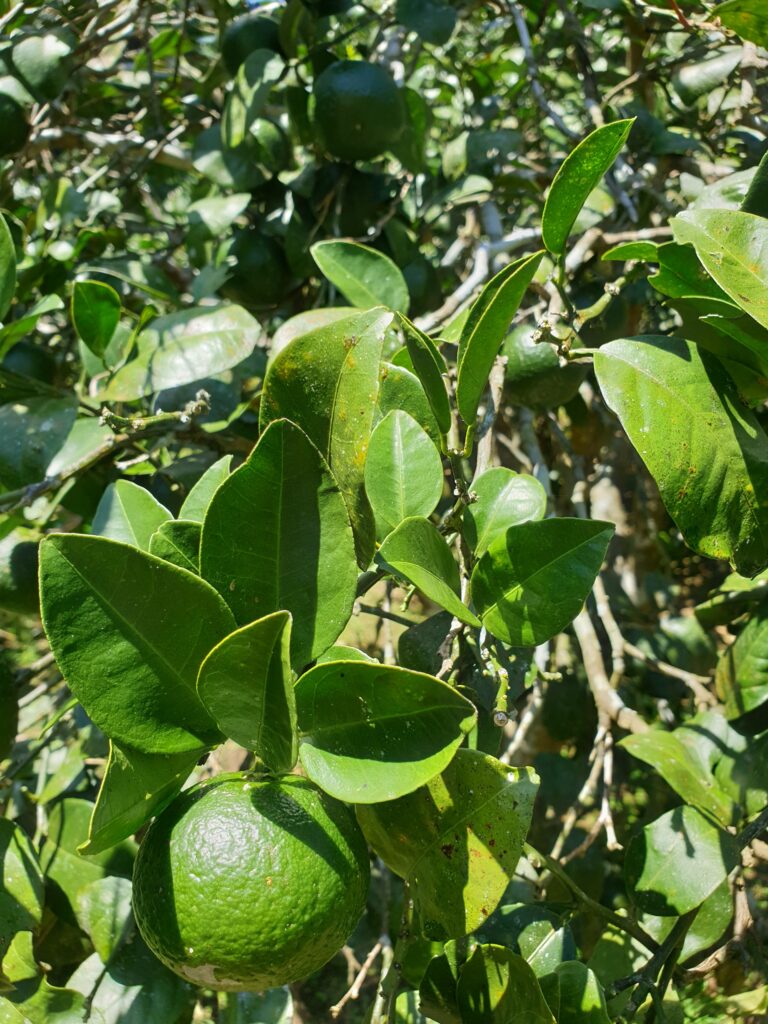
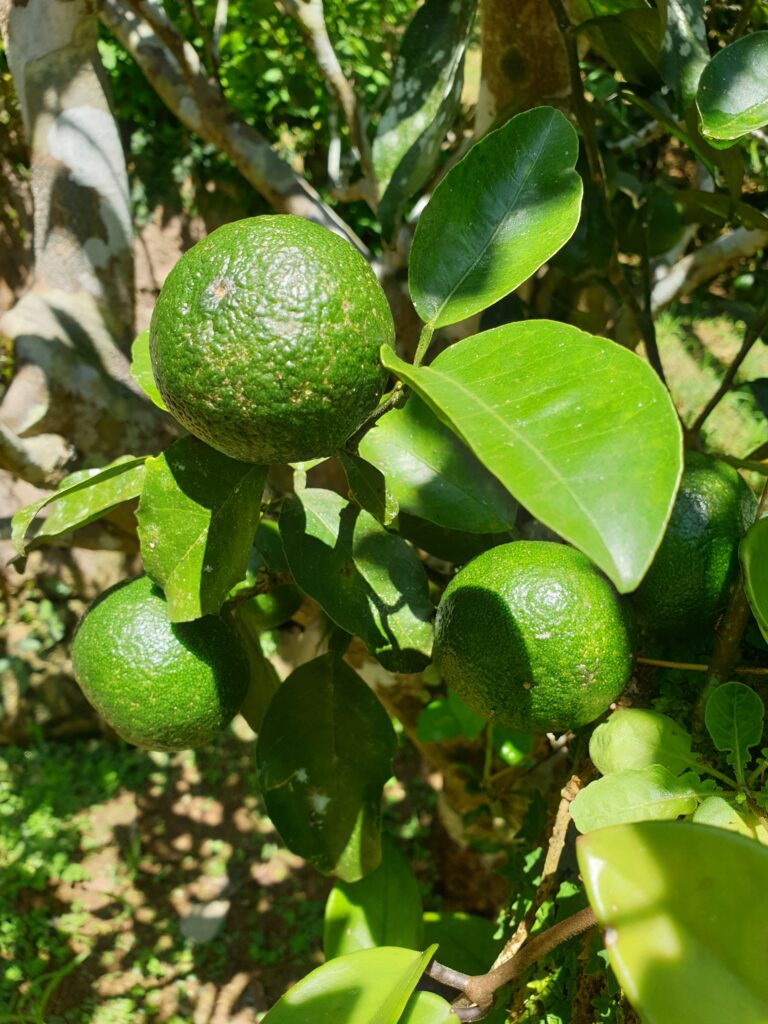
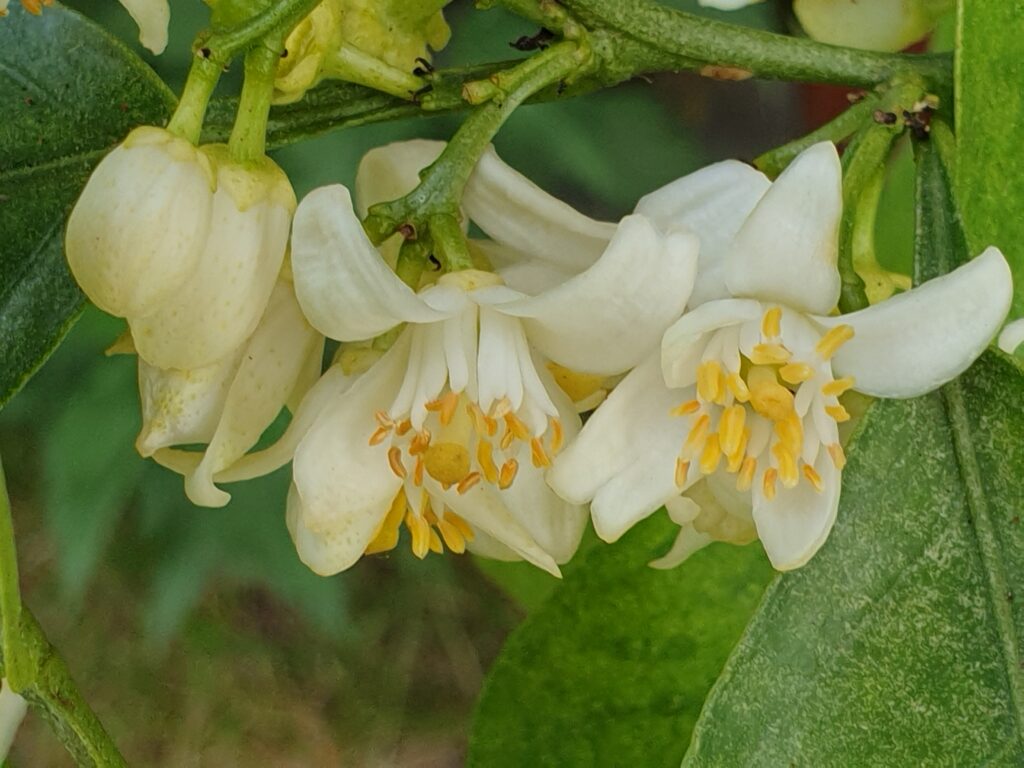
Tanaka (1957) examined a single immature fruit from the second collection site. The fruit was obconical, still green, depressed-globose, diameter approximately 4 cm; oil cells small, densely and evenly distributed; rudimentary radial grooves present; no apical areola. Calyx medium-sized, more or less swollen, shortly cut into lobes. Cross-section of fruit scented with mandarin aroma; rind thin; central column small. Segments 8. Pulp meaty, not very juicy, yellow-orange, subacid, edible. Pulp vesicles fusoid with a blunt tip. Seeds rather large, flattened, smooth, with a rounded apex and a simply pointed base (without a tail — a diagnostic character distinguishing Tarogayo from Kābuchī and Ōtō) (Orion Breweries, 2023); green polyembryonic. Leaves elliptic-ovate, with a rounded base; petioles short, approximately 8 mm, without a wing.
Ripe fruits (J-FEC, 2024): diameter approximately 65 mm, weight approximately 100–120 g; rind light yellow-orange, 3–4 mm, easily peeled; segments 8–9; pulp yellow-orange, soft, juicy; seeds green polyembryonic, 10–20 per fruit; harvest from early November (Okinawa).
TASTE AND USE
The yellow-orange pulp is fragrant and sweet. Fruits are consumed primarily fresh; they are only rarely sold on the market.
CONSERVATION AND CURRENT STATUS
In Japan: Cultivation is severely restricted; the species occurs only in private gardens in Okinawa. Fewer trees than Ōtō. Collection specimens at the Toso Orchard, Kagoshima University (accessions no. 34 Tarogayo and no. 35 Unju; Yamamoto et al. 2013, 2019) and at the Ogimi Experimental Station in Okinawa.


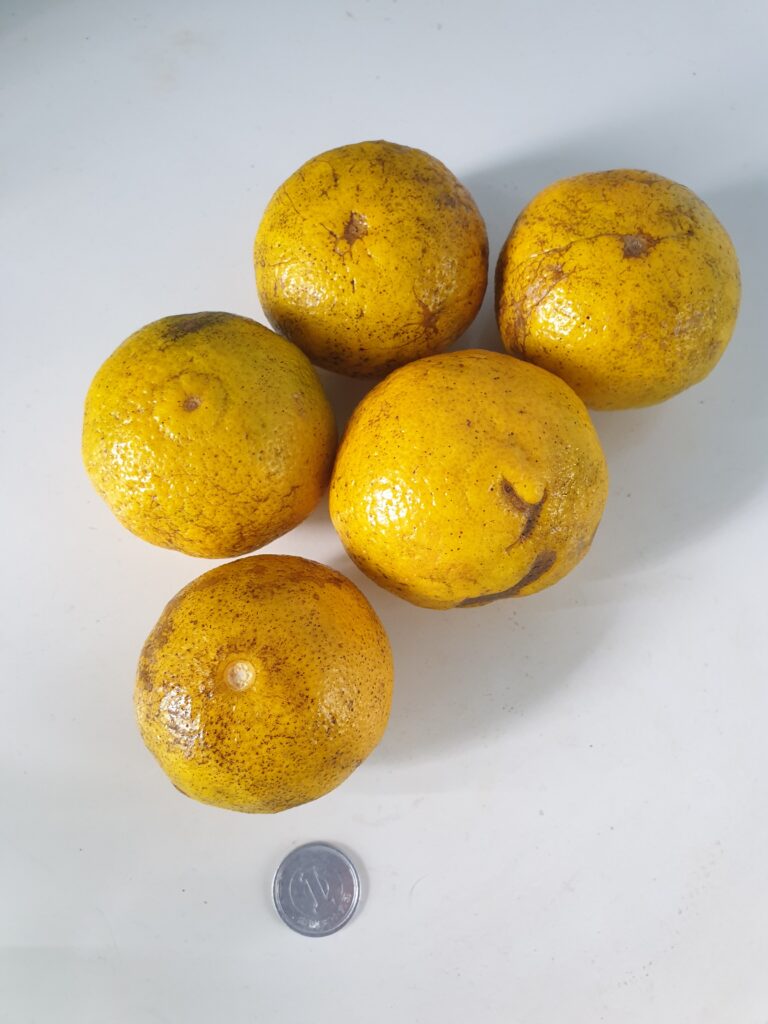

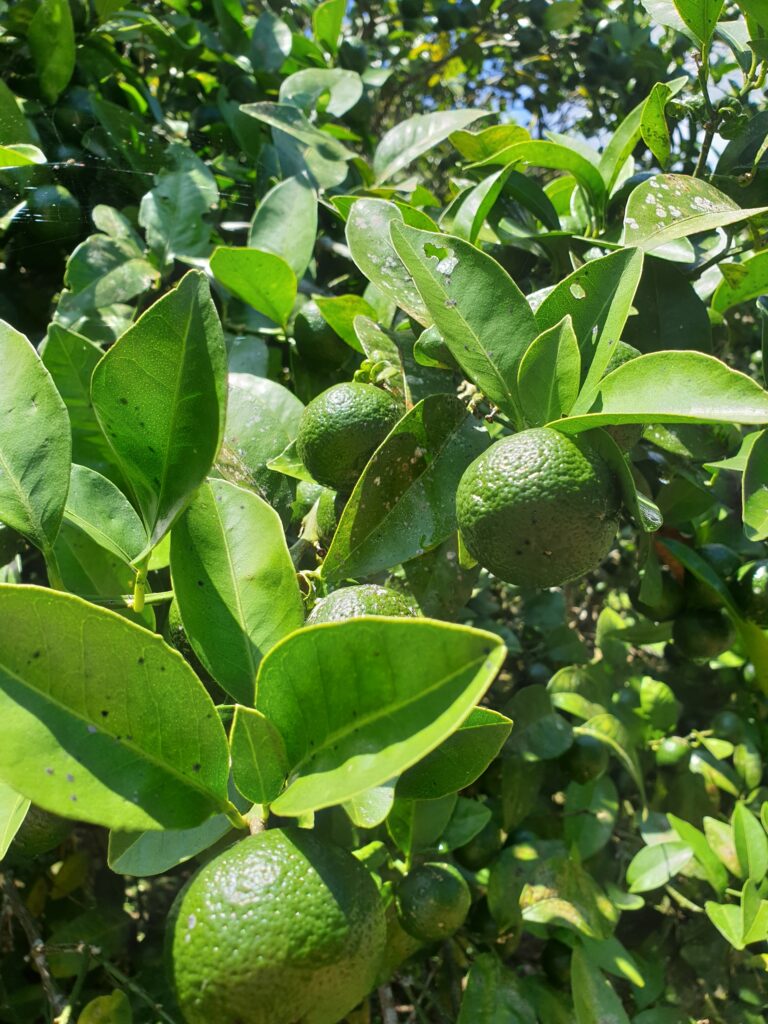
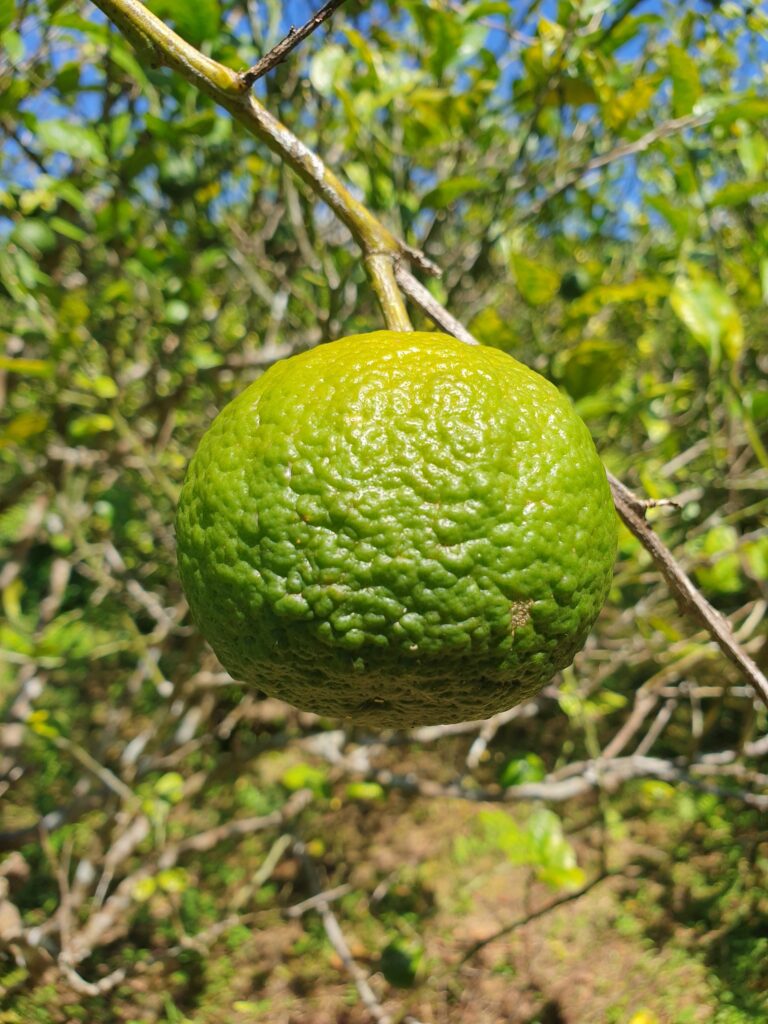
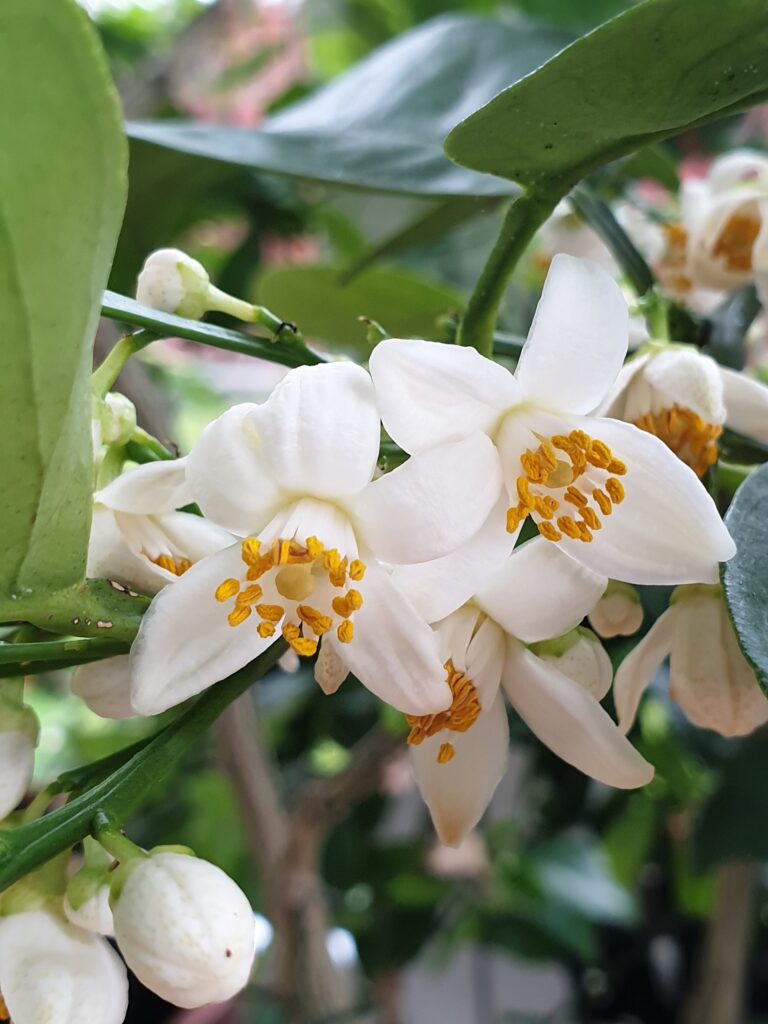
Citrus keraji hort. ex Tanaka ‘Keraji’
Japanese name: Keraji (ケラジ); Japanese kanji name 花良治蜜柑 (Keraji mikan); colloquially „Hana Ryōji mikan“ after the village of origin
SYNONYMS
Citrus keraji Hort. ex Tanaka in Stud. Citrol. 7:74, 1935, nomen — first publication as a nomen only
Citrus keraji Hort. ex Tanaka in Spec. Probe in Cit. 76 & 130, 1954 — full description
Citrus keraji Hort. ex Tanaka, Icon. Jap. Cit. Fr. 2: 414, 1948 (Yu. Tanaka)
Unzoki (ウンゾキ) Hort. — Okinawan name for the same species (Kijoka, Ōgimi-son); Tanaka (1957) demonstrated complete taxonomic identity of Unzoki with Keraji from Amamioshima
Keraji-mikan, Kikaijima mikan — synonymous vernacular names
TAXONOMIC NOTE
Tanaka (1957) verified during his December 1956 survey that the Okinawan Unzoki (Kijoka, Ōgimi-son) and Keraji from Amamioshima are taxonomically identical. Yamamoto et al. (2010) demonstrated by ISSR analysis and cross-incompatibility tests that Keraji arose by back-crossing of Kunembo (♀, seed parent) × Kikaimikan/Kābuchī (♂, pollen parent). Compatibility tests confirmed an identical incompatibility genotype for Keraji and Kikaimikan in both cross directions, while both are compatible with Kunembo. Wu et al. (2021) placed the Keraji accession within the Yukunibu group.
HISTORY AND ORIGIN
Cultivation of Keraji is documented from the 18th century. Tradition holds that the species was discovered on a small islet east of Kikaijima and brought to the village of Hana Ryōji (花良治), after which it was named (Yamamoto et al. 2010). Yamamoto et al. (2010) suggest that the species could have arisen after the introduction of Kunembo to Kikaijima, where Kunembo was grown as a garden tree during the Edo period (17th–19th century). Keraji may have originated as a natural seedling of Kunembo pollinated by Kikaimikan in the traditional gardens of the island. Production flourished in the Taishō era (1912–1926) but has since continuously declined; today the species is cultivated almost exclusively on Kikaijima Island.
BOTANICAL DESCRIPTION
After Tanaka (1957), Yamamoto et al. (2013, 2019) and entry no. 131 in Tanaka’s monograph (Tanaka, 1948): trees of medium vigour. Leaves fairly thick; petiole without a wing or with a very narrowly margined edge; lamina decurrent on the petiole, as in Kābuchī. Fruits weigh approximately 54–100 g (average ca. 80 g), diameter 55–60 mm, height approximately 45 mm. Shape depressed-globose (fruit shape index 124–128), regular; fruits uniformly formed. Apex of fruit flat or slightly concave; stylar scar very small; no radial grooves. Rind 3–5 mm thick, glossy, somewhat rough and firm; easily peeled. Rich in essential oils, emitting a strong, pronounced Kunembo-type aroma, characteristic of Kikaijima and highly prized by local consumers. Rind colour yellow-orange; on Kikaijima the fruits are consumed before they colour up (green or light green). Oil cells sunken, medium-sized, moderately dense. Albedo white. Segments approximately 9; membranes thin; central column large, open. Pulp soft, juicy, yellow-orange. Juice Brix approximately 8°; acidity falls quickly; harvest from late October to approximately early December. Seeds approximately 3; green, polyembryonic. In practice Keraji is nearly seedless owing to self-incompatibility.
TASTE AND USE
Keraji is prized on Kikaijima above all for its distinctly aromatic rind with an intense Kunembo-type fragrance that lingers on the hands after peeling. The pulp is sweet-acid and eaten fresh. Slightly immature fruits are traditionally used to remove the odour during the preparation of the local speciality habu-sake — a distilled spirit with the poisonous habu snake (J-FEC, 2024). The juice is used to flavour spirits by squeezing it through slices of fruit. In recent years processed rind products have appeared on the market (JACK, 2024). Yamamoto et al. (2019) recorded PMF content of approximately 579–769 μg/g peel and ascorbic acid content of approximately 29–36 mg/100 ml juice (second-highest value among all accessions studied — just after Fusu).
CONSERVATION AND CURRENT STATUS
In Japan: Total production in 2003 approximately 3.5 tonnes (J-FEC, 2024) — making it one of the most endangered traditional Japanese citrus fruits. Kikaijima Island is the sole cultivation area, where Keraji functions as a symbol of regional identity. In recent years processed products have been developed, indicating a certain renewal of interest in the species (JACK, 2024). Collection specimens are maintained at the Toso Orchard, Kagoshima University (accessions no. 17 Keraji and no. 18 Kikai Mikan; Yamamoto et al. 2019).
In Europe: The literature cites cold hardiness down to −12 °C (Dekarz, 2023). There is uncertainty as to whether European plants sold as Keraji correspond to the taxonomic description of the species or are in fact Kābuchī. Unlike the preceding taxa, these plants are commonly available in nurseries and are highly ornamental under European conditions.