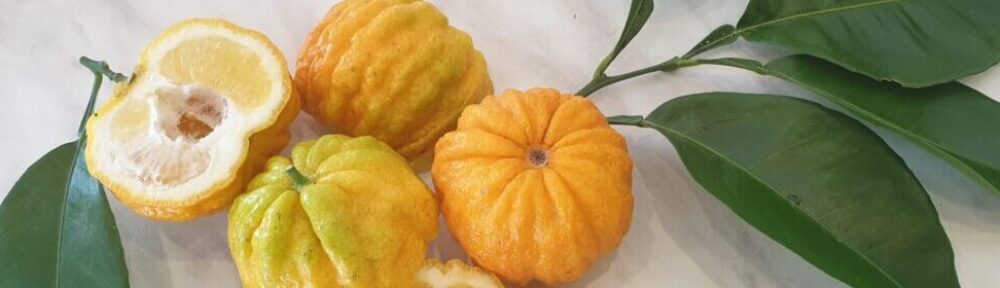
Japanese name:代々柑 (Daidai), 回青橙 (Kaiseito)
Chinese name: 橙 (Chéng), pronounced „Tcheng“; dried unripe fruits: 枝實 (Zhī shí), pronounced „Tchi-Tchi“; dried peel of ripe fruits: 枝殼 (Zhī qiào), pronounced „Tchi-tchchiao“
European names: bigarade (fr.), bitter orange, Seville orange (en.), melangolo (it.), naranja amarga (es.)
English names: Sour orange, Bitter orange, Bigarade, Marmalade orange
SYNONYMS (selection)
Citrus aurantium L. (1753) — accepted name under the Swingle system; Sp. Pl. 2: 782 (1753)
Citrus × aurantium L. — nothospecies notation; hybrid origin confirmed (Wu et al., 2018)
Citrus bigaradia Loisel. (1816) — historical synonym, invalid in modern taxonomy; Deterville (1816), Nouv. dict. hist. nat. p. 58
Citrus vulgaris Risso (1813) — synonym used by Risso in Nice; Ann. Mus. Hist. Nat. 20: 183
Aurantium acre Mill. (1768) — historical synonym
— C. aurantium var. daidai (Makino) M. Hiroe — daidai (see Japanese cultivars)
— C. aurantium var. Cyathifera Y. Tanaka (1946) — Za-daidai; Tanaka (1946), entry no. 92
ORIGIN AND DISTRIBUTION
Citrus aurantium is a hybrid originating from a natural cross between pummelo (C. maxima) as the maternal parent and mandarin (C. reticulata) as the paternal taxon. Genomic studies (Wu et al., 2018) place the species among secondary hybrids originating in Southeast Asia, most probably in the region of northeastern India, Burma and southwestern China. The bitter orange reached Europe by the 10th century at the latest; Arab merchants travelling the Silk Road routes are considered its main vectors. Citrus groves are documented in Sicily around 1002 AD (Hodgson, 1967).
The species was introduced to Japan from China probably before the 8th century AD. Cultivars of the daidai and kaiseito groups are documented from the Nara period (710–794). Tanaka (1946) describes daidai (entry no. 100) and Za-daidai (entry no. 92) as morphologically distinct taxa within the species.
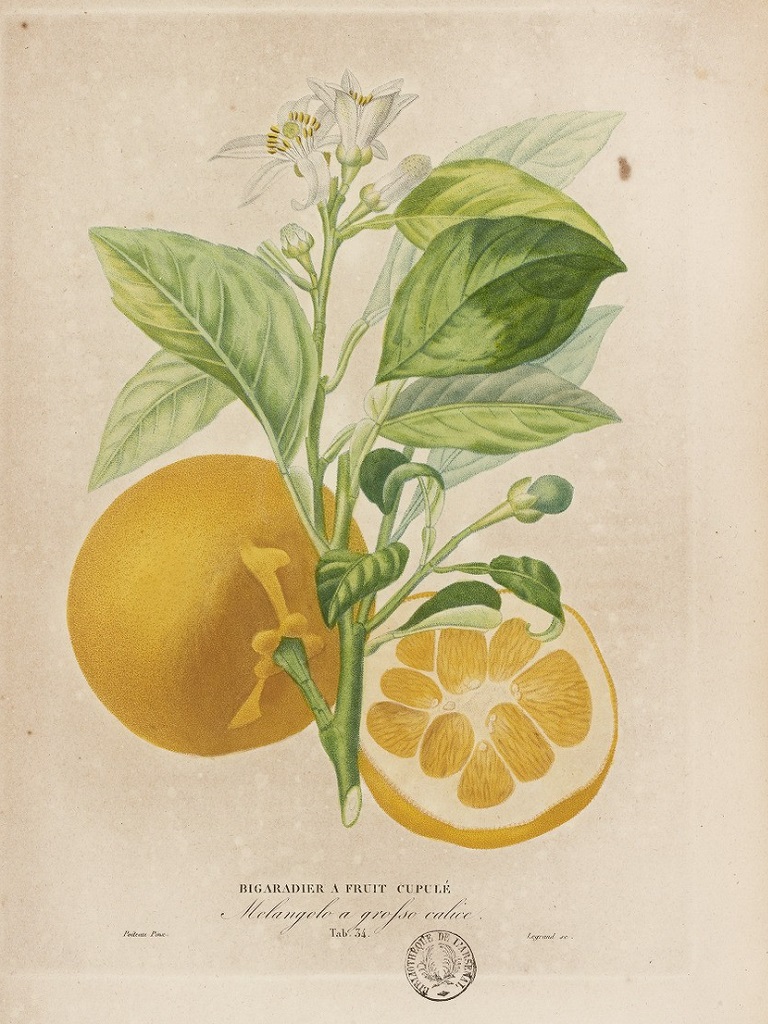
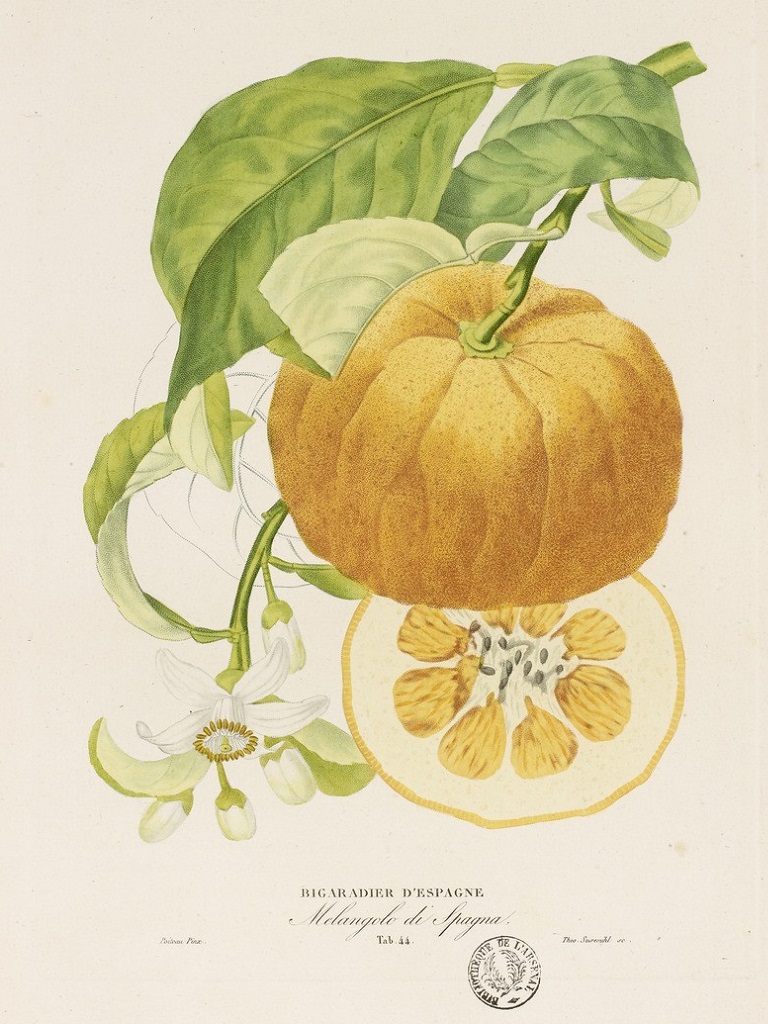
In Europe, the bitter orange spread rapidly along the entire Mediterranean coast. Spain, Italy and southern France became centres for the cultivation of new cultivars. Risso and Poiteau, in their landmark work Histoire Naturelle des Orangers (1818–1820), catalogued 169 citrus taxa, a substantial proportion of which belong to C. aurantium; their illustrations still serve today as a reference point for the identification of historical cultivars (Risso & Poiteau, 1818-1822).
BOTANICAL DESCRIPTION
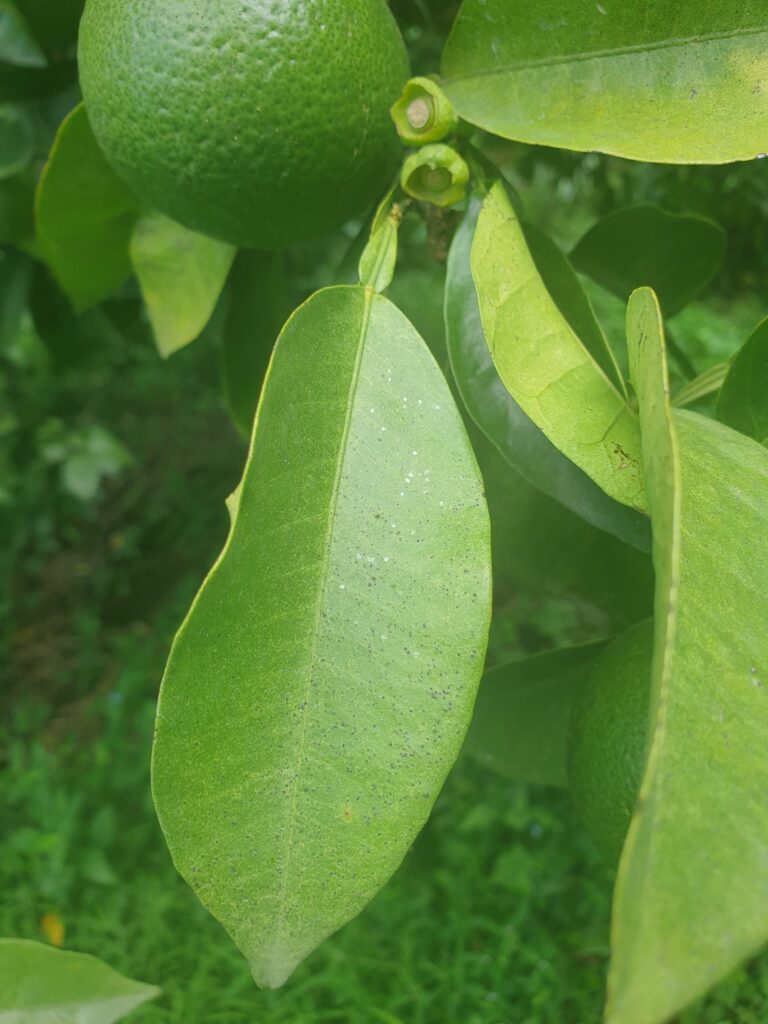
The Citrus aurantium tree is evergreen, reaching 5–9 m in height. The bark is smooth, brownish-grey; branches bear sharp thorns 2.5–8 cm long. Leaves are alternate, ovate-lanceolate, 6–10 cm long; the petiole is conspicuously winged — a key diagnostic character distinguishing it from mandarin cultivars. The upper leaf surface is dark and glossy, the lower surface matt; leaves strongly aromatic.
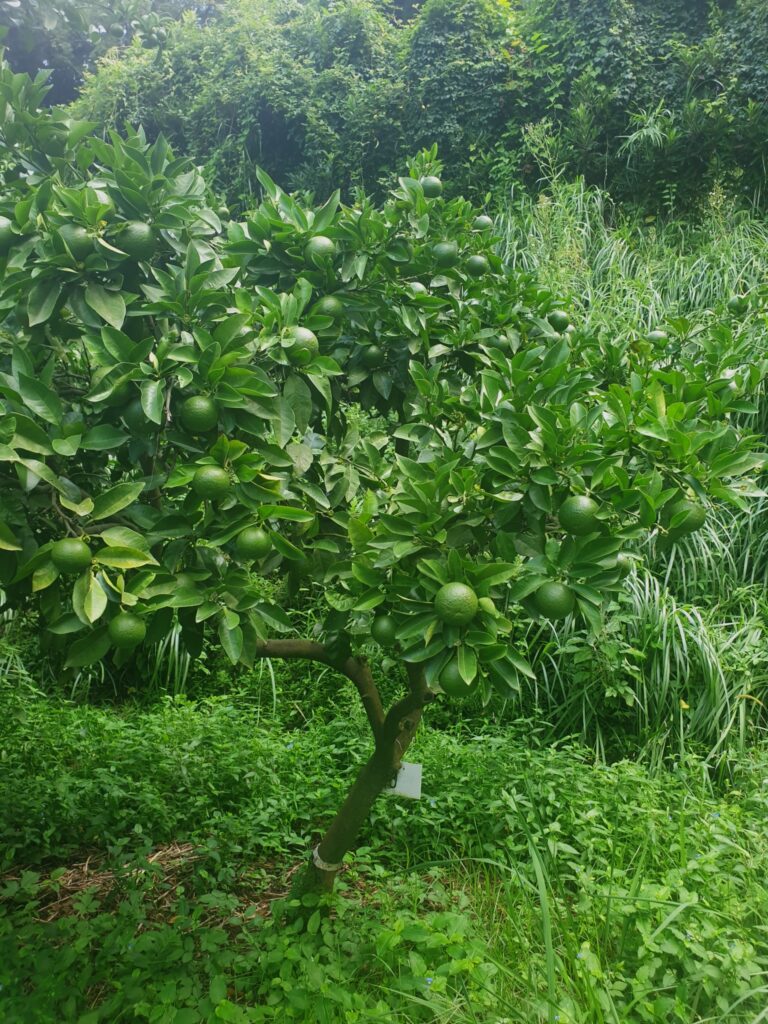
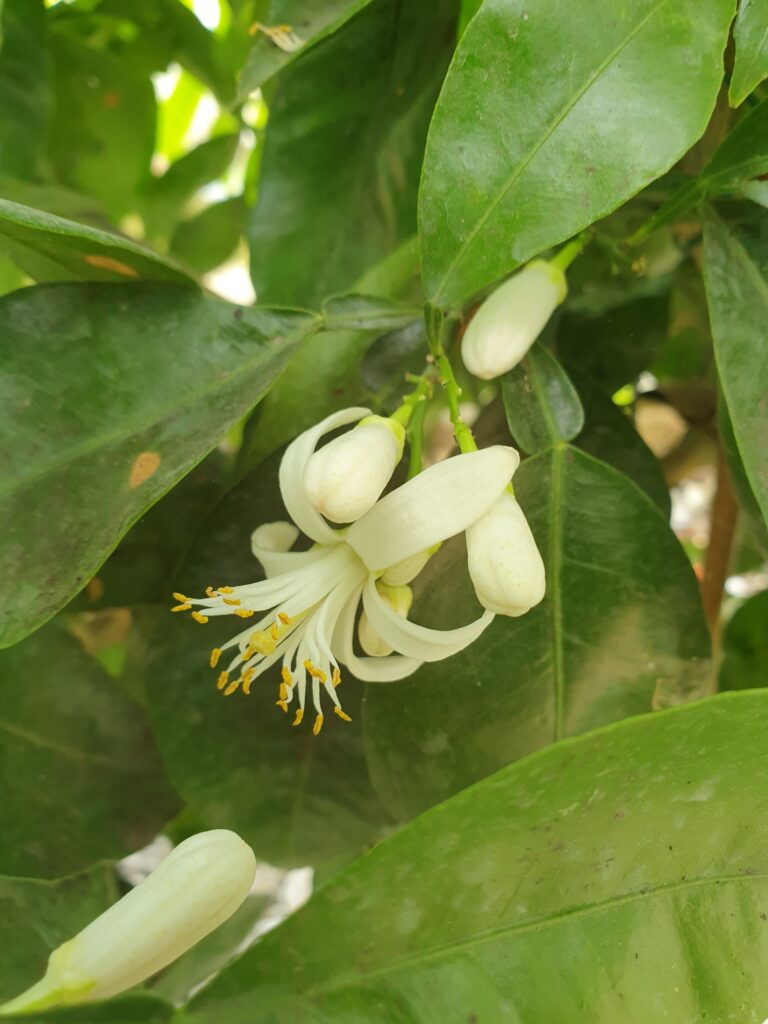
Flowers are large, white, strongly fragrant, borne singly or in axillary clusters; corolla of 5 petals, 1.5–2 cm long; 20–40 stamens. The fruit is a hesperidium, globose to slightly oblate, diameter 7–10 cm; rind thick, strongly granulate, dark green when unripe, orange-red at full maturity; flesh distinctly acid, bitter, strongly juicy; 10–12 segments. Fruits persist on the tree for over a year without dropping — a characteristic feature of the daidai cultivar (Tanaka, 1946; Hodgson, 1967).
DISTRIBUTION AND USE IN CHINA
China is one of the presumed countries of origin of bitter orange (Wu et al., 2018) and also the centre of its medicinal use for more than two millennia. The earliest documented records date from the Han dynasty (202 BC–220 AD), when unripe fruits were listed in the Shennong Bencao Jing as a remedy for constipation, cramps and skin disorders (Wang, 1985 cit. in Arabjchem, 2023).
In present-day China, bitter orange is cultivated mainly in the provinces of Hunan, Sichuan, Jiangxi, Fujian, Zhejiang and Jiangsu. Hunan and Jiangxi are historically important growing centres; the cultivars Xiucheng and Xiangcheng from Jiangxi are officially recognised as source plants for the pharmaceutical drugs Zhishi and Zhiqiao (Cai et al., 1999). The Chinese Pharmacopoeia (2020) standardises both commodities with synephrine content as the control marker (Arabjchem, 2023).
枝實 Zhī shí (Japanese: kijitsu): Dried unripe fruits collected in May–June, diameter 0.5–2.5 cm; used as a stomachic and tonic for the movement of qi; primary production from Sichuan, Jiangxi and Hunan (Arabjchem, 2023).
枝殼 Zhī qiào: Dried peel of ripe fruits collected in July–August; milder effect on qi than Zhishi; both commodities are individually listed in the Chinese Pharmacopoeia 2020 (Wagner et al., 2017).
Beyond these two principal medicinal raw materials, a broader range of cultivars used for therapeutic purposes exists in China. A taxonomic survey (Cai et al., 1999) identified, alongside C. aurantium, hybrid genotypes of Poncirus trifoliata × C. aurantium as source plants in some regions, where they serve as substitutes.
Gou Tou (狗头橙) — Chinese cultivar
Synonyms: Gou Tou, Goutoucheng
Taxonomic position: Citrus aurantium L. ‘Gou Tou’ Hort.; UCR CRC 4004 (from Liuzhou Academy of Agricultural Sciences, Guangxi, China, 1981)
Gou Tou (literally dog’s head, a name derived from the fruit shape) is a Chinese bitter orange cultivar originating from Guangxi province. Fruits are larger than those of the European bigarade, orange-coloured, globose; flavour is described as strongly acid with an aroma resembling grapefruit and a distinctive aromatic profile (UCR, 2023; Woodlanders Nursery, 2025). It was tested as a rootstock for sweet orange (UCR, 1989), but results were unsatisfactory. Today it is grown in research and collection gardens in the USA and France (Mon Jardin Extraordinaire, 2025).
THE JAPANESE CULTIVARS
Daidai — 橙
Japanese name: 橙 (Daidai / だいだい)
Taxonomic position: Citrus aurantium var. daidai (Makino) M. Hiroe; son. Citrus × daidai Siebold ex Hayata (1919)
Daidai is the Japanese cultivar of bitter orange introduced from China before the 8th century AD. The Japanese name 橙 is a homonym of the expression 代々 (daidai = „generations upon generations“), referring to the fruit’s ability to remain on the tree for several years without dropping. This property made the fruits a symbol of family continuity and prosperity. The Japanese word for the colour orange, 橙色 (daidai-iro), is derived directly from this cultivar (SANTEN Design, 2025).
Fruits are globose, diameter 5–8 cm; rind thick, granulate, bright orange; flesh strongly acid and bitter; 9–10 segments, numerous seeds. Tree vigorous, over 6 m tall, nearly thornless (Tanaka, 1946, entry no. 100).
Cultural and ceremonial use: During the Japanese New Year celebrations (shōgatsu), the daidai fruit is traditionally placed on top of kagami mochi, the ritual rice cake. The symbolism encompasses family prosperity and continuity across generations (SANTEN Design, 2025; Hanaki et al., 2022).
Culinary and medicinal use: The juice is used as an ingredient in ponzu (pronounced „pontsu“; traditional Japanese citrus sauce). Peel in kampō: dried peel of unripe fruits = 枝實 (kijitsu), dried peel of ripe fruits = 橙皮 (tōhi), both used as stomachics and expectorants.. (UCR CRC 0696, 2026).
Za-daidai — ザダイダイ
Japanese name: ザダイダイ (Za-daidai)
Taxonomic position: Citrus aurantium var. Cyathifera Y. Tanaka (1946); entry no. 92 in An Iconograph of Japanese Citrus Fruits
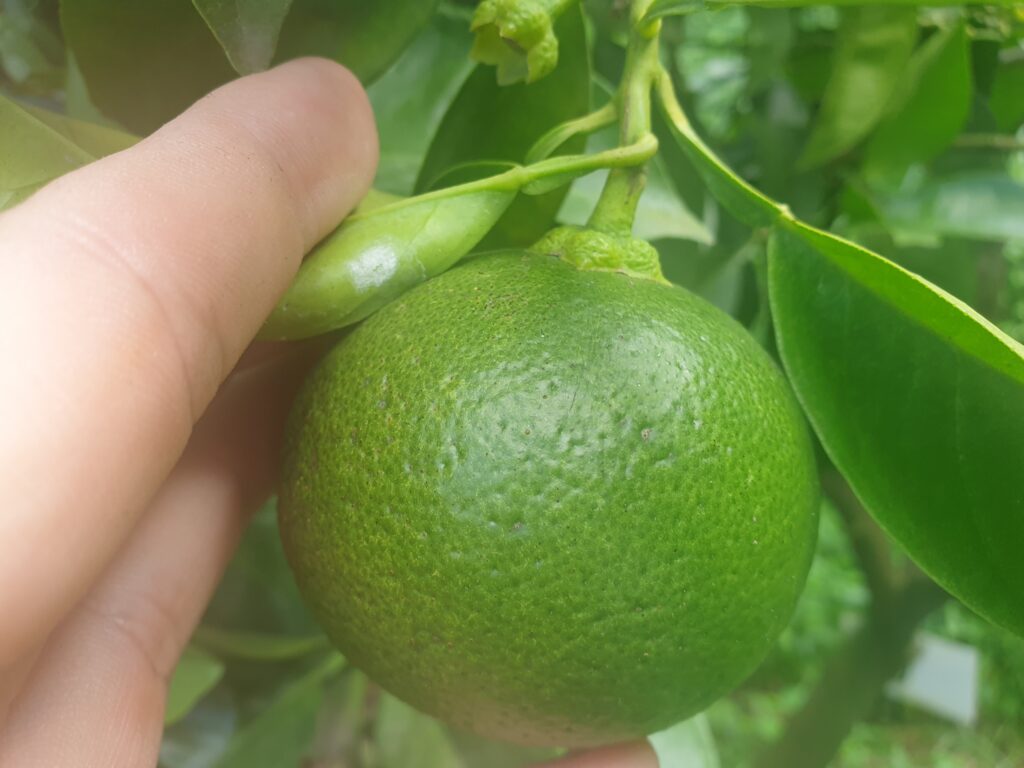
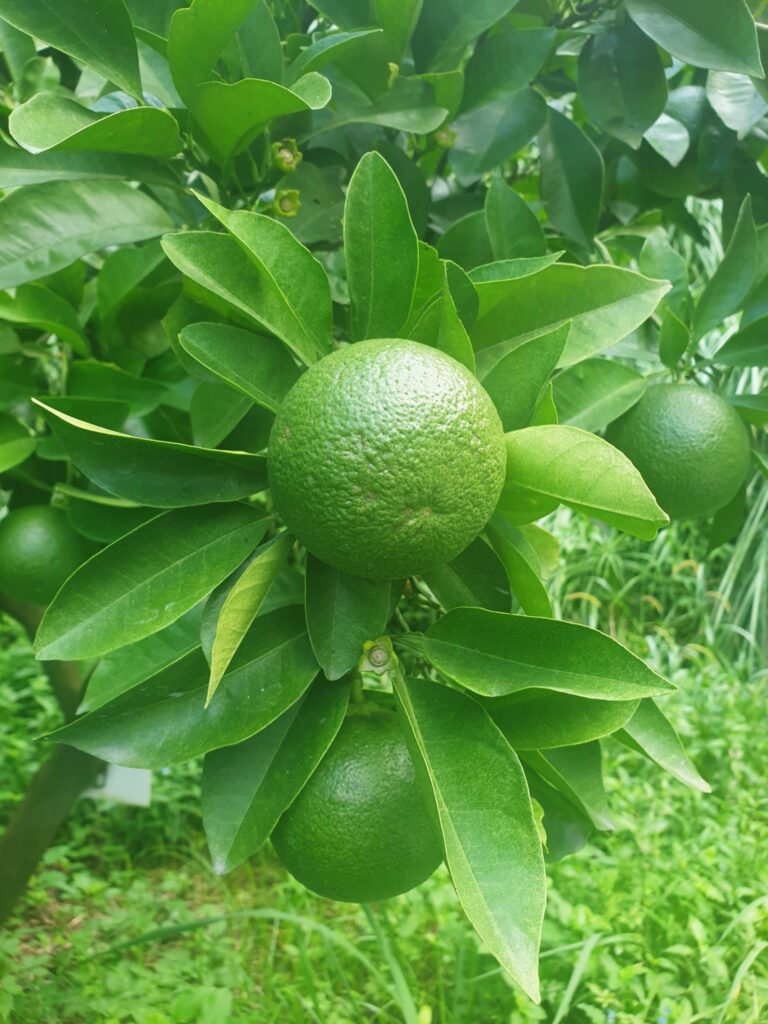
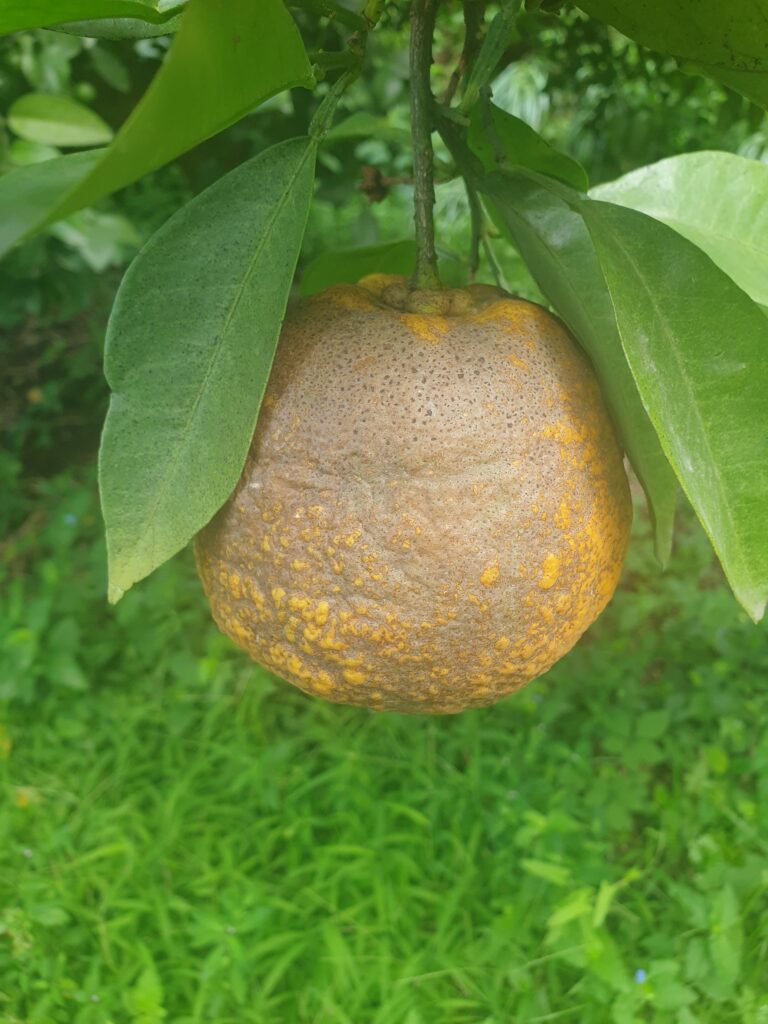
Tanaka (1946) describes Za-daidai as a bitter orange cultivar with a characteristic fleshy cup-shaped base of the fruit — hence the Latin epithet cyathifera (cup-bearing). Synonyms listed by Tanaka: Kaiseito (回青橙), Kinkyu (金橘), Yama-tachibana, Abe-tachibana Risso’s and Poiteau (1822) ) catalogued the corresponding type under the historical name C. bigaradia var. cyathifera — in modern authority POWO/Kew this taxon is however placed under the accepted name C. aurantium var. Cyathifera.
Key morphological distinction from C. rokugatsu: Za-daidai (entry no. 125 per Tanaka), occurring in C. rokugatsu conversely, bears a conspicuous areola at the fruit apex and lacks the winged petiole typical of the bigarade. The distinction was confirmed by Dr. Hideyasu Kinjo (Japan).
The confusion of Za-daidai with Citrus rokugatsu (entry no. 125 according to Tanaka), which occurs in the catalogs UCR (2024), is taxonomically incorrect. For details see the article Citrus rokugatsu.
MEDICI GARDENS AND PRESERVATION OF HISTORICAL CULTIVARS
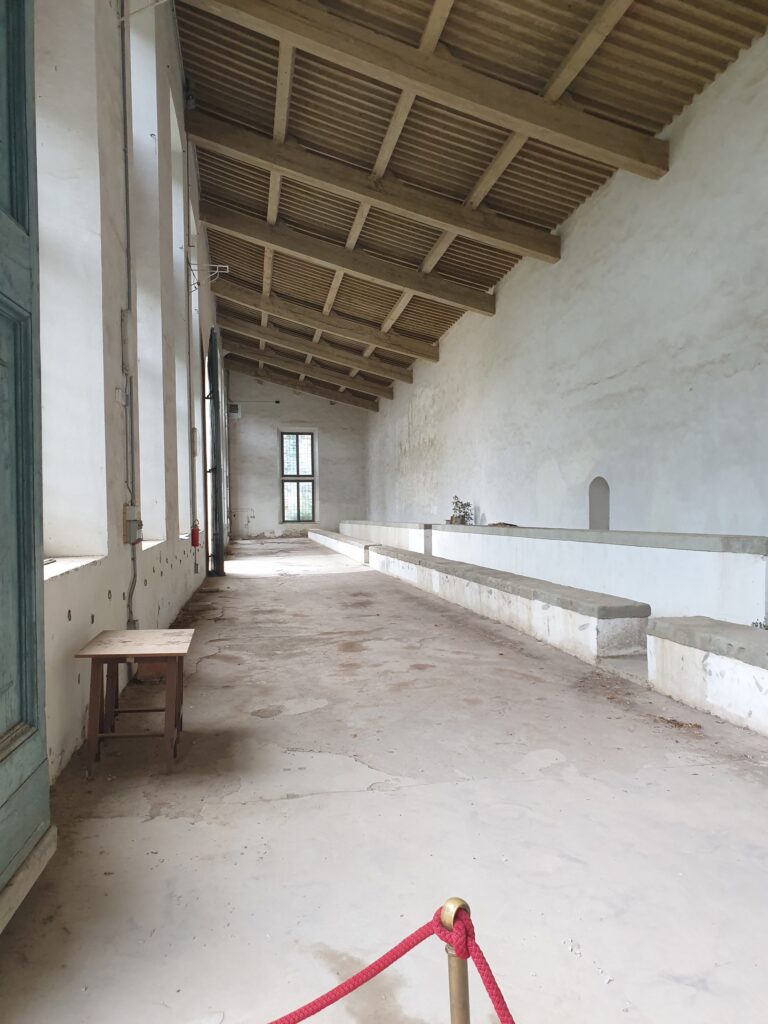
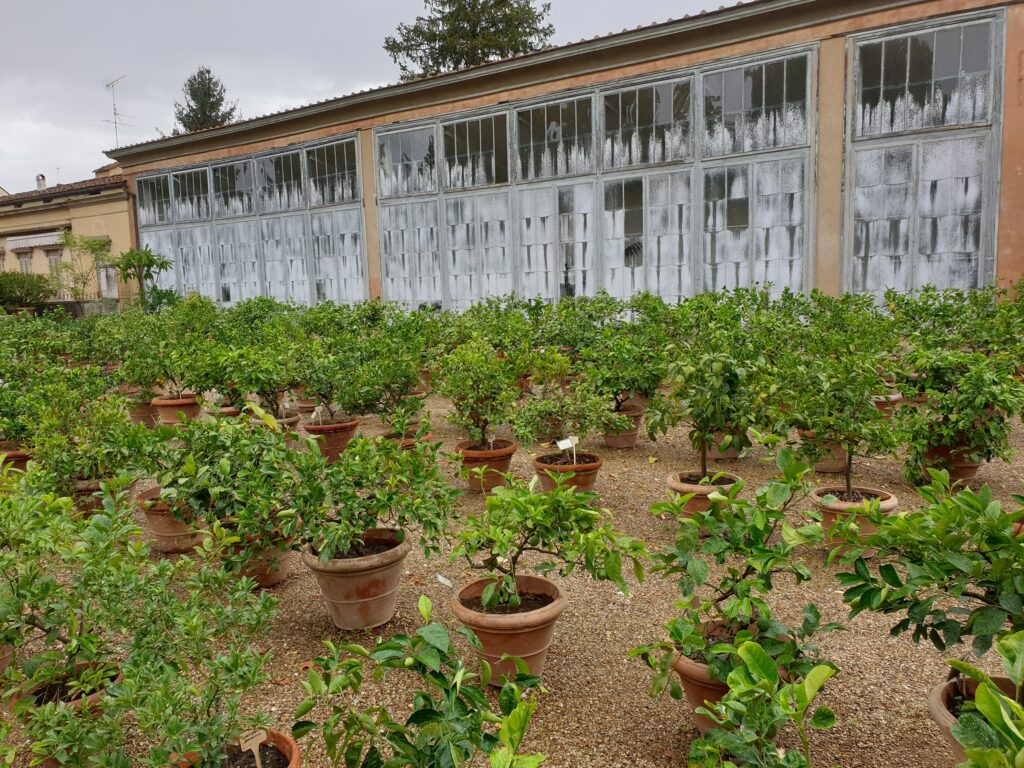
The Medici family played a key role in the importation, cultivation and preservation of historical citrus cultivars in Europe. The most prominent centre of this collecting activity was the Villa di Castello on the north-western outskirts of Florence, whose garden was established in 1538–1539 on the orders of Cosimo I de’ Medici, first Grand Duke of Tuscany (Arteleonardo.com, 2025).
The citrus trees were cultivated in containers in heavy terracotta pots made from Impruneta clay; every autumn they were transferred to covered winter shelters (limonaie) and in spring returned to the garden terraces. At the height of Medici collecting, this garden represented the largest and most diverse citrus collection in Europe. In 1715 Cosimo III commissioned the painter Bartolomeo Bimbi to document the entire collection on canvas — these paintings still serve today as a historical record of cultivar representation (Arteleonardo.com, 2025; Atlas Obscura, 2025).
Among cultivars with a demonstrable link to the Medici period are Bizzarria, Consolei/Canaliculata, Corniculata, Crispifolia and several cultivars of the Bouquetier group. After the extinction of the Medici dynasty (1737), the villa passed into the hands of the Habsburg-Lorraine; during the 20th century the collection came close to extinction. In 1980 garden curator Paolo Galeotti rediscovered the last surviving specimen of the ancient Bizzarria in a private Florentine garden and returned it to the collection of Villa di Castello. Today the collection numbers around 500 potted plants; the garden has been inscribed on the UNESCO World Heritage List since 2013 (Atlas Obscura, 2025).
HISTORICAL EUROPEAN CULTIVARS
The European cultivation of bitter orange has its roots in Moorish Andalusia (10th century AD) and the Mediterranean coast of Italy. The bitter orange reached Europe from China via the Near East and Persia, where Arab geographers and physicians writing in Arabic, above all Ibn Sīnā (Avicenna, c. 1000 AD), employed it in medicine. Arab merchants and conquering expeditions then brought the tree to southern Spain and Sicily, where citrus groves are documented around 1002 AD. (Hodgson, 1967; Morton, 1987). Risso’s and Poiteau (1818-1822) catalogued in Histoire Naturelle des Orangers 169 taxa, a large proportion of which constitute historical European bitter orange cultivars. Risso and Poiteau described these cultivars under the historical generic name Citrus bigaradia; in modern taxonomy all are placed under Citrus aurantium L.
Seville orange
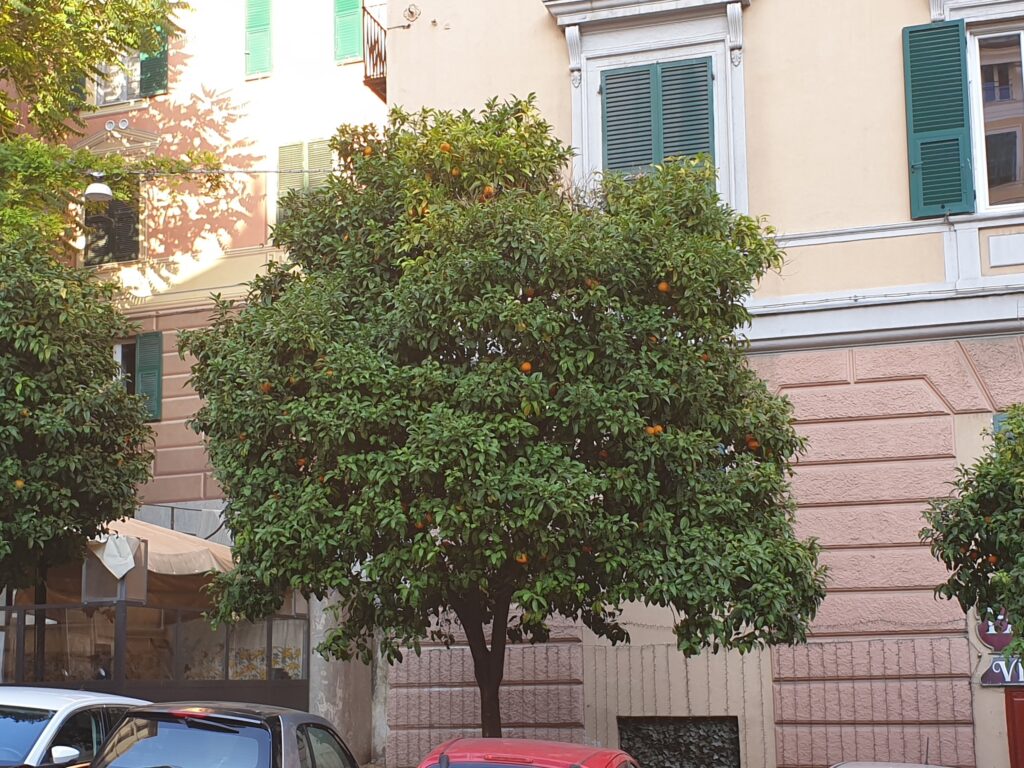
The term Seville orange (es. naranja amarga de Sevilla, en. Seville orange) is used in the English-language and Spanish-language literature to denote C. aurantium subsp. amara Link, i.e. the standard bitter orange in its typical European form. It was introduced to Andalusia by the Moors in the 10th century AD. (Hodgson, 1967). Today Seville oranges are harvested annually from the street trees of Seville and exported to Great Britain for the production of traditional English marmalade. Morton (1987) notes that, despite its international renown as a marmalade ingredient, the fruit is rarely consumed locally by the inhabitants of Andalusia.
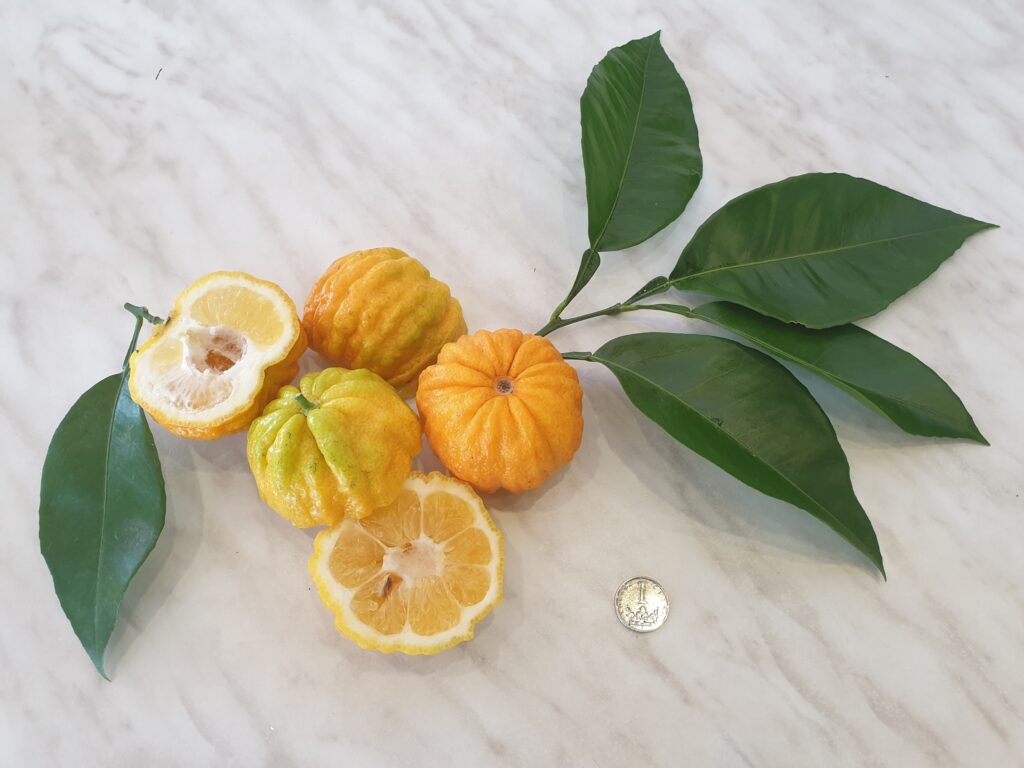
Consolei (Canaliculata) — Grooved bitter orange
Synonyms: Consolei, Canaliculata, Incanelati, Striatum, arancio amaro scannellato (it.), bigaradier à fruit strié (fr.)
Taxonomic position: Citrus aurantium ‘Consolei’ Hort.; cultivar name of Italian horticultural origin; first reliable documentation: Bartolomeo Bimbi, Arancio scannellato, cultivar 11, Tab. III (c. 1715–20, Villa di Castello, Florence)
Consolei is one of the oldest documented European bitter orange cultivars, grown in Tuscany since the 16th century and recorded in the Medici gardens. The cultivar is characterised by conspicuous longitudinal grooves (channels) running parallel from the base to the apex of the fruit — hence the Italian name scannellato (grooved) and the Latin epithet canaliculata (channelled). Tree compact, thornless; flowers large, white, fragrant, diameter 3–3.5 cm. Fruits small to medium, diameter 3–5 cm; rind orange, firm. The cultivar has been continuously present in Italian and French botanical collections since the 16th century (Bimbi, c. 1715-20 ; Lenzi, 2021b).
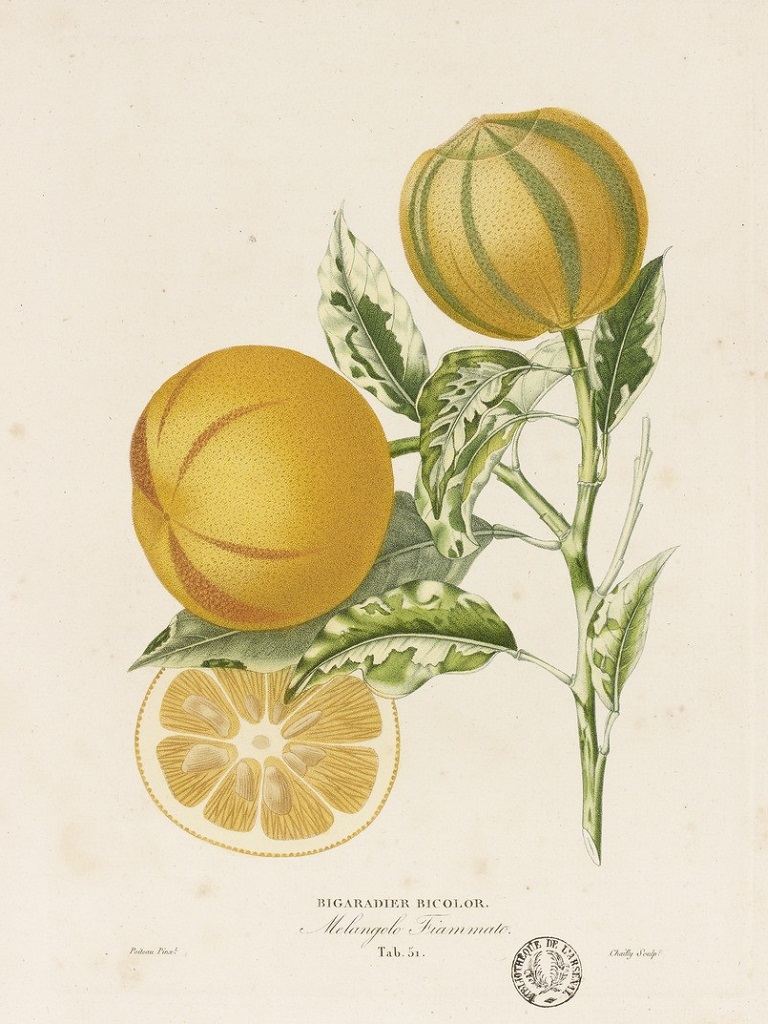
Virgatum (Fasciata) — Striped bitter oragne
Synonyms: Virgatum, Fasciata; bigaradier à fruits rayés (fr.), arancio amaro a striscie (it.)
Taxonomic position: Citrus aurantium ‘Virgatum’ Hort.; Risso’s & Poiteau (1822) as a C. bigaradia var. fasciata (p. 101); POWO/Kew
Virgatum is a cultivar with conspicuous coloured stripes on the fruit rind — orange stripes on a dark-green background, which change during ripening. The striping results from unstable chlorophyll expression in the carpel peel during maturation Risso’s and Poiteau (1822) catalogued it under the historical name C. bigaradia var. fasciata. The tree is grown primarily as an ornamental cultivar; the fruits are visually decorative, with flavour corresponding to the standard bitter orange. Variants with striped leaves are designated C. aurantium ‘Variegatum’.
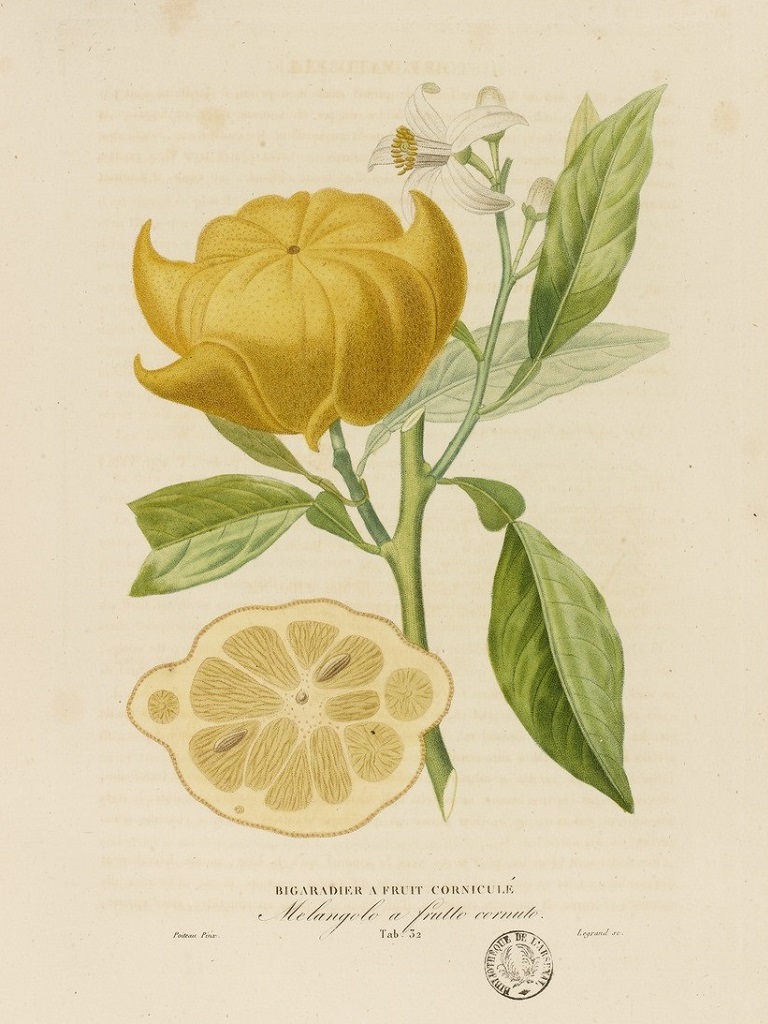
Corniculata — Horned bitter orange
Synonyms: Corniculata, Cornicula; arancio amaro cornuto (it.), bigaradier cornu (fr.)
Taxonomic position: Citrus aurantium ‘Corniculata’ Hort.; Risso’s & Poiteau (1822) as a C. bigaradia var. corniculata (p. 76); POWO/Kew
Corniculata is a cultivar with fruits bearing horn-like protuberances — irregular horn-shaped prominences growing from the flavedo; at full maturity the fruit carries several protuberances 2–5 cm long, giving it a gothic appearance. Risso’s and Poiteau (1822) list it as one of the most singular ornamental cultivars. Grown in Italian and French botanical gardens since the 16th century, partly present in the Medici collection. Flavour corresponds to the standard bitter orange.
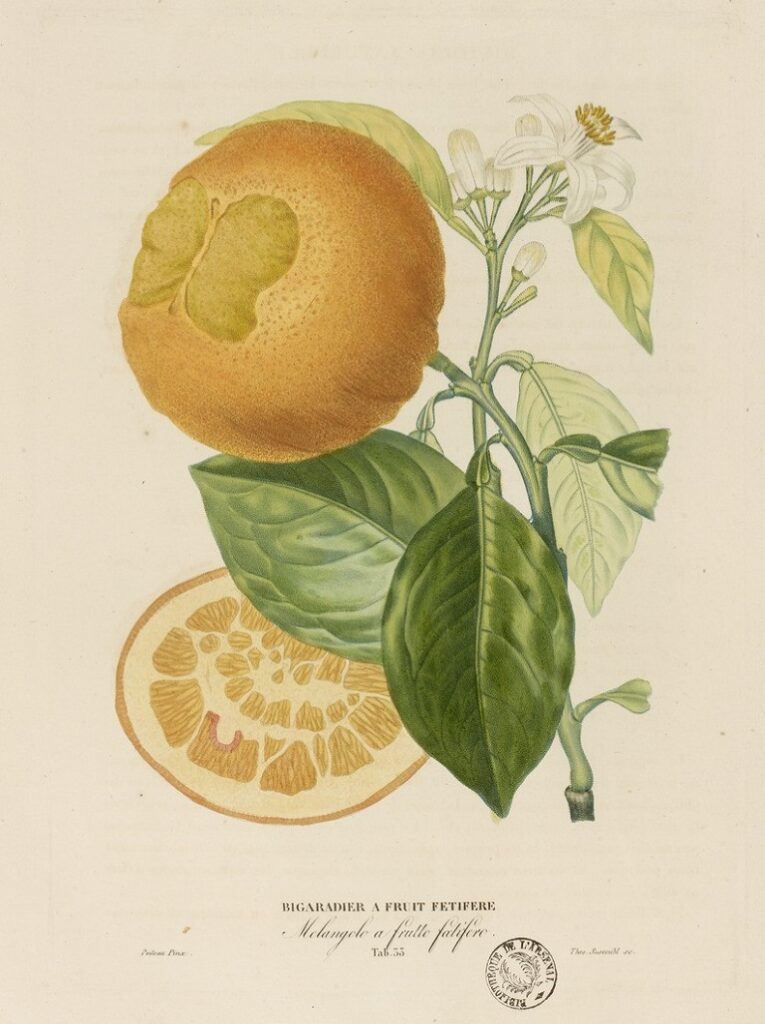
Foetifera — Childing bitter orange
Synonyms: arancio amaro fetifero (it.); Childing Bitter Orange (en.)
Taxonomic position: Citrus aurantium ‘Foetifera’ Hort.; Risso & Poiteau (1822) as C. bigaradia var. fetifera (p. 78); POWO/Kew
Foetifera (recorded by Risso as fetifera) is a cultivar named after its key morphological feature: the presence of a secondary small fruit inside the main fruit — a phenomenon known in Italian literature as frutto nel frutto. The Latin epithet derives from foetus (offspring, embryo) + ferre (to bear), meaning literally “embryо-bearing” — not from fetidus (stinking), as is sometimes erroneously stated. Risso did not describe Foetifera as a malodorous cultivar, and information about any unpleasant odour is not corroborated in modern sources. The Italian nursery Agrumi Lenzi, which cultivates the plant, names it arancio amaro fetifero and in English as “Childing Bitter Orange” (Lenzi, 2021c; Risso & Poiteau, 1822).
The fruit is globose and strongly flattened at the poles; the tree is vigorous, with long, partly thorny branches and lanceolate leaves. The cultivar has a demonstrably ancient origin in Italy and is maintained in specialised collections (Lenzi, 2021c).
Crispifolia — Curly-leaved bitter orange
Taxonomic position: Citrus aurantium ‘Crispifolia’ Hort.; POWO/Kew; cultivar name from the Italian horticultural tradition; presumed synonym of French Riche Dépouillé (see below)
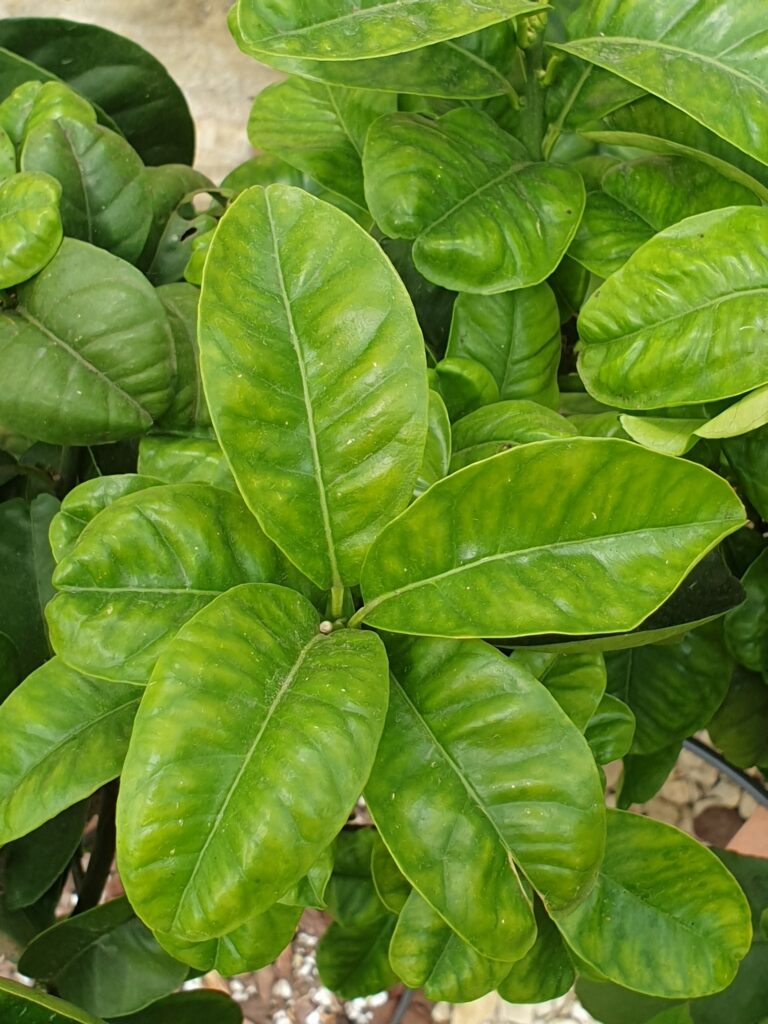
Crispifolia is a cultivar with markedly wrinkled, undulate leaves resembling lace — Lat. crispus = curled, crisped. The tree is grown primarily as an ornamental; fruits are medium-sized, with flavour corresponding to the bitter orange. The cultivar is documented in Tuscan gardens from the 17th century (Tintori, 2025; Agrumi Lenzi, 2021a).
The nursery Oscar Tintori (Pescia, Tuscany) describes Crispifolia as a cultivar with strongly wrinkled, crinkled foliage and — notably — a non-alate petiole (Tintori, 2025). Absence of the petiole wing is equally the key morphological feature of the cultivar Riche Dépouillé of the Bouquetier group — a cultivar that Chapot (1964) identified with the American name Bouquet de Fleurs, and which was not successfully identified for the European continent by 20th-century botanists (Hodgson, 1967). The shared feature of a wingless petiole, the presence in Tuscan historical collections, and the semantic content of dépouillé (fr. = stripped, plain, i.e. lacking the petiole wing) all suggest that Crispifolia of the Italian tradition and Riche Dépouillé of the French tradition are identical cultivars. This hypothesis would merit a closer comparative morphological study.
Crispifolia — Curly-leaved bitter orange
Taxonomic position: Citrus aurantium ‘Crispifolia’ Hort.; POWO/Kew; cultivar name from the Italian horticultural tradition; presumed synonym of French Riche Dépouillé (see below)
Crispifolia is a cultivar with markedly wrinkled, undulate leaves resembling lace — Lat. crispus = curled, crisped. The tree is grown primarily as an ornamental; fruits are medium-sized, with flavour corresponding to the bitter orange. The cultivar is documented in Tuscan gardens from the 17th century (Tintori, 2025; Agrumi Lenzi, 2021a).
The nursery Oscar Tintori (Pescia, Tuscany) describes Crispifolia as a cultivar with strongly wrinkled, crinkled foliage and — notably — a non-alate petiole (Tintori, 2025). Absence of the petiole wing is equally the key morphological feature of the cultivar Riche Dépouillé of the Bouquetier group — a cultivar that Chapot (1964) identified with the American name Bouquet de Fleurs, and which was not successfully identified for the European continent by 20th-century botanists (Hodgson, 1967). The shared feature of a wingless petiole, the presence in Tuscan historical collections, and the semantic content of dépouillé (fr. = stripped, plain, i.e. lacking the petiole wing) all suggest that Crispifolia of the Italian tradition and Riche Dépouillé of the French tradition are identical cultivars. This hypothesis would merit a closer comparative morphological study.
Bittersweet oranges — Bittersweet group
Synonyms: Bittersweet, Bittersweet of Florida, Apepu (Paraguay)
Taxonomic position: Citrus aurantium L. ‘Bittersweet’ Hort.; UCR CRC 1588
A group of cultivars differing from the standard bitter orange in lower acidity and more pleasant flavour. Hodgson (1967), on the basis of UCR collection results, regards these cultivars as mutations of the bitter orange, not as hybrids with sweet orange as was formerly assumed. The tree is characterised by a more compact habit, broader and less taper-pointed leaves, and fruits with a slightly smoother rind and paler colour. Hodgson (1967) considers these to be the same cultivar as described by Risso and Poiteau (1818–22, p. 101).
Two varieties are distinguished, practically indistinguishable from each other: Bittersweet of Florida and Apepu (Paraguay). Spanish settlers introduced this group to South America, where the feral form covers extensive areas in Paraguay. The local petitgrain bigarade oil — distilled from leaves and twigs — is today one of the principal world sources of this raw material for the perfumery industry (Hodgson, 1967; UCR, 2026).
Willowleaf (Granito) — Willow-leaved bitter orange
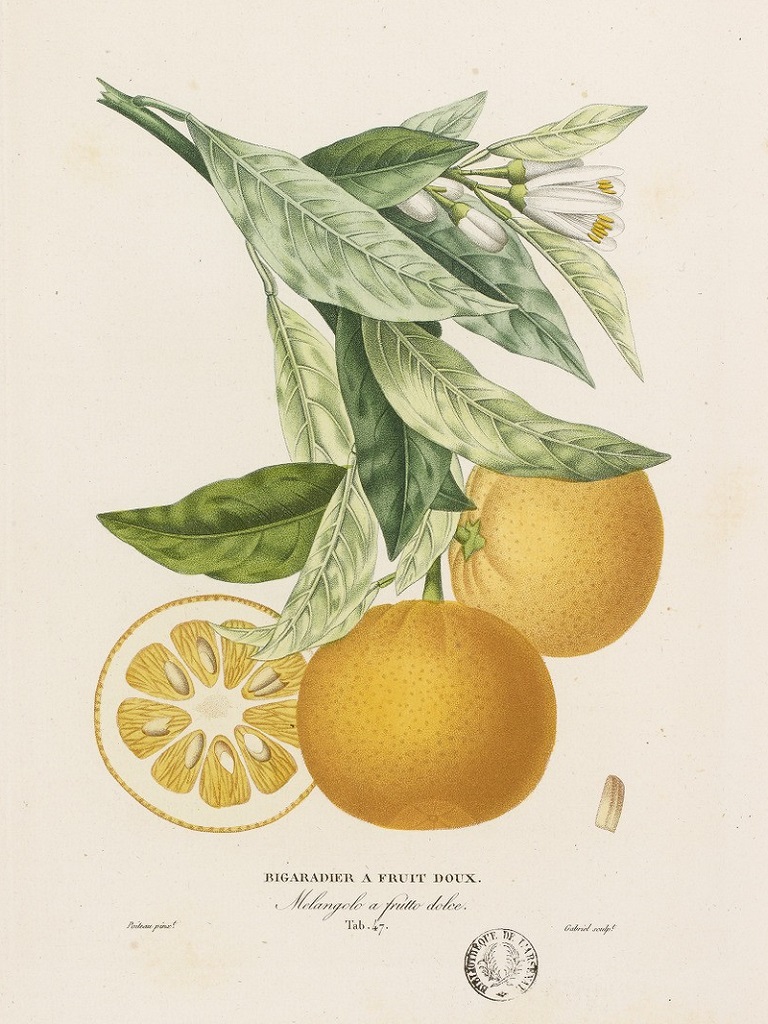
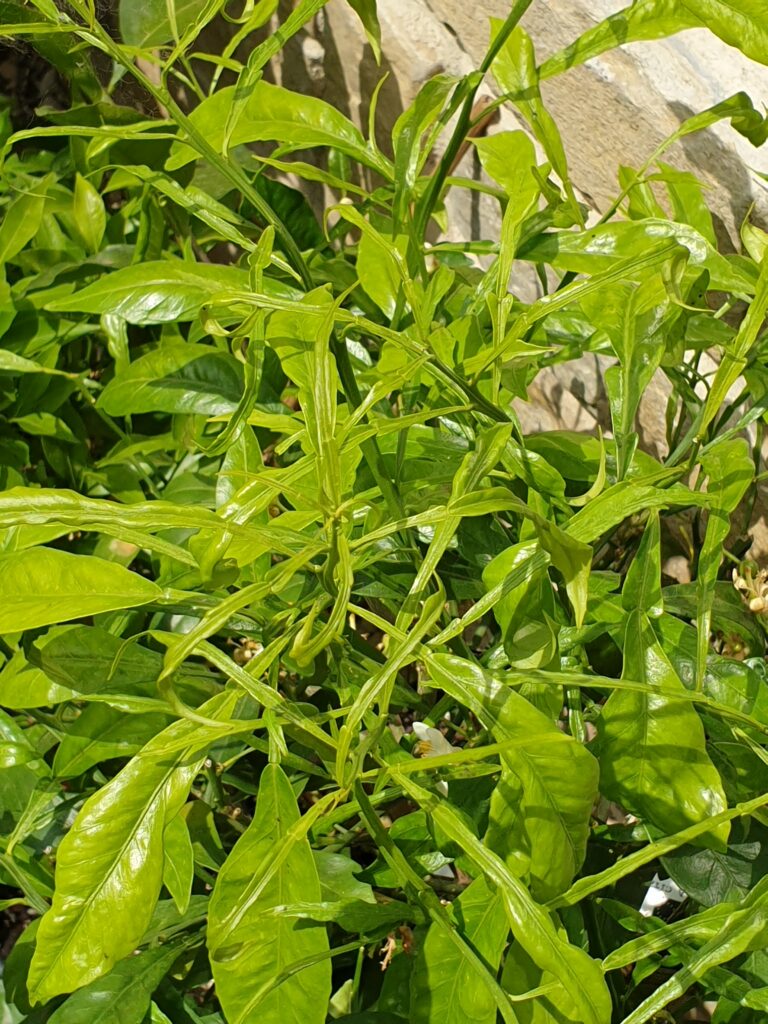
Synonyms: Willowleaf, Granito, Salicifolia; bigaradier à feuilles de saule (fr.)
Taxonomic position: Citrus aurantium ‘Granito’ Hort.; Risso & Poiteau (1822) as C. bigaradia var. salicifolia (p. 102)
The Willowleaf bitter orange is a cultivar with unusually narrow, lanceolate leaves resembling those of a willow or of mandarin cultivars of the C. deliciosa group. This morphological resemblance to mandarin foliage led to historical taxonomic confusion. Trabut (1902) identified Granito / Willowleaf as the probable paternal parent of clementine (C. clementina) — a conclusion relied upon by Chalot et al. (1963) in reconstructing the hybrid origin of clementine; Webber (1943) and Tanaka (1954) however disputed this conclusion (Hodgson, 1967).
Bizzarria — graft chimaera
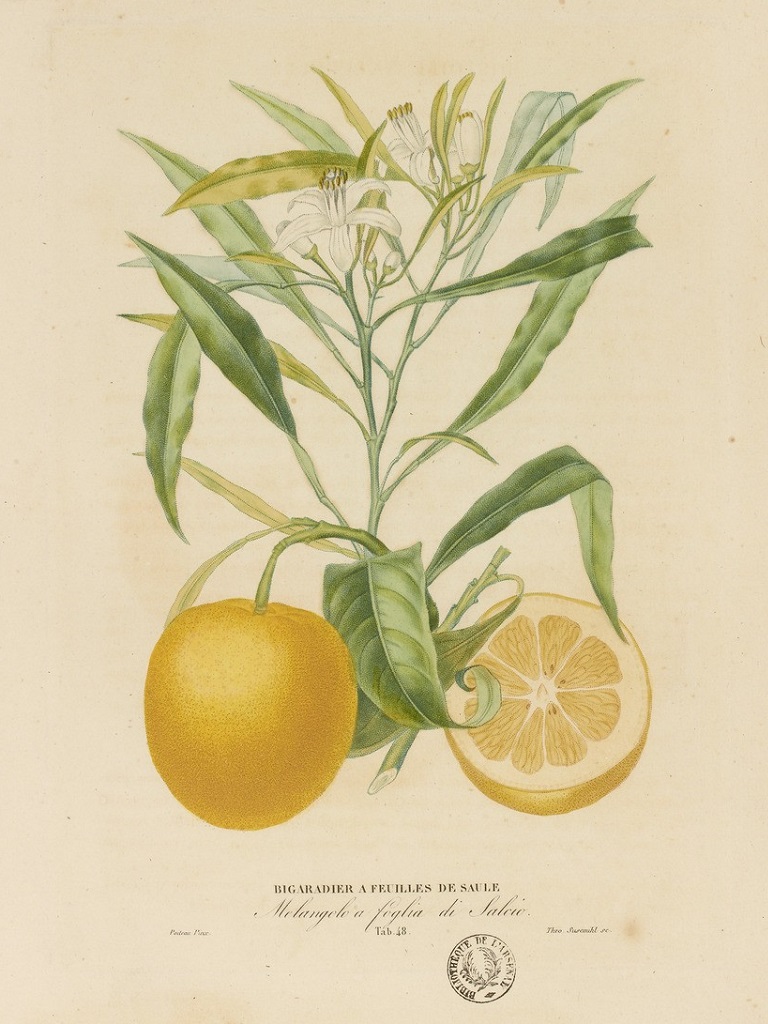
Taxonomic position: Citrus ‘Bizzarria’ Hort.; periclinal chimaera C. aurantium + C. medica; first documentation: Nati (1674)
Bizzarria is a taxonomically singular object — not a cultivar in the classical sense, but a graft chimaera (periclinal chimaera) arising spontaneously around 1644 at the graft union of bitter orange (C. aurantium) and citron (C. medica) in the garden of Villa Torre degli Agli near Florence, owned by the Panciatichi family. First scientific documentation: Pietro Nati, De malo limonia citrata aurantia vulgo la Bizzarria (1674); Nati was at the time director of the Botanical Garden in Pisa, appointed by Cosimo III de’ Medici (Trattoria Zà Zà, 2024; zitrus.info, 2025).
The characteristic feature of Bizzarria is that on a single plant, branches and fruits of three types may simultaneously develop: pure bitter orange, pure citron, and a mixed (chimaeric) type. Each year different fruits develop, wrinkled and irregular (hence bizzarria = oddity, strangeness). The Medici family considered the result “unaesthetic”; several specimens were nevertheless transferred to other Florentine gardens. Bizzarria disappeared from collections probably during the First World War. In 1980 Paolo Galeotti rediscovered it as the last surviving specimen in a private garden and returned it to the collection of Villa di Castello (Atlas Obscura, 2025; Agrumi Lenzi, 2021).
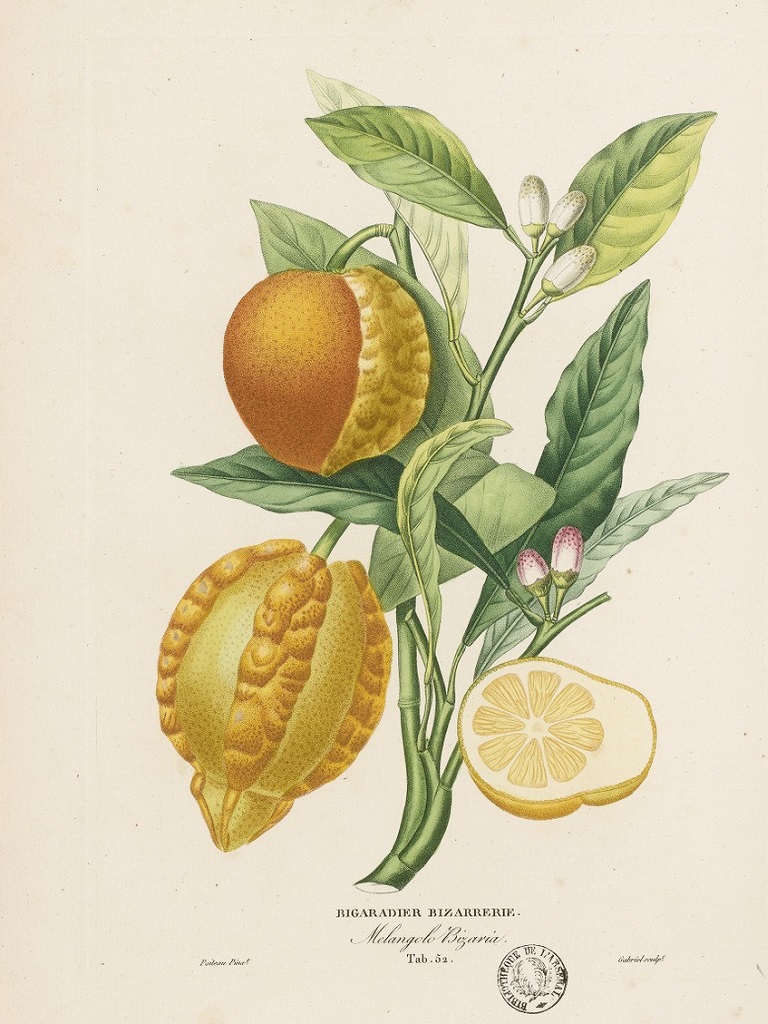
Bouquetier group — Perfumery cultivars
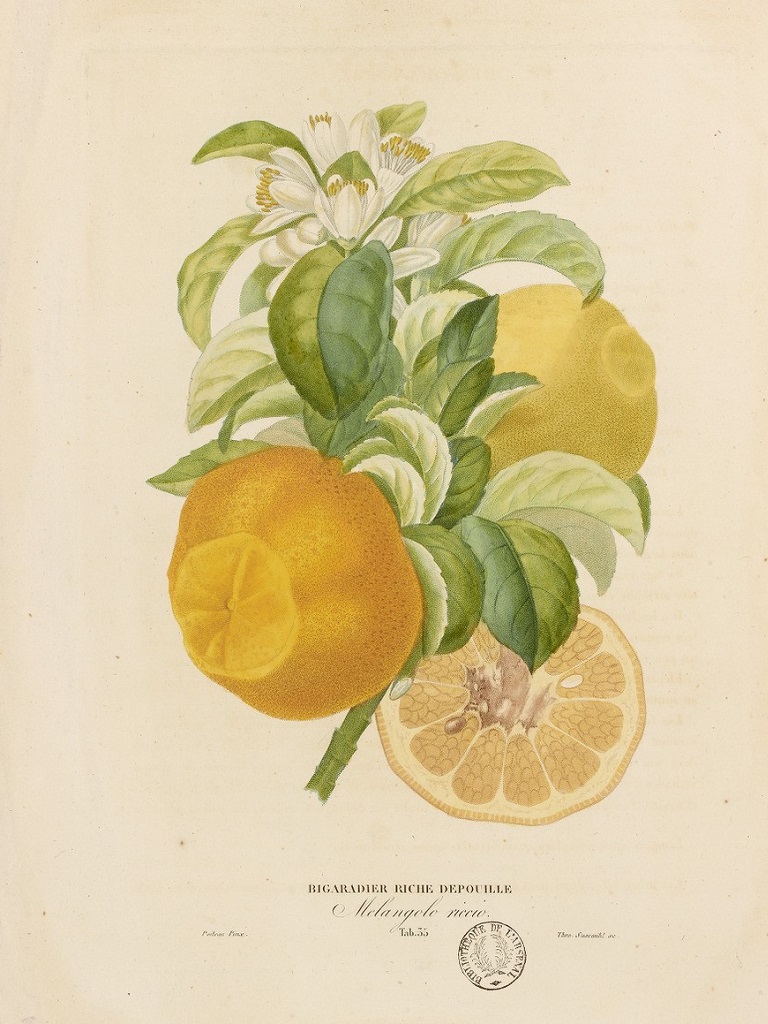
Representatives: Bouquetier commun, Bouquetier de Nice, Bouquetier de Grasse, Riche Dépouillé
A group of cultivars grown primarily for the production of essential oil from the flowers (neroli bigarade oil), documented from the 15th century in the area of the French and Italian Riviera (Reuther et al., 1967; PROSEA, 2025). Today grown mainly in Morocco and Tunisia. The cultivar Riche Dépouillé is characterised by leaves lacking a winged petiole; its presence in present-day Europe is uncertain — see the note under Crispifolia. A collection of 39 accessions of the Bouquetier group is maintained at INRAE in Saint-Giuliano, Corsica.
Laraha
Taxonomic position: C. aurantium subsp. currassuviencis (Caribbean cultivar, island of Curaçao)
Laraha is a Caribbean bitter orange cultivar naturalised on the island of Curaçao (Netherlands Antilles), where from the 16th century onwards feral Spanish bitter oranges gave rise to a specific local cultivar with a markedly thick, aromatic rind. The dried peel of laraha forms the basis of the liqueur Curaçao (triple sec, Grand Marnier). The flesh is strongly bitter and unpleasant for direct consumption; commercial value lies exclusively in the essential oil from the rind.
USE AND PRODUCTS
Food industry
Bitter orange peel is used for the production of marmalades (traditional English orange marmalade made from Seville oranges), candied peel and liqueurs (Cointreau, Grand Marnier, triple sec, Curaçao, Campari, Oranjebitter). The juice serves as a substitute for vinegar; in Japan as the base of ponzu sauce. Belgian witbier (wheat beer) is traditionally aromatised with bitter orange peel. In Nordic countries (Finland, Sweden) dried ground peel (fin. pomeranssi) is added to Christmas baked goods (Morton, 1987).
Perfumery and cosmetics
From the flowers of bitter orange is distilled neroli bigarade oil, a key ingredient of perfumes and cologne (Eau de Cologne). A by-product of distillation is orange flower water (eau de fleur d’oranger). From the fresh peel is cold-pressed bitter orange peel oil, used as a flavouring in the food industry, beverages and pharmacy. Branches and leaves yield by distillation petitgrain bigarade oil, a less expensive substitute for neroli oil (PROSEA, 2025).
Traditional medicine
In Japanese and Chinese medicine (kampō / TCM), dried peel of unripe fruits (枝實, kijitsu / zhī shí) is used as a stomachic, expectorant and laxative; recorded in the Shennong Bencao Jing (Han dynasty, 202 BC). Preparations from bitter orange contain synephrine (an alkaloid with sympathomimetic activity), which is the subject of regulatory debate in the food supplement sector (Wagner et al., 2017; Arabjchem, 2023).
Use as rootstock
C. aurantium was historically the most widely used rootstock for sweet orange, lemon and grapefruit. Following the spread of citrus tristeza virus (CTV), to which C. aurantium is highly susceptible, its share as a rootstock has been substantially reduced (PROSEA, 2025).