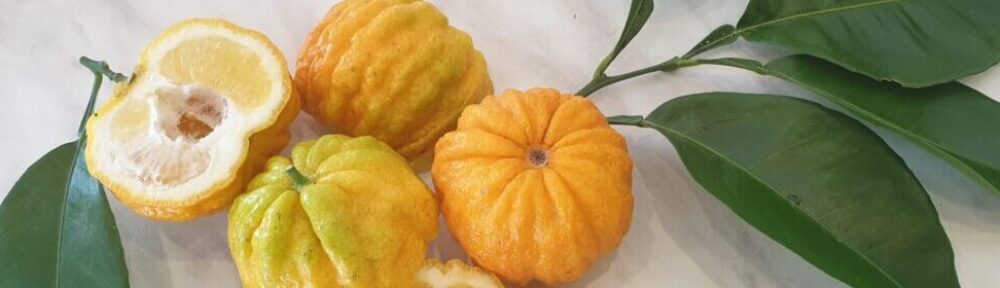
Japanese name: 六月蜜柑 (Rokugatsu-mikan); literally „June mandarin“
Alternative romanisation: Rokugatsu Mikan
English name: June Citrus, Rokugatsu Mandarin
SYNONYMS
Citrus rokugatsu Hort. ex Yu. Tanaka (1946) — accepted name in the Tanaka system
— Zadaidai (ザダイダイ) Hort. — used in part of the literature, notably UCR (2024); incorrect identification; see Taxonomic Note
— Fusu (フス) Hort. — local name on Kikaijima Island
— Gomaya / Kāmē (カーメー) Hort. — local name on Okinawa
— Makunbo (マクンボ) Hort. (1929–1939) — historical name recorded by Tanaka during field collection
— Tunge Hort. — local name on Okinoerabujima Island
— Ishikata Hort. — name used on Yoron Island; genetic affiliation to the species disputed (see text)
TAXONOMIC NOTE
Rokugatsu-mikan and Za-daidai: two distinct cultivars
In part of the specialist literature, notably in the UCR (2024) catalogue, the name Za-daidai (ザダイダイ) is applied to Citrus rokugatsu, constituting a taxonomic misidentification with practical consequences for cultivar identification and research.
Tanaka (1946) clearly distinguishes two taxa in his monograph:
1. Citrus aurantium L. var. Cyathifera Y. Tanaka — entry no. 92, Japanese name Za-daidai (ザダイダイ). This is a cultivar of sour orange with a cyathiform (cup-shaped) fruit base. Tanaka lists the synonyms Kaiseito, Kinkyu (Chinese name 金橘), Yama-tachibana, and Abe-tachibana.
2. Citrus rokugatsu Hort. ex Y. Tanaka — entry no. 125, Japanese name Rokugatsu-mikan (六月蜜柑). Tanaka explicitly notes the similarity with Za-daidai in the character of the fleshy calyx, but provides two distinguishing morphological characters: (a) absence of a petiole wing and (b) presence of a conspicuous areola (a botanical pit) at the fruit apex, which is absent in Za-daidai. This distinction was confirmed by Dr. Hideyasu Kinjo (Japan), a specialist in the citrus flora of the Okinawa and Amami islands. According to Dr. Kinjo, both cultivars are maintained in Japanese collections and the defining morphological character is precisely the presence of an areola at the fruit apex in C. rokugatsu and its absence in Za-daidai.
From a genomic perspective, Wu et al. (2021) confirm the hybrid origin of C. rokugatsu (Tanibuta × C. aurantium), whereas Za-daidai belongs directly to Citrus aurantium. The two taxa are therefore of different origin and are not synonyms. The name Rokugatsu-mikan should be used exclusively for C. rokugatsu, not Za-daidai.
HISTORY AND ORIGIN
Origin and first botanical description
Citrus rokugatsu was first formally described by Tanaka (1946) as a new species — entry no. 125 in the monograph An Iconograph of Japanese Citrus Fruits — on the basis of plant material from Shikoku Island, where the author considers it native. The Latin botanical diagnosis in the monograph reads: Folia elliptico-lanceolata, basi cuneata, margine subintegra vel integra, apice acuminata; petiolis angustissimis alatis; Flores solitarii, calyx crassus; Fructus globosus 4 cm, pericarpis luteo, loculus 8, semine polyembryonata. The name rokugatsu (六月, June) refers to the ripening period — fruits begin to ripen in June, unusually early for Japanese citrus cultivars. Tanaka notes in the monograph that the species originates from Shikoku and that a genetic affinity with branches of C. aurantium may exist.
Tanaka (1957) further confirmed cultivation of the species on Amami Ōshima Island in Kagoshima Prefecture and proposed that the species spread northwards into the Japanese interior from the southern islands. In the same work he noted the morphological similarity with C. aurantium var. Cyathifera (Za-daidai) in the character of the large fleshy calyx, and gave two distinguishing characters: absence of a petiole wing and the presence of a conspicuous areola at the fruit apex.
The tree is characterised by vigorous growth and good resistance to diseases and pests.
Distribution on the Amami and Ryukyu Islands
A survey by Yamamoto et al. (2006) documented the occurrence of the species on several islands of the Amami Archipelago in Kagoshima Prefecture, where it has naturalised in a subtropical environment. On Kikaijima Island it is grown under the local name Fusu and occasionally offered at local markets as a regional cultivar. On Okinoerabujima Island it persists in private gardens under the name Tunge.
Yamamoto et al. (2022) documented citrus species on Kuroshima Island (Kagoshima Prefecture) and recorded the presence of local forms morphologically consistent with C. rokugatsu. Specimens from the surveys are maintained in the citrus collection of Toso Orchard at the Experimental Farm of the Faculty of Agriculture, Kagoshima University.
On Yoron Island a morphologically similar taxon was recorded under the name Ishikata; however, Lam & Ishikawa (2019) showed by molecular markers that Ishikata represents a distinct cultivar, genetically closer to kabuchi (C. keraji var. kabuchii) than to C. rokugatsu, despite having been labelled as such.
Occurrence in Europe
A citrus variety registered under the name Citrus rokugatsu “Za-daidai” was once present in Czech collections. In 2015 it was exhibited at the citrus show in Brno. The collection specimens originated from historical glasshouses of the turn of the 19th–twentieth century at Náměšť nad Oslavou Castle, which has been in a state of neglect since at least 2001 (statement of the castle curator, 2024). The cultivar gradually disappeared from the collections, probably due to low appeal as a direct-consumption fruit. Whether it was actually a Rokugatsu-mikan or rather a Za-Daidai, which may have originated from French collections where this bigarade was historically found, is now difficult to verify.
GENETIC CHARACTERISTICS
Wu et al. (2021) identified C. rokugatsu from Okinawa as an F1 hybrid of C. ryukyuensis (Tanibuta) and C. aurantium, designating Tanibuta as the maternal parent and sour orange as the paternal parent.
Shimizu (2018) likewise confirmed C. aurantium as one of the parents, but identified sour orange as the maternal parent. The results of the two studies are contradictory with respect to the direction of hybridisation, though not with respect to the parental taxa involved. It is therefore possible that accessions currently circulating under the name rokugatsu-mikan represent genetically distinct clones with different maternal lineages — one derived from Tanibuta (♀) × C. aurantium (♂), the other in the reverse arrangement.
On the basis of its genomic constitution, C. rokugatsu is a hybrid with one parent from the lineage of endemic Ryukyuan taxa and the other from introduced sour orange. This hybrid origin accounts for the morphological similarity with C. aurantium while retaining local characters of the Ryukyuan citrus flora.


BOTANICAL DESCRIPTION
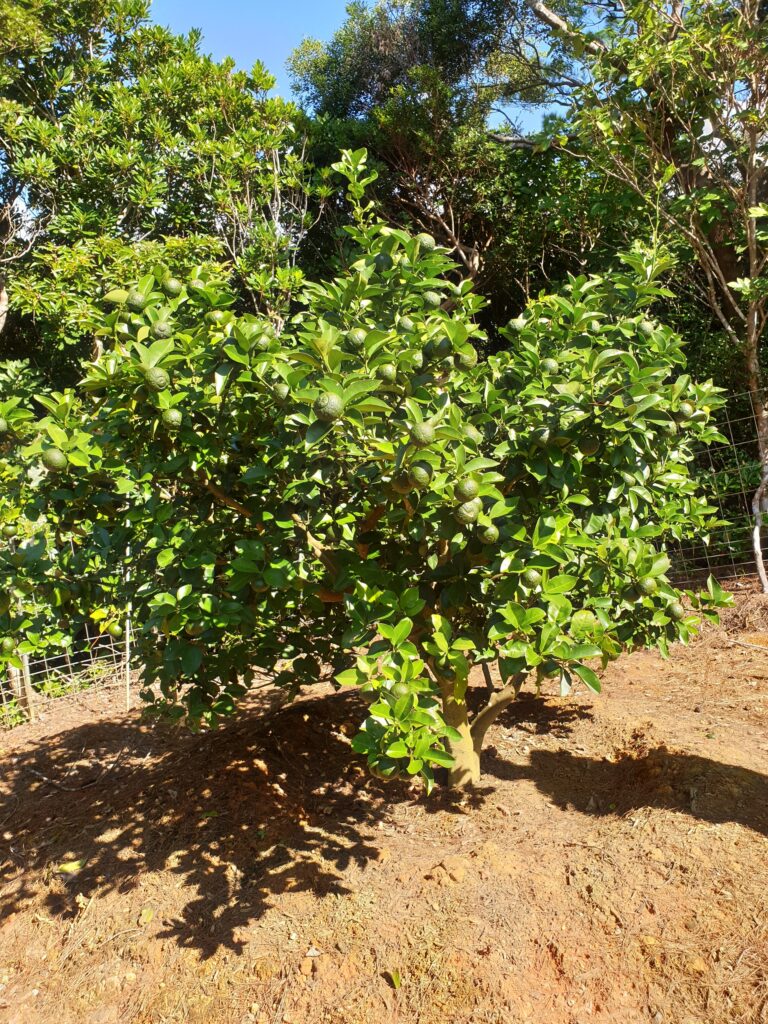
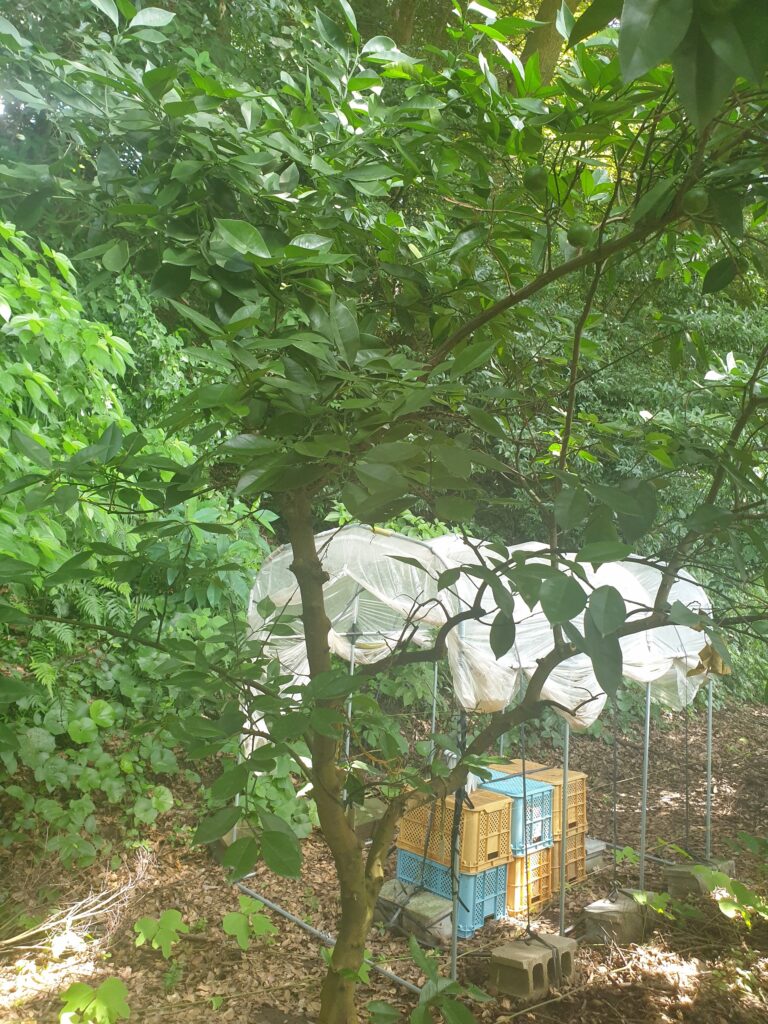
According to Tanaka (1946), the tree of C. rokugatsu is of medium stature with a compact crown, vigorous growth, and good resistance to diseases and pests.
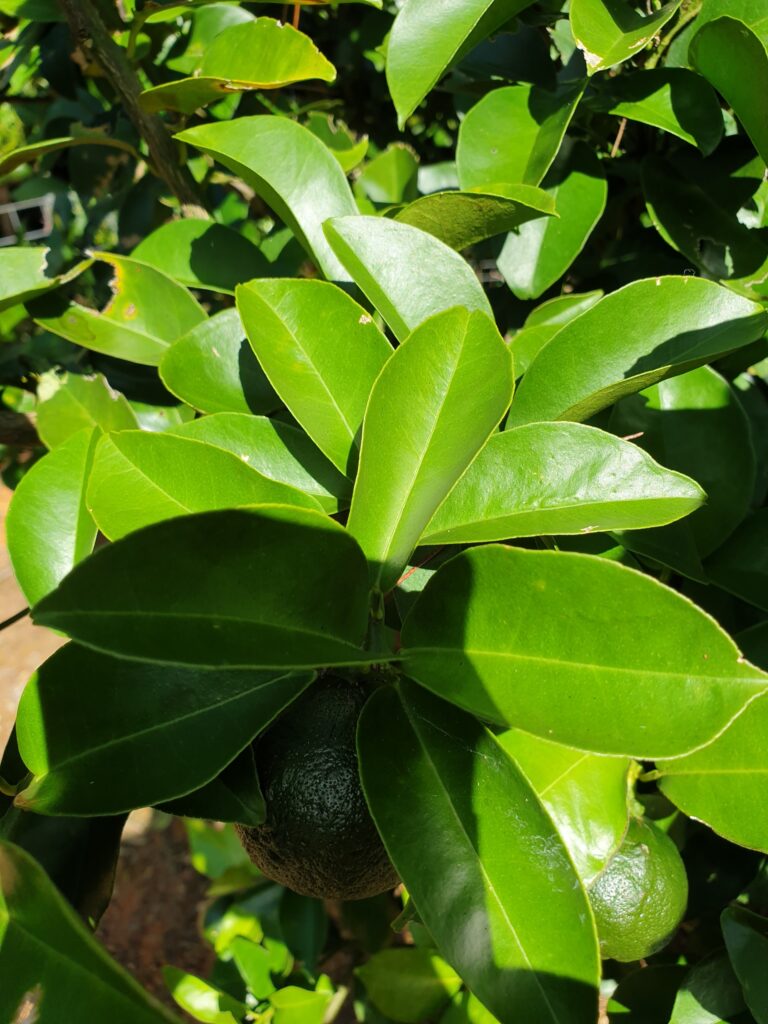
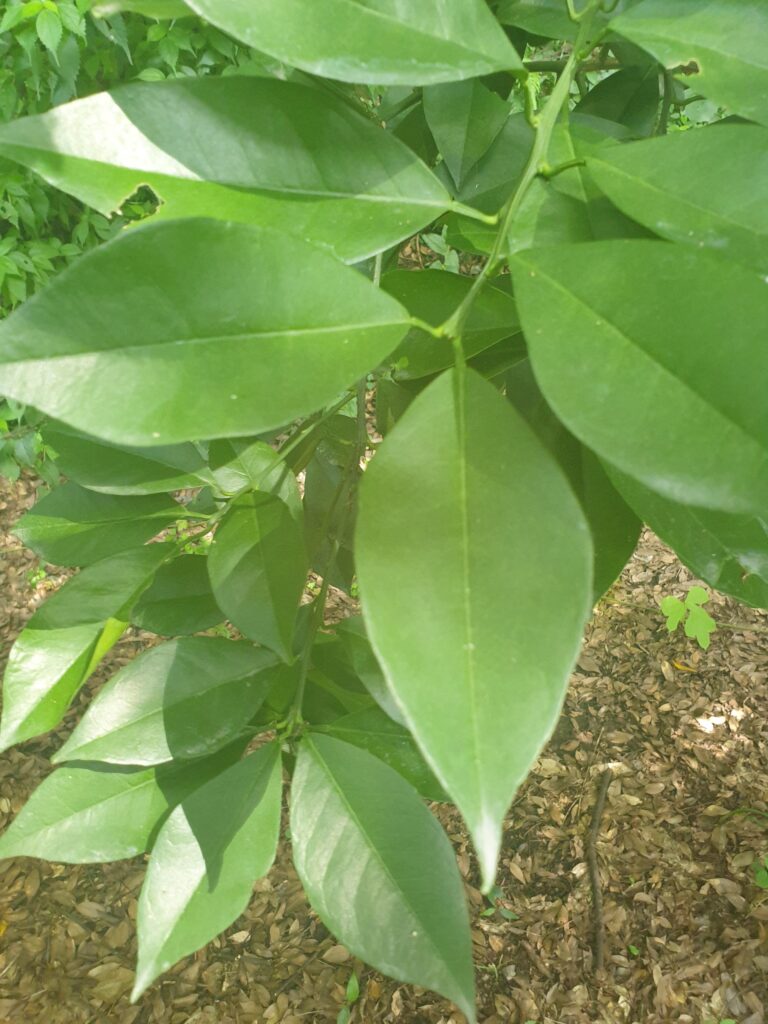
Leaves are elliptic-lanceolate with a cuneate base; margin nearly entire to entire; apex conspicuously acuminate; petioles narrowly winged.
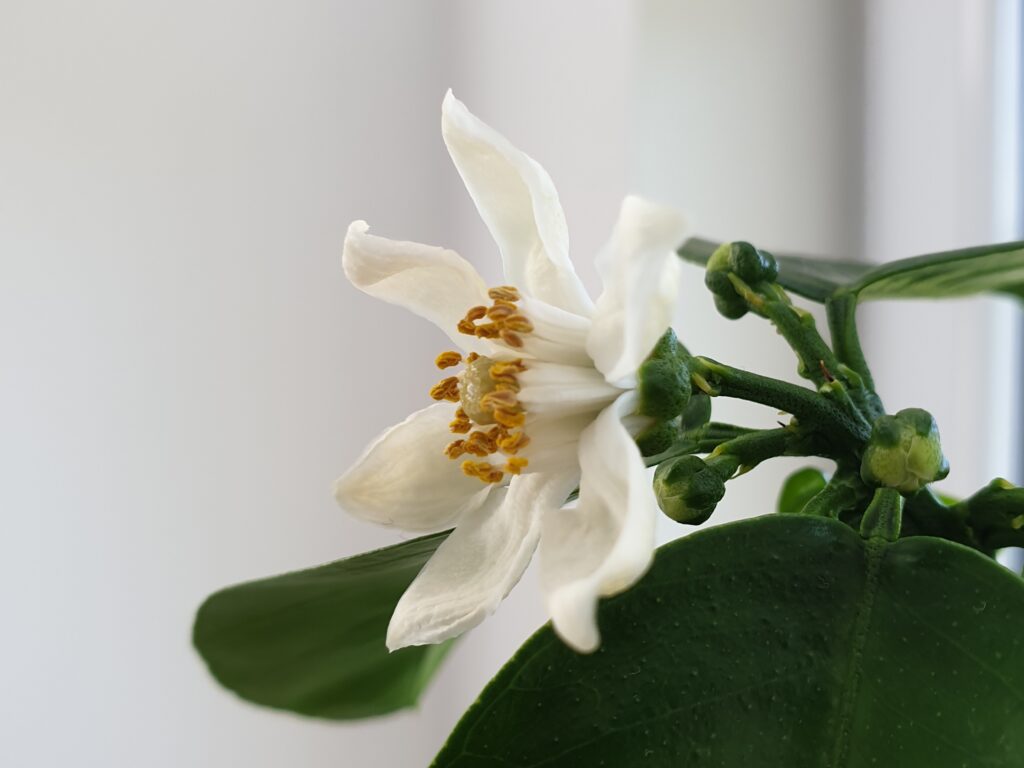
Flowers are solitary, with a conspicuously large and fleshy calyx.
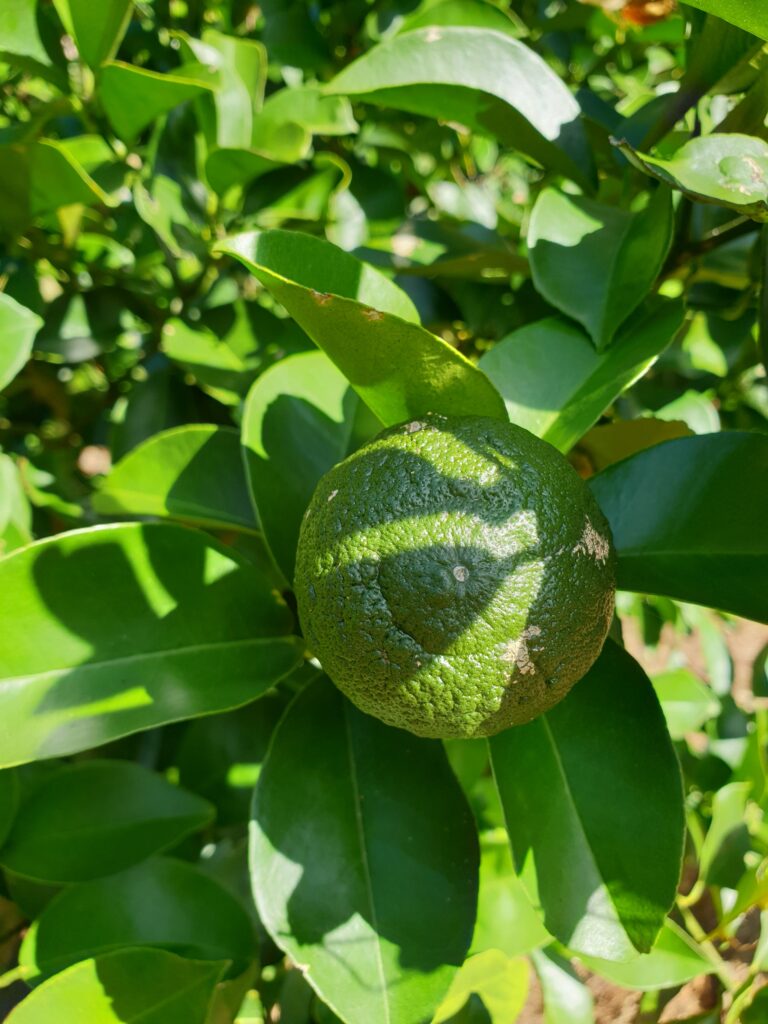
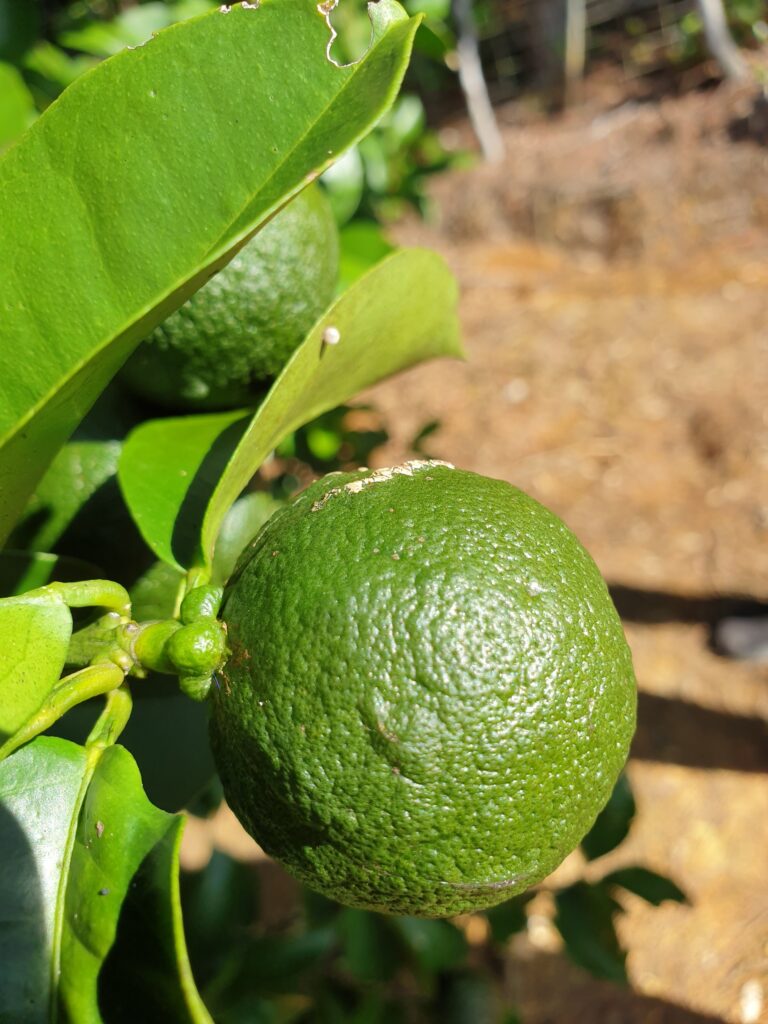
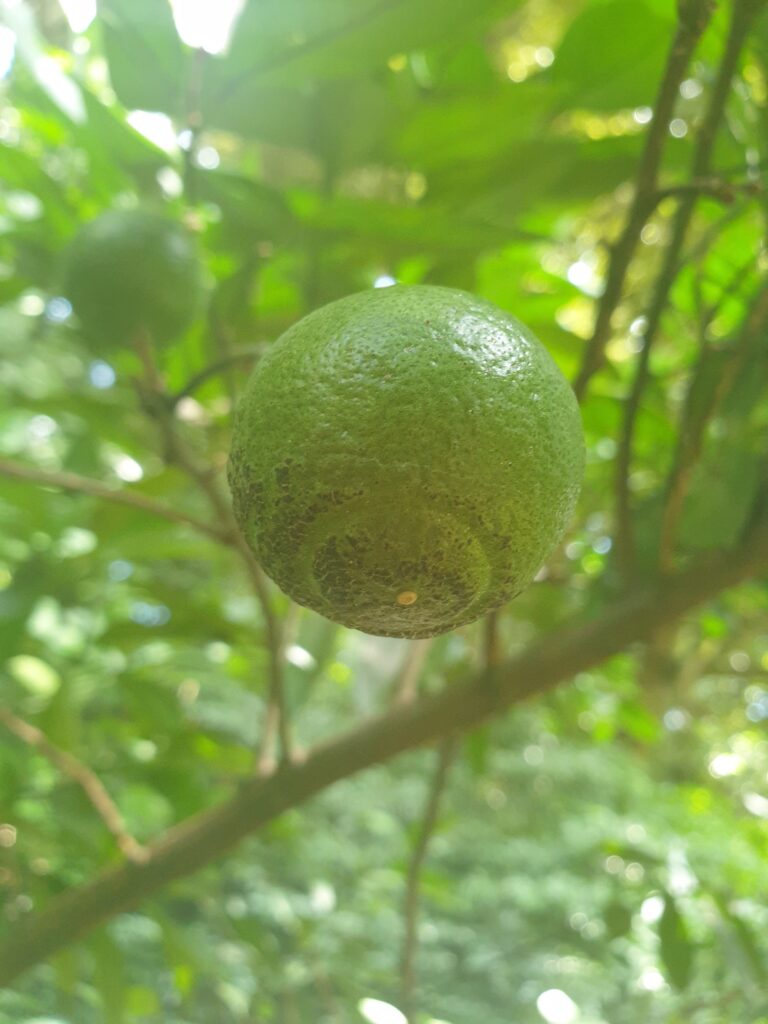
Fruit is globose, approximately 60 mm in diameter, approximately 70 mm in height, weight approximately 200–240 g. Peel is fairly thick, approximately 8–9 mm, yellow-orange in colour. Number of segments: 8; seeds polyembryonate. The defining botanical character distinguishing the species from Za-daidai is the presence of a conspicuous areola at the fruit apex. According to the measurement table recorded by Tanaka (1946), the juice shows a sugar content of approximately 7.50 °Brix, acidity of 0.96 %, and an overall sensory rating of 7.85 on Tanaka’s scale.
The tree is highly productive and resistant to diseases and pests (Michinoshima Farm, 2021).
TASTE AND USE
Tanaka (1957) described the flavour of the fruits as sweeter than that of ordinary sour orange, yet considered them unpalatable. This description is at odds with current practice on the Ryukyuan and Amamian islands, where growers and farmers characterise the flavour as sweet to sweet-sour, noting that the fruits peel easily and the flesh is juicy with only a mild bitterness of the peel.
Fruits are consumed fresh and used for culinary processing — for the preparation of sauces, jams, and desserts, in much the same way as other local citrus species. Cooked fruits do not taste bitter but impart a characteristic aroma to dishes. Thanks to its compact growth habit and decorative appearance, the species is also cultivated as an ornamental plant.
CONSERVATION AND CURRENT STATUS
In Japan
Citrus rokugatsu is still grown in gardens on the Ryukyuan and Amamian islands, though without significant commercial exploitation — primarily as a local cultivar, collector’s curiosity, or ornamental plant. Collection specimens are maintained in the Toso Orchard collection at the Experimental Farm of the Faculty of Agriculture, Kagoshima University (Yamamoto et al., 2022). On Kikaijima Island the species is occasionally sold at local markets under the name Fusu.
In Europe
The species has disappeared from collections in the Czech Republic. The UCR Citrus Variety Collection in Riverside, California, holds it under accession number CRC 3845, but with the erroneous synonym Za-daidai (see Taxonomic Note).