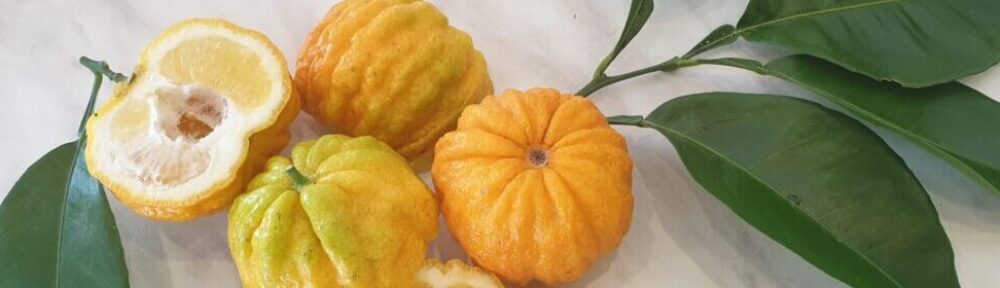
Japanese name: 川端蜜柑 (Kawabata mikan)
SYNONYMS:
– Kawabata Kunembo (川畑九年母, historical local name) (Tanaka, 1946)
– Ukon no Tachibana (鬱金橘, “Turmeric Orange” – historical name in Tashiro’s map from 1882) (Hanaki, 2022)
HISTORY AND ORIGIN
Kawabata mikan is a nearly extinct cultivar native to the southern Kyushu region of Japan. The cultivar originates from the Kawabe-gun area (川辺郡), specifically from the village of Kaseda (today part of the city of Minamisatsuma) in Kagoshima Prefecture (Tanaka, 1946; Hanaki, 2022). The name “Kawabata” is derived directly from this locality of origin.
Historical records of the cultivar’s existence date back to at least before 1843, when it was mentioned in connection with the Kawabe-gun area. At that time, Kawabata mikan was cultivated in the traditional manner – up to several dozen trees were planted around rural homes (Hanaki, 2022). According to Tanaka’s monograph, a Kawabata mikan tree existed at the home of the Ichi family on the “Jaen Yashiki” estate since the time of the previous generation (Tanaka, 1946). By this, Tanaka most likely meant the family’s noble residence in the Korimoto area (that is, in the location of today’s campus of Kagoshima University), where the Ichi family owned extensive lands, which would suggest the growing popularity of the cultivar at that time and its wider distribution.
The cultivar was formerly known as “Kawabata Kunembo” (Tanaka, 1946), which reflects its genetic connection to Kunembo as a significant parent variety. Unlike commercially successful cultivars such as Satsuma or Sakurajima Komikan, Kawabata mikan was never sold in fruit shops or supermarkets, and today it is a rare cultivar that is rapidly disappearing (Entabe, 2022).
Molecular genealogical research has revealed that Kawabata mikan is a natural hybrid between Kunembo (Citrus nobilis Lour. var. kunep Tanaka) and an as yet unidentified variety. Cytotype analysis revealed that Kawabata mikan shares cytotype C05 (Hyuganatsu type) with several other cultivars, including Hyuganatsu, Oogonkan and Tengu (Shimizu, 2016). This shared cytotype indicates a common maternal origin of these cultivars, while their nuclear genotypes differ depending on the second parent. The precise identity of Kawabata mikan’s second parent remains unknown, which is common for many traditional Japanese citrus cultivars that arose as spontaneous natural hybrids several centuries ago.
Today, this rare cultivar is preserved in the citrus collection of Toso Orchard (十曽果樹園) at the experimental farm of the Faculty of Agriculture, Kagoshima University, which is dedicated to the conservation of local citrus genetic resources from the Kagoshima region and surrounding islands (Yamamoto, 2006).
BOTANICAL DESCRIPTION
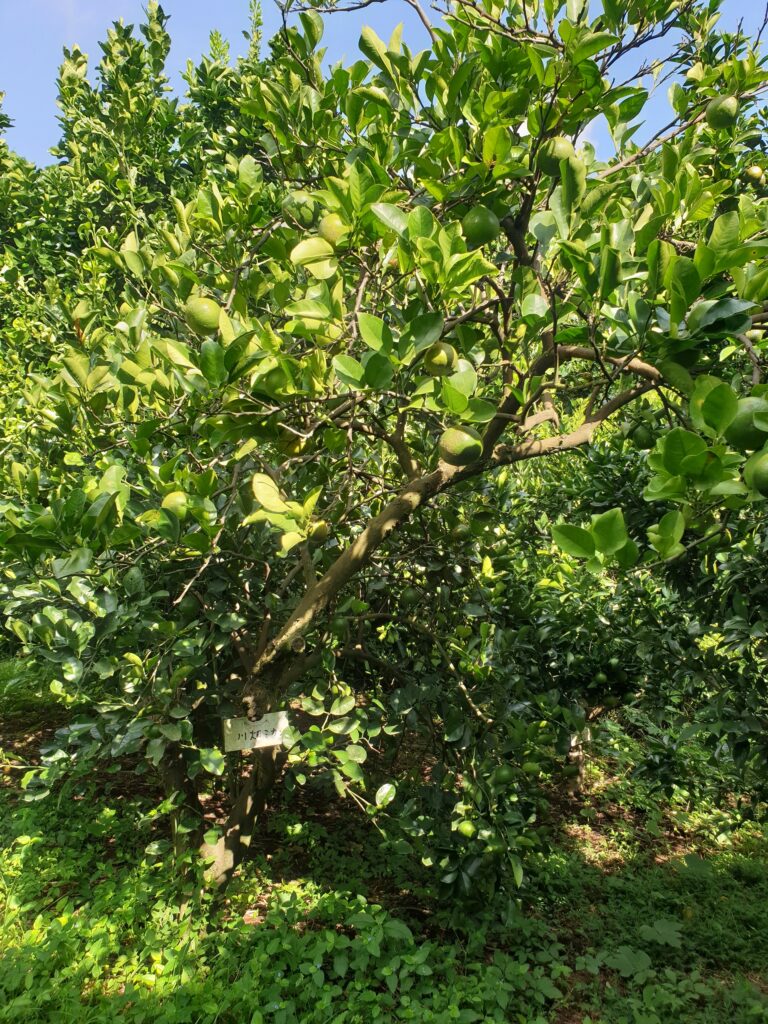
The Kawabata mikan tree is of medium vigour with a fairly compact crown. The branches are of medium strength, with irregular thorns or almost thornless (Tanaka, 1946). In the Toso Orchard collection, the tree displays a dense, well-structured crown – the observed specimen reaches a height of approximately 3 metres. According to Tanaka’s monograph, the tree is easy to cultivate and resistant to pests, but tolerates drought and cold poorly. The tree is fairly productive (Tanaka, 1946), suggesting its suitability for traditional home cultivation in regions with adequate moisture.
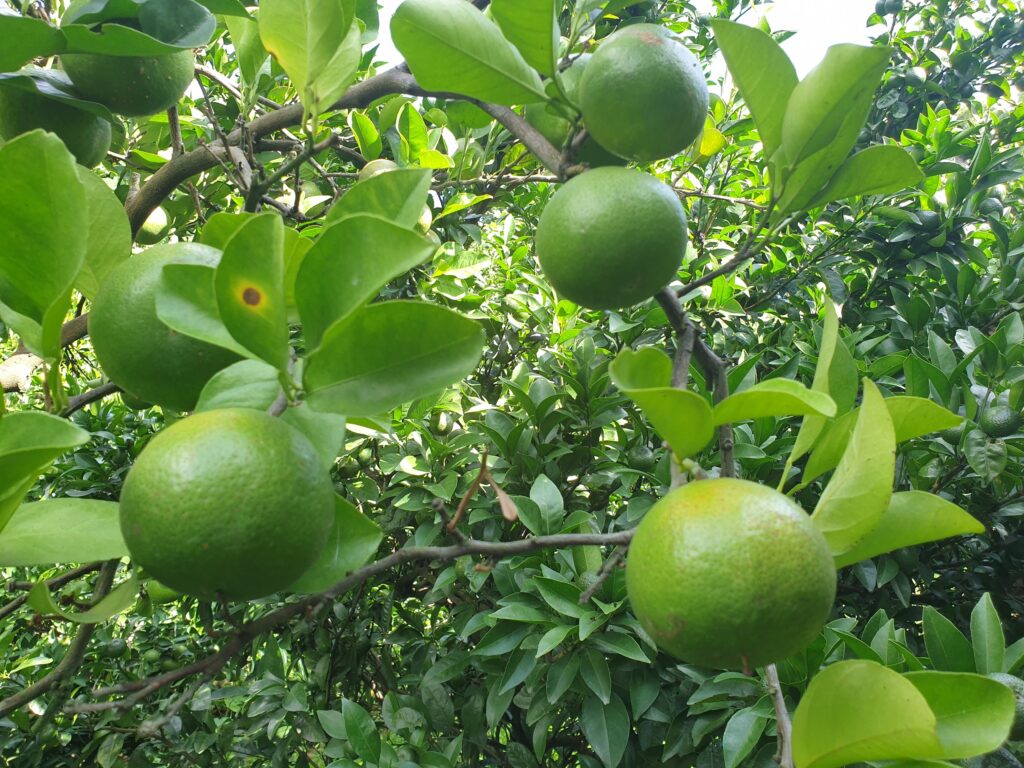
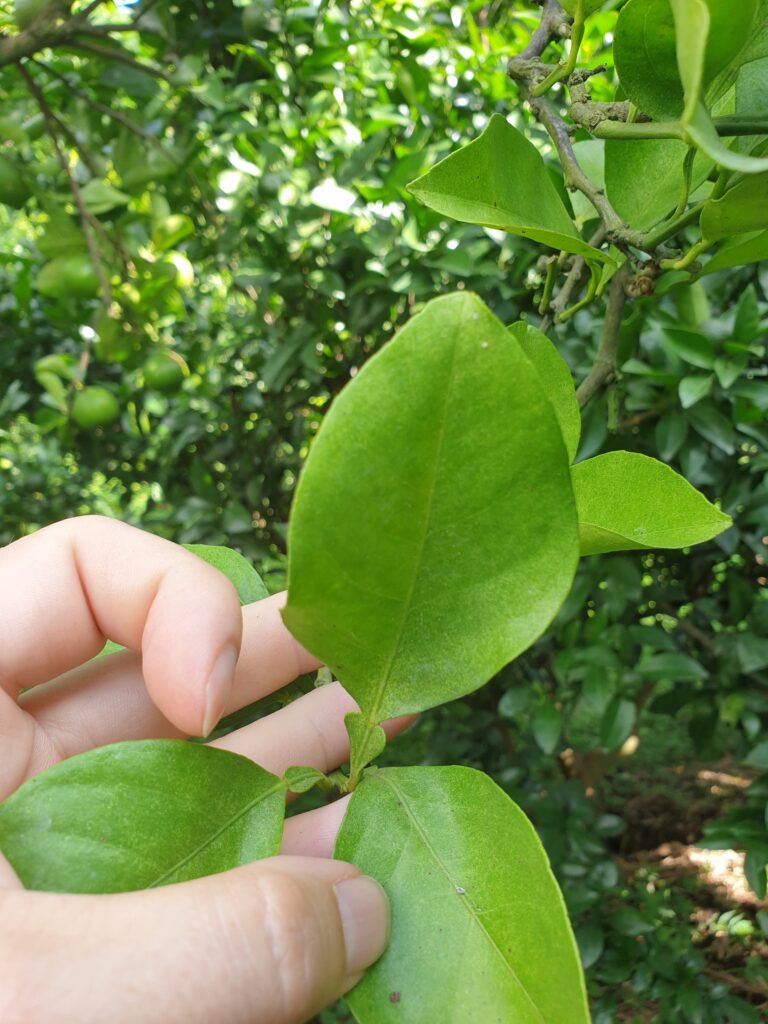
The leaves are of medium size, elliptic in shape, with characteristic wing-like appendages (alata) on the petiole. The leaves have a glossy, dark green upper surface. According to Tanaka’s monograph, the flowers are whitish, growing singly or in groups of 2–3 (Tanaka, 1946).
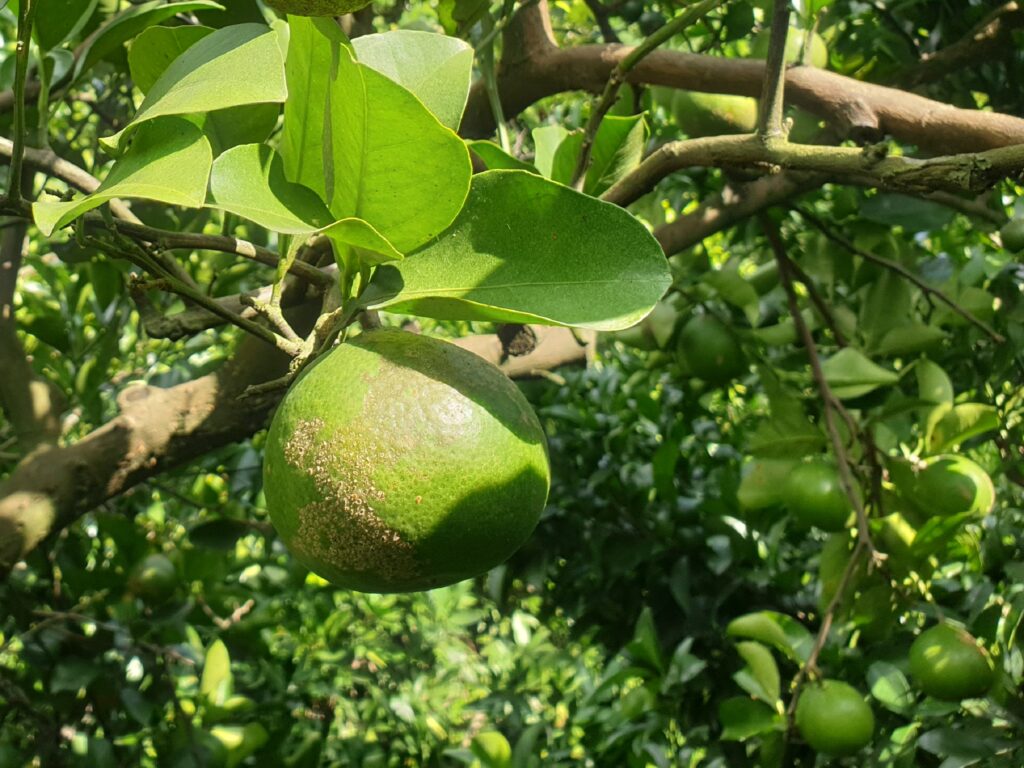
The fruits of Kawabata mikan are of medium size, spherical to slightly oblate in shape, with a transverse diameter of approximately 75 mm and a fruit weight of approximately 200 g. The rind is fairly tough, smooth to finely textured. The colour of the fruit at full maturity is a vivid yellow to golden yellow; the flesh is light yellow and moderately juicy. The number of segments per fruit is usually 10 or 11, with more than 10 seeds; the seeds are monoembryonic, white or light green in cross-section (Tanaka, 1946).
TASTE AND USE
According to Tanaka’s monograph, the taste of Kawabata mikan is refreshing, with a balanced ratio of acidity and sweetness (Tanaka, 1946). Modern descriptions characterise the fruits as having a mildly tart sweetness with a distinctive bright yellow colour (373news.com, 2023). Traditional descriptions state that Kawabata mikan has a balanced, elegant flavour reminiscent of the premium citrus Hyūganatsu (Entabe, 2022) – which may be related to the shared maternal origin (cytotype C05) of both cultivars (Shimizu, 2016). The rind is aromatic and contains pronounced essential oils.
According to Tanaka’s monograph (1946), the fruits ripen approximately in December to January (Tanaka, 1946). Interestingly, an older source from 1917 gives the harvest time as the beginning to the middle of October (Hanaki, 2022), which represents a difference of approximately two months. This discrepancy may reflect different phenological stages of harvest (early harvest of unripe fruit vs. full maturity), regional differences in climatic conditions, or changes in cultivation practices over time. At the time of my visit to Toso Orchard in mid-September, the fruits were beginning to turn yellow.
To consume fresh fruit, it is necessary to use a knife to score and peel the rind, unlike the easily peeled commercial mandarins (Entabe, 2022; 373news.com, 2023). The tough rind, which is difficult to peel by hand, was the main reason for the decline in the cultivar’s popularity in modern times (373news.com, 2023).
Traditional use:
- Consumption of fresh fruit
- Dessert fruit after meals – its refreshing properties help to remove the heavy feeling of oil and meat left in the mouth (Entabe, 2022)
Modern potential use:
- Processed products utilising the acidity and aromatic rind: liqueurs, dressings, jams (Kagoshima Prefecture, 2023)
- Regional specialities
- Culinary applications appreciating the unique flavour profile
CONSERVATION AND THE CURRENT STATUS
Kawabata mikan is a classic example of traditional citrus diversity that has been displaced by the modernisation of agriculture and the standardisation of commercial production. While other traditional cultivars such as Sakurajima komikan or Satsuma have maintained their economic significance, Kawabata mikan has remained a local, non-commercial cultivar that has virtually disappeared from common cultivation in the modern era. (373news.com, 2023).
Kawabata mikan originates from the Kawabata area in the town of Kaseda (today part of the city of Minamisatsuma) in Kagoshima Prefecture. In recent years, significant community efforts have been underway to revive this nearly forgotten cultivar (City of Minamisatsuma, 2023; Kagoshima Prefecture, 2023).
A survey of awareness of Kawabata mikan conducted in 2022 revealed a generational gap – while older residents remember the cultivar well and regard it as a nostalgic part of local identity, the younger generation, especially people under 30, are largely unaware of it (Kagoshima Prefecture, 2023). Older residents in the survey nevertheless expressed a desire to revive the cultivation and availability of the fruits they remember from their youth.
Since 2023, students from Kaseda Jorin High School in Minamisatsuma have been actively involved in the revitalisation. The students are collaborating with the local community on several projects (City of Minamisatsuma, 2023; Kagoshima Prefecture, 2023; 373news.com, 2023):
- Growing grafted seedlings for wider distribution
- Educational activities at primary schools, including hands-on harvesting experiences for pupils
- Donation of seedlings (10 trees to Kawabata Primary School in 2023)
- Research into commercialisation possibilities through processed products
The initiative aims to create added value through processed products that would overcome the disadvantage of the difficult-to-peel rind of fresh fruit. Thanks to the pronounced acidity and aromatic rind, the production of liqueurs, dressings, jams and other specialities is being considered. The long-term goal is to incorporate Kawabata mikan products into the furusato nōzei system (regional gift products linked to tax incentives) and to use these fruits to promote the region (Kagoshima Prefecture, 2023).
In the Japanese context, Kawabata mikan is referred to as “幻の川畑みかん” (maboroshi no Kawabata mikan) – literally “phantom” or “legendary” Kawabata mikan (Kagoshima Prefecture, 2023). This term is commonly used in Japan for rare local products that have nearly disappeared and exist only in the memories of the older generation. “Phantom” here does not express something supernatural, but rather something almost mythical – something that was once commonplace but is now almost unattainable, a product that has become a legend. This poetic term emphasises the nostalgic value of the cultivar and its status as rare cultural heritage of the region.